 English
 French
 German
 Russian
 中文
中文

When Poetry Refuses to Be Silent: A Voice from Mikuyu Prison
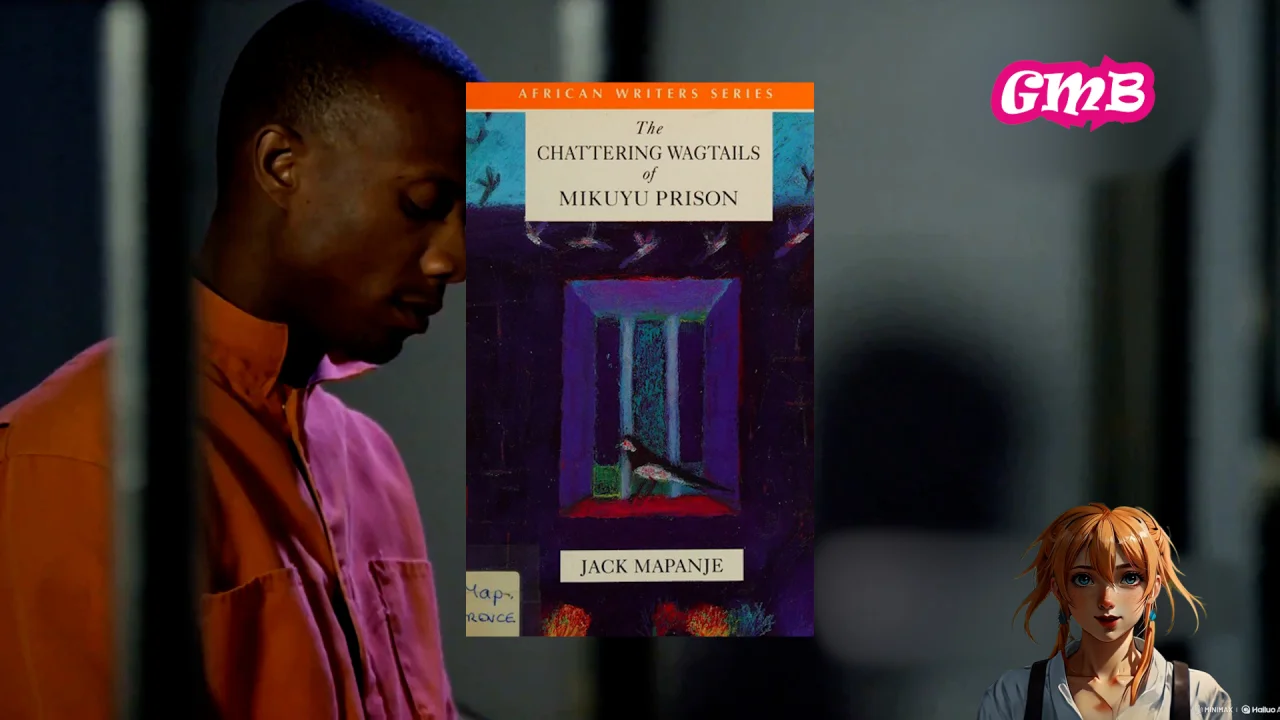
There’s something unsettling about reading poems written from a prison cell.
Not fictional prison. Not metaphorical prison.
A real one.
As I turned the pages of The Chattering Wagtails of Mikuyu Prison by Jack Mapanje, I kept thinking: What does it cost a writer to tell the truth? And more importantly — what does it cost a country when truth becomes dangerous?
These poems are not loud. They don’t shout slogans. They don’t name names recklessly. Instead, they whisper in metaphor, circle around danger, and then suddenly — pierce you.
And the most chilling part? The poems that led to his imprisonment weren’t even the ones written in prison. It was his earlier collection, Of Chameleons and Gods, that dared to critique an authoritarian regime — and for that, he was detained without trial for three and a half years.
This book is what survived.
What Kind of Book Is This?
This is a political prison poetry collection about resistance, silence, complicity, and survival.
Tone: Reflective, sharp, quietly defiant
Pace: Moderate — contemplative but emotionally heavy
Themes: Power, corruption, exile, censorship, resilience, moral responsibility
This book is for readers who:
-
Believe literature can challenge authority
-
Are drawn to African political history and resistance writing
-
Appreciate layered metaphor and encoded critique
This book is NOT for readers who:
-
Prefer straightforward, literal poetry
-
Want escapism rather than confrontation
-
Dislike politically charged writing
👉 The edition I read is available here:
The Chattering Wagtails of Mikuyu Prison (Amazon edition)
Why This Book Matters (The Emotional Core)
What stayed with me wasn’t just the suffering.
It was the courage.
In the opening section, “Another Fools’ Day Homes In,” Mapanje critiques corruption through image rather than accusation. In “Haggling Old Woman at Balaka,” he writes:
“You sell chicken eggs for cokes and fantas
To suckle your babies, then you ask me
Why your babies are rickets and ribs?”
It’s not just about trade. It’s about a nation exchanging substance for illusion.
In another poem, he describes politicians as:
“Hyenas with the gilt of our skulls behind…”
That line lingered with me for days.
But what unsettled me even more was this admission:
“The crime is how we deliberately keep out of touch,
Pretending it has nothing to do with us…”
Mapanje doesn’t only accuse leaders. He questions citizens. He questions silence. He questions us.
And that’s why this book still feels painfully relevant.
Oppression doesn’t always begin with violence. Sometimes it begins with indifference.
A Glimpse of the Story (No Spoilers)
The collection is structured in four sections:
-
Another Fools’ Day Homes In — social critique before imprisonment
-
Out of Bounds — sharper commentary on poverty and exploitation
-
Chattering Wagtails — poems from inside Mikuyu Prison
-
The Release and Other Curious Sights — freedom, but not relief
In “Out of Bounds,” Mapanje exposes the realities faced by women whose husbands were sent to work in mines. Survival becomes humiliation. Poverty becomes normalized. He even repeats the word “whoring” — shocking in a society where sexual realities were rarely spoken aloud.
One of the most haunting pieces describes an overcrowded maternity ward:
“Sixty inmates of spasming women top & tail
On thirty beds…”
Even before prison, the country itself feels like confinement.
Then comes Mikuyu.
In the third section, he describes being stripped naked, treated like a criminal, isolated from family. But the most unexpected companionship comes from birds — wagtails — whose droppings he is forced to clean daily.
The poem “The Chattering Wagtails of Mikuyu Prison” becomes symbolic. The birds are free. He is not.
And yet — he is the one who writes.
In the final section, after international pressure from figures like Wole Soyinka and Harold Pinter helped secure his release, Mapanje doesn’t soften.
He introduces the chilling word “accidentalized” — to kill someone and pretend it was an accident when everyone knows it wasn’t.
That word appears early in the collection. And it returns at the end.
The circle never quite closes.
Who This Book Is Perfect For
You’ll enjoy this collection if:
-
You like poetry that confronts power quietly but forcefully
-
You appreciate writers who encode truth in metaphor
-
You read literature to understand history and human courage
You might struggle with this book if:
-
You prefer narrative-driven storytelling
-
You need clear villains rather than systemic critique
-
You want emotional comfort
👉 If this sounds like your kind of book, you can find it here:
The Chattering Wagtails of Mikuyu Prison on Amazon
My Honest Verdict
This isn’t an easy collection.
Some poems demand rereading. Some metaphors require patience. And if you’re unfamiliar with Malawi’s political history, certain references may feel distant at first.
But that distance fades.
What worked:
-
The layered metaphors
-
The emotional restraint
-
The symbolic continuity across sections
What didn’t:
-
At times, the density slows momentum
-
Some contextual knowledge helps fully appreciate the critique
Still — I recommend it.
Because this isn’t just poetry. It’s documentation. It’s resistance disguised as lyricism.
This isn’t a perfect collection — but it’s an honest one.
And those are rare.
About the Author
Jack Mapanje was born in Malawi and taught at Chancellor College, University of Malawi. His first collection, Of Chameleons and Gods, was withdrawn from institutions in Malawi after publication. In 1987, he was imprisoned without charge.
Despite international campaigns for his release by writers and activists — including Susan Sontag and Noam Chomsky — he remained detained until 1991.
Many of the poems in The Chattering Wagtails of Mikuyu Prison were composed during that imprisonment.
He later moved to the UK and continued teaching and writing, publishing collections such as Skipping Without Ropes and The Last of the Sweet Bananas.
His life is proof that poetry can survive even when freedom does not.
Final Thoughts
When I finished this collection, I didn’t feel triumphant.
I felt unsettled.
Because the poems don’t end with victory. They end with vigilance. With the reminder that oppression mutates. That silence enables it. That words matter.
If you care about African literature, political resistance, or the power of metaphor under censorship, this book deserves your attention.
It’s not comfortable.
It’s not light.
But it is necessary.
👉 If you’d like to read the same edition I did, you can find The Chattering Wagtails of Mikuyu Prison here.