 English
 French
 German
 Russian
 中文
中文
A Family That Fights Like a Nation at War
Some families argue over who left the lights on. Others argue over who forgot to feed the dog.
But there’s this one family — and their arguments feel like a full-blown coup d’état.
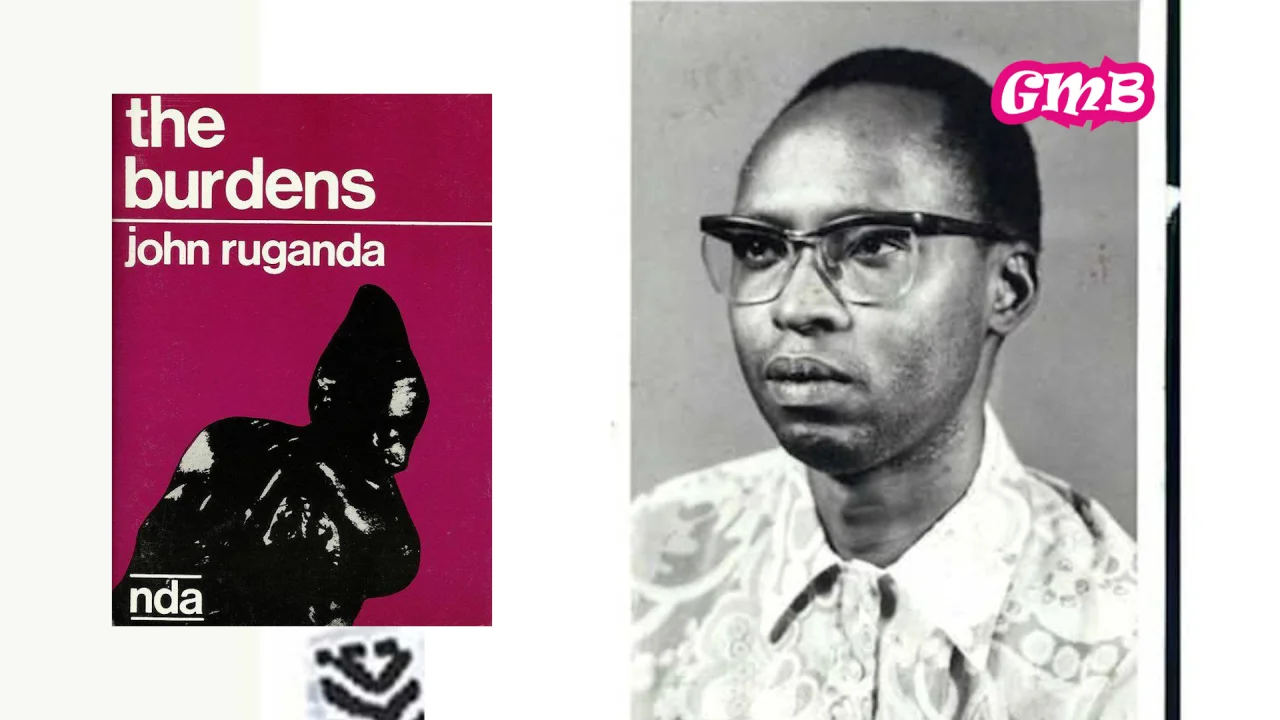
Their home is a battleground of political rants, broken distilling equipment, mock assassinations, fake police raids, and one deeply unfortunate safari bed. This isn’t a reality show. It’s one of the darkest, most brutally honest, and disturbingly funny African plays I’ve ever read.
By the time you finish this story, you realize something unsettling: this is not just a family drama. It’s a story about the burdens we carry inside our homes, our marriages, and our nations — and how power, once it rots, poisons everything it touches.
👉 You can find the same edition of The Burdens by John Ruganda I read here:
Amazon – The Burdens by John Ruganda | GMBooshop - https://godsmercybookshop.com/the-burdens-1367
Of Safari Beds and Second-Hand Dreams
The play opens inside a crumbling living room where poverty isn’t just visible — it’s structural. Cow dung coats the walls. Cobwebs pass for decoration. And at the center of it all sits Tinka, mat-weaving queen and unofficial Minister of Sarcasm.
Life has not been gentle with her.
Her son Kaija, fourteen and already exhausted by adulthood, enters to complain that his nine-year-old sister Nyakake has wet the bed again. But he’s not just reporting domestic disaster — he has a plan. He wants to sell groundnuts so he can save up for his own bed.
That’s how desperate things are.
Outside, dogs sniff around. In this world, that could mean thieves. Or worse — hunger, sickness, disappointment. Kaija even suspects Nyakake may have tuberculosis. Tinka sighs and drops the line that defines their entire existence:
“Were not your father such a heavy drinker, we could take the girl to a proper doctor.”
And just like that, the dragging begins.
Wamala — former Cabinet Minister, now full-time alcoholic and part-time dreamer — becomes the target of a verbal autopsy. Tinka even trains her son on how to roast his own father with surgical precision.
The cruelty stings because it’s true.
Yet this house is not just broke. It’s haunted — by failed ambitions, political betrayal, and a past that refuses to stay buried. When Tinka finally tells a folk story to soothe the children, her bitterness bleeds into every word.
Then Wamala enters, grinning like a victorious general.
He has brought home a second-hand safari bed.
Kaija is ecstatic. Tinka is disgusted.
To Wamala, this bed is proof that he’s still a provider. To Tinka, it’s just another reminder that everything in their lives is used, worn out, and falling apart.
👉 If you’re looking for a powerful African play that captures this kind of domestic tension, this edition is available here:
Amazon – The Burdens (Paperback) | GMBooshop - https://godsmercybookshop.com/the-burdens-1367
Power, Alcohol, and the Ghost of Politics
Wamala refuses to accept his fall from grace. He is still inventing. Still dreaming. Still planning his return.
Two-headed matches. Political slogans. International syndicates.
All rejected. All mocked. All doomed.
When he claims he has made money writing slogans for a rising politician named Vincent, Tinka dismisses it as madness. But this “madness” is Wamala’s last lifeline — the fantasy that he still matters.
Their marriage erupts into violence, insults, and raw confession. He calls her a burden. She agrees. He threatens police. She bleeds. He washes her elbow while ranting about how a man needs peace at home.
The past hangs over them like a curse: their wealth, their scandalous romance, their fall from power. They once had everything. Now they have each other — and not much else.
They go to bed hand-in-hand, not out of love, but exhaustion.
The Speech That Never Was
The next morning, Wamala dresses for a meeting that exists mostly in his head. Borrowed clothes. Borrowed confidence. Borrowed dignity.
He rehearses speeches. Imagines applause. Relives power.
Tinka humors him — then dismantles him.
Their role-play turns vicious. She becomes Vincent: arrogant, patronizing, armed with cigarettes and contempt. When Wamala lashes out at the elite, calling them exploiters and swindlers, “Vincent” responds with the brutal truth of power:
The poor are dispensable.
The moment breaks him.
He smashes her equipment. Grabs her throat. Nearly kills her.
Bootsteps outside trigger his deepest fear — arrest, humiliation, disappearance. He panics. Grabs “Vincent” as a human shield.
It’s his son.
And in that instant, the play exposes its deepest horror: power doesn’t just corrupt leaders — it teaches them to destroy their own children.
And Always Remember…
The final act is quiet, frantic, and devastating.
Tinka packs. Kaija panics. Wamala is gone.
Something happened. Something unspeakable. Tinka refuses to name it. The children sense the truth anyway. Their mother looks older. Scratched. Broken.
When the police knock, Tinka collapses into screams:
“And always remember — it was not my fault!”
The curtain falls on three bodies huddled together — a family shattered beyond repair.
👉 This play is still painfully relevant today. You can read it here:
Amazon – The Burdens by John Ruganda | GMBooshop - https://godsmercybookshop.com/the-burdens-1367
Why The Burdens Still Hurts
On the surface, this is a domestic drama. Beneath that, it’s a merciless political allegory.
Wamala represents the post-independence African elite — idealistic once, powerful briefly, now bitter and hollow. His slogans, speeches, and inventions mirror nations that promised transformation but delivered decay.
Tinka represents the ordinary people — especially women — who carried the real cost of failure. Her bitterness is not cruelty; it is history.
The children are the future. And they are already wounded.
The title says everything.
There are burdens of power, love, betrayal, ambition, and truth.
And the heaviest burden of all is realizing you cannot outrun who you’ve become.
Final Verdict
The Burdens is not an easy read — but it is an essential one.
It is funny in the way despair sometimes is.
It is brutal without being sensational.
And it tells the truth without apology.
This isn’t just a play you read.
It’s a mirror you stand in front of — whether you like what you see or not.
If you care about African literature that confronts power, politics, and the fragile violence of family life, John Ruganda’s The Burdens deserves your time.
👉 If you want to read the same edition I did, you’ll find it here:
Amazon – The Burdens | GMBooshop - https://godsmercybookshop.com/the-burdens-1367