 English
 French
 German
 Russian
 中文
中文

The Desire That Destroys: When Wanting Blue Eyes Becomes a Tragedy
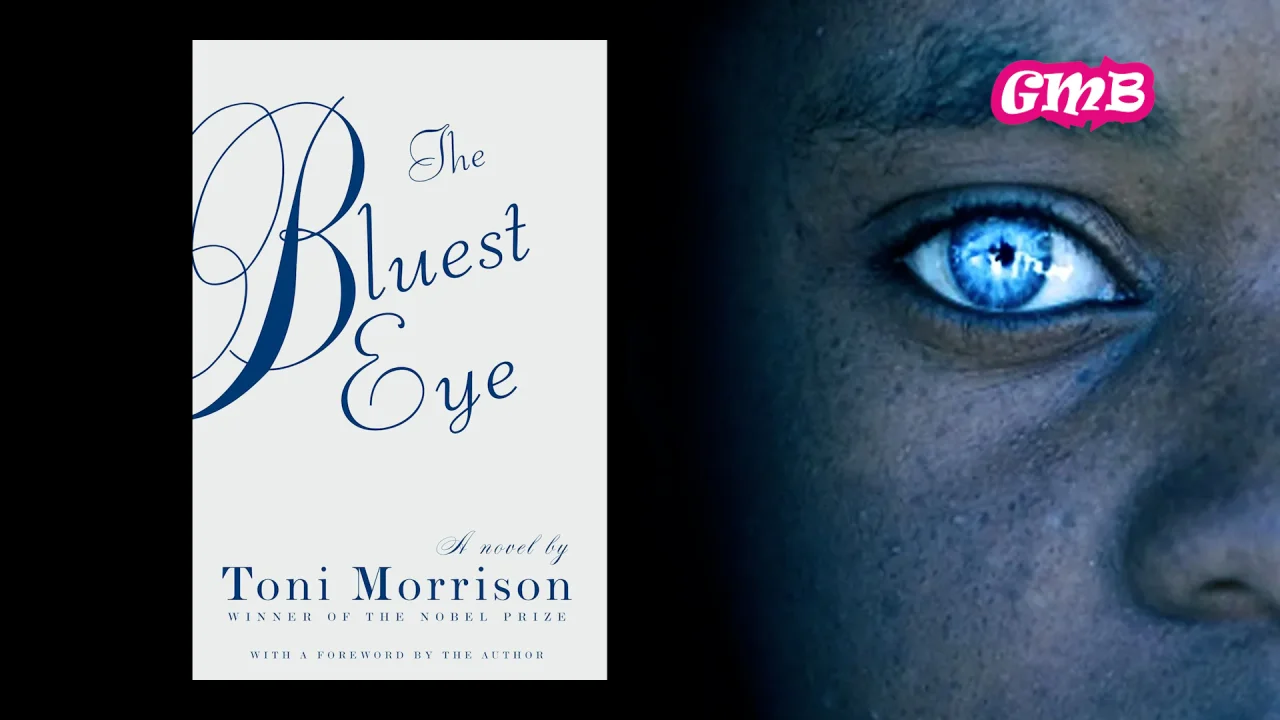
A Wish That Should Never Hurt This Much
There’s something deeply unsettling about watching a child pray.
Not because prayer itself is troubling—but because of what she’s asking for.
While reading The Bluest Eye by Toni Morrison, I kept returning to one haunting thought:
What kind of world makes a child believe she needs different eyes to be loved?
This isn’t just a novel. It’s an emotional experience that lingers long after the final page—quiet, heavy, and impossible to ignore.
👉 The edition I read is available here:
https://amzn.to/4iKTDOb
Summary: A Story About Beauty, Trauma, and Identity
Set in post-Emancipation America, The Bluest Eye follows Pecola Breedlove, an eleven-year-old Black girl who desperately wishes for blue eyes—believing they will make her beautiful, accepted, and worthy of love.
But Pecola’s world is anything but nurturing.
She grows up in a deeply fractured household, surrounded by emotional neglect, generational trauma, and societal rejection. Her parents, Pauline and Cholly Breedlove, carry wounds of their own—pain that spills over into Pecola’s life in devastating ways.
The story is narrated primarily by Claudia McTeer, who reflects on Pecola’s life both as a child and as an adult, offering a layered perspective on innocence, cruelty, and memory.
At its core, the novel explores:
-
The destructive power of beauty standards
-
Internalized racism and self-hatred
-
The impact of trauma across generations
-
The failure of community to protect its most vulnerable
And it does all this without offering easy comfort.
Analysis & Review: A Quietly Devastating Masterpiece
What Works: Morrison’s Unflinching Honesty
Toni Morrison doesn’t just tell a story—she dissects a system.
Pecola’s desire for blue eyes isn’t random. It’s the logical result of a world that constantly tells her she is ugly, invisible, and unworthy. Morrison forces us to confront how these ideas are created, reinforced, and internalized—not just by individuals, but by entire communities.
What makes this novel so powerful is its refusal to simplify.
Cholly, for example, is both a perpetrator and a victim. His actions are horrifying—but Morrison doesn’t let us dismiss him as a one-dimensional villain. Instead, she traces the roots of his trauma, showing how pain mutates when it’s left unhealed.
That complexity runs through the entire book.
Even the community—people who should protect Pecola—ends up using her as a kind of emotional scapegoat. Her suffering becomes a reference point: at least we’re not her.
It’s uncomfortable. But it’s real.
What Might Not Work: The Emotional Weight
This is not an easy book to read.
The pacing is deliberate, sometimes slow. The structure shifts between perspectives. And the subject matter—abuse, neglect, and psychological breakdown—is heavy.
If you’re looking for a fast-paced, plot-driven story, this might feel overwhelming or even exhausting.
But that discomfort is intentional.
Morrison isn’t trying to entertain you—she’s trying to make you see.
Personal Insight: Why This Story Still Hurts Today
What struck me most is how current this 1970 novel feels.
Pecola’s longing for blue eyes might seem specific to her time—but it’s not. Today, the tools have changed, not the desire.
Instead of praying for blue eyes, people chase:
-
Filters
-
Cosmetic surgery
-
Skin-lightening products
-
Hair transformations
The question Morrison asks still echoes loudly:
Why can’t we accept ourselves as we are?
And maybe the more uncomfortable follow-up:
Who taught us not to?
Conclusion & Recommendation: Who Should Read This Book?
The Bluest Eye is not a casual read—it’s a necessary one.
You should read this book if:
-
You’re interested in stories that explore identity and psychological depth
-
You want literature that challenges societal norms
-
You’re willing to sit with discomfort and reflect
This book might not be for you if:
-
You prefer light, uplifting narratives
-
You want clear resolutions and emotional closure
-
You struggle with heavy or disturbing themes
👉 You can find the same edition here:
https://amzn.to/4iKTDOb
Final Thoughts: A Story That Refuses to Let Go
This isn’t a novel you “enjoy” in the traditional sense.
It’s one you endure. One you carry.
The Bluest Eye forces you to confront the quiet violence of beauty standards, the long shadow of trauma, and the devastating consequences of being unseen.
And somehow, through all that pain, Morrison’s writing remains stunningly beautiful—almost poetic in its honesty.
That’s what makes this book unforgettable.
It doesn’t just tell you a story.
It changes how you see the world—and maybe, how you see yourself.
👉 If you’d like to read the same edition I did, here’s the link:
https://amzn.to/4iKTDOb