 English
 French
 German
 Russian
 中文
中文

When Culture Becomes Costume: Reading The Blinkards and The Anglo-Fanti by Kobina Sekyi
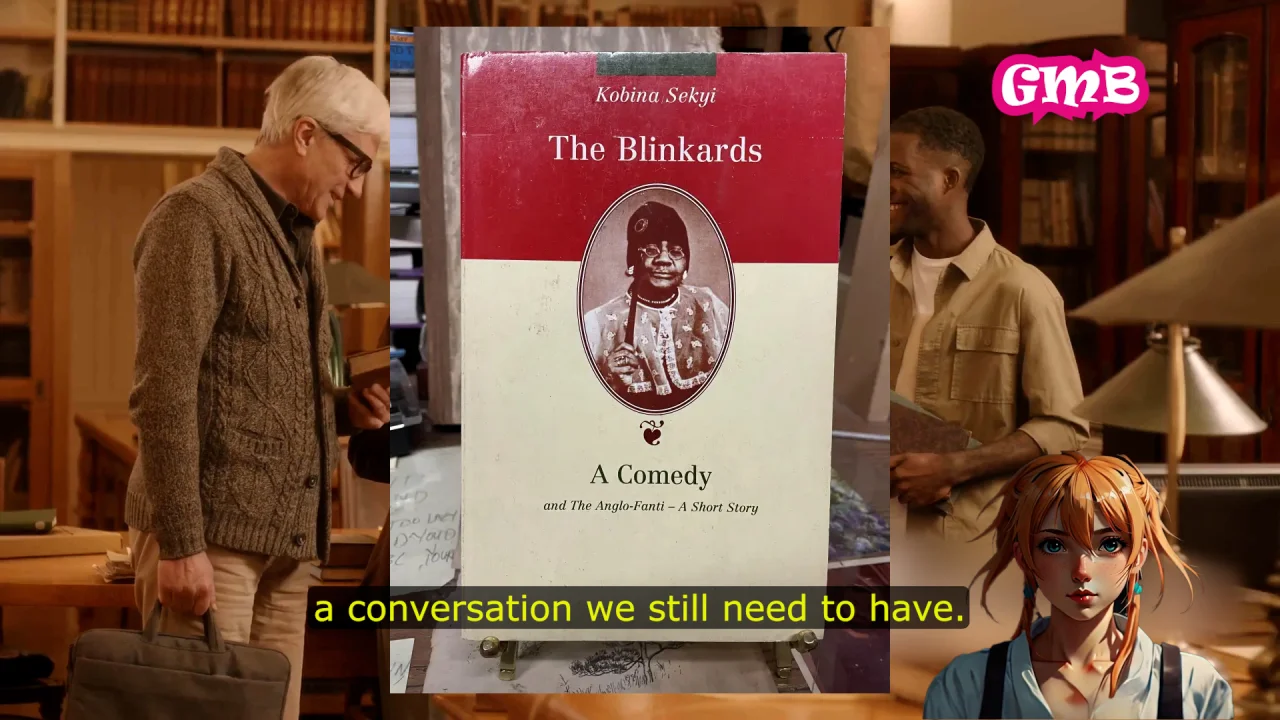
There’s something darkly amusing about watching people abandon themselves in the name of “progress.” Not evolving—erasing. Watching them twist their tongues, wardrobes, and values just to look like something they are not. It’s funny at first. Then it becomes uncomfortable. Then tragic.
That uneasy laughter is exactly what Kobina Sekyi delivers in The Blinkards and The Anglo-Fanti, a slim but devastating book made up of a satirical play and a short story. Written over a century ago, yet painfully current, this book takes aim at blind cultural imitation, colonial psychology, and the quiet violence of self-erasure.
👉 The edition I read is available here:
The Blinkards and The Anglo-Fanti by Kobina Sekyi (Amazon)
What Kind of Book Is This?
This is a satirical, reflective, and quietly angry work about identity under colonial pressure.
-
Genre: Satire / Social Commentary / Early African Literature
-
Tone: Humorous, biting, tragic beneath the laughter
-
Pace: Moderate
-
Themes: Cultural alienation, colonial mentality, identity loss, tradition vs modernity
This book is for readers who:
-
Enjoy satire with teeth
-
Like literature that interrogates power and culture
-
Are interested in African intellectual history
This book is not for readers who:
-
Prefer fast-paced action
-
Need neat moral conclusions
-
Are uncomfortable being questioned
The Blinkards: When “Civilization” Becomes a Performance
You ever meet someone who tries so hard to be foreign that it’s painful to watch? The forced accent. The three-piece suit in 35-degree heat. The refusal to eat local food like it might revoke their passport.
If that person lived in early 1900s Cape Coast, they’d fit perfectly into The Blinkards.
Meet Mrs. Borɔfosɛm: Patron Saint of Overdoing It
Mrs. Borɔfosɛm is the embodiment of colonial aspiration gone wrong. She eats only European food, dresses in full Victorian regalia, and speaks English so unnaturally that even the British would pause. Everything African must go. Everything European must stay—logic optional.
Her husband, Mr. Borɔfosɛm, just wants peace. But peace is not “civilized,” so she forces him into cigars, foreign food, and constant performance.
This is not modernization. It’s cosplay.
Mr. Tsiba’s Fatal Error
Mr. Tsiba, a cocoa farmer, makes one disastrous decision: he sends his daughter, Miss Tsiba, to be trained under Mrs. Borɔfosɛm’s guidance. The result?
-
No local language
-
No local food
-
No independent thought
Miss Tsiba becomes a perfect colonial product—polished, confused, and completely detached.
Romance Without Roots
Miss Tsiba falls for Okadu, a young man equally obsessed with doing things “the English way.” Their engagement happens at a garden party. No family consultation. No tradition. Just imitation.
Because they read about it in an English novel.
The fallout is brutal. A mother dies of shock. A grandmother storms into the chapel and shuts everything down. And when the case reaches court, Native Law wins.
Tradition, it turns out, still matters.
Why The Blinkards Still Hurts (and Still Works)
Sekyi isn’t arguing against education or change. He’s arguing against unthinking imitation.
This play shows how abandoning your culture doesn’t make you modern—it makes you hollow. And a century later, the joke still lands because we still recognize the characters.
We’ve all met a Borɔfosɛm.
The Anglo-Fanti: When the Dream Abroad Turns Into a Nightmare
If The Blinkards is loud satire, The Anglo-Fanti is quieter—and sadder.
Kwesi Onyidzin, who renames himself Edward Cudjoe, grows up believing Africa is backward and Europe is salvation. He studies hard, earns a scholarship, and goes to London to study law.
And then reality arrives.
“It does not take him long to find out that he is regarded as a savage…”
Even the starving man asking him for alms considers himself superior.
That moment changes everything.
Disillusionment Without Escape
Kwesi sees the cracks in the civilization he worshipped. His friends see them too. But instead of questioning the system, they accept the humiliation as the price of being “civilized.”
If you complain, you’re the problem.
Home Is No Refuge
When Kwesi returns to the Gold Coast and begins embracing his culture again, his family is disappointed. They wanted a performance, not authenticity.
His wife becomes another Borɔfosɛm—forcing European habits, hosting garden parties, turning marriage into a civilizing mission.
Kwesi breaks.
Because pretending forever is impossible.
Cape Coast, Colonial Pressure, and Cultural Confusion
Both stories are set in Cape Coast—the first colonial capital of Ghana, a major port, and a center of early anglicization. Names changed. Language shifted. English seeped into daily life.
Sekyi wasn’t writing from a distance. He was criticizing his own society—because he loved it enough to tell the truth.
Kobina Sekyi: The Man Who Saw Through the Illusion
Sekyi himself studied in England. He wore the suit. Spoke the language. Then reality intervened.
After surviving a shipwreck during World War I, a white man told him he had no right to live because he was Black.
That moment shattered the myth.
Sekyi returned not as a colonial admirer, but as a critic—using satire as a weapon against cultural self-destruction.
👉 You can explore his work here:
The Blinkards and The Anglo-Fanti (Amazon)
My Honest Verdict
This is not a comfortable book. But it is an honest one.
What works:
-
Sharp satire
-
Timeless themes
-
Unflinching critique
What may challenge some readers:
-
Dated language
-
Slower narrative style
-
No easy heroes
Still, this book matters. It asks questions we are still afraid to answer.
Final Thoughts
The Blinkards and The Anglo-Fanti isn’t just about colonial Ghana. It’s about what happens when people confuse imitation with progress. When education becomes erasure. When civilization demands self-hatred as the entry fee.
If you believe in selective cultural absorption, in growth without disappearance, in modernity without amnesia—this book will speak to you.
👉 If you’d like to read the same edition I did, you can find it here:
The Blinkards and The Anglo-Fanti by Kobina Sekyi (Amazon)
Read it slowly. Laugh—but pay attention to what makes you uncomfortable. That’s where the truth is hiding.
And whatever you do—don’t be a Blinkard.