 English
 French
 German
 Russian
 中文
中文

The Man Who Could Turn a Pork Bone Into a Lesson About the World
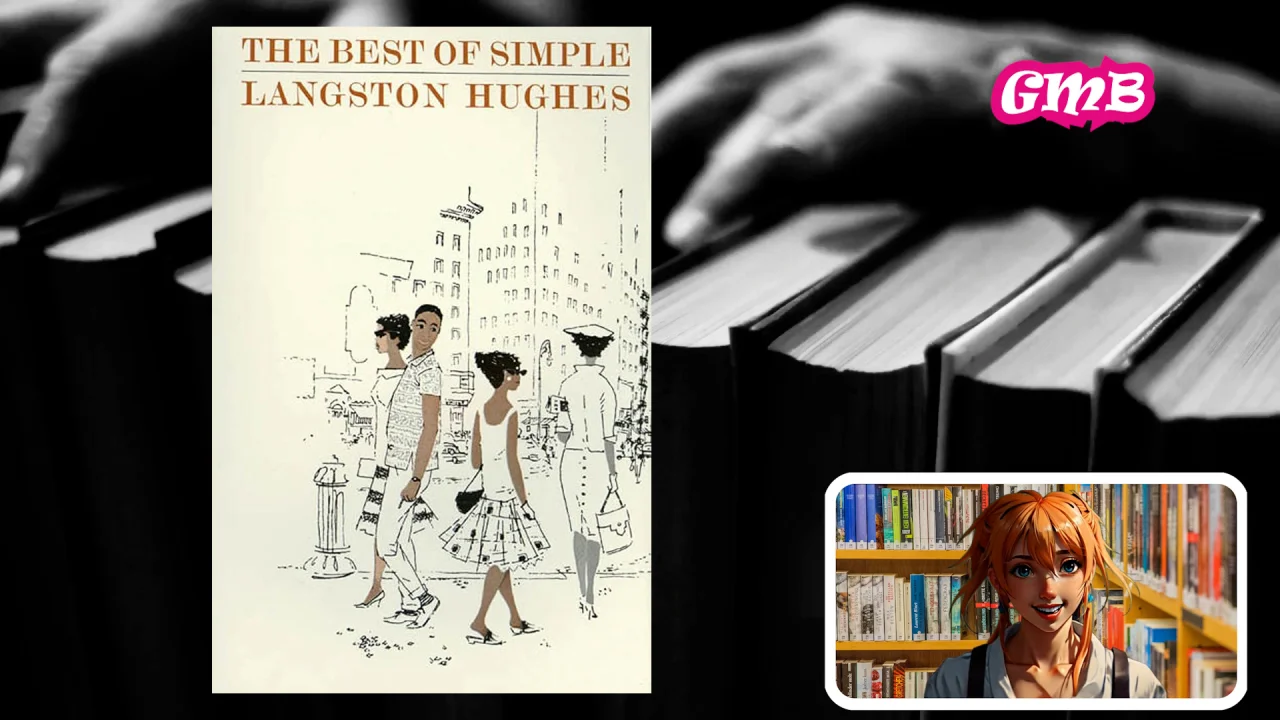
There’s a moment in this book where a simple, almost ridiculous conversation spirals into something much bigger—and I had to pause.
How does a discussion about something as trivial as table manners suddenly become a sharp critique of race, class, and power?
That’s when it hit me: this isn’t just storytelling. This is observation at its most dangerous—because it’s wrapped in humor.
And at the center of it all is a man who refuses to let anything stay “small.”
Welcome to The Best of Simple by Langston Hughes—a book that feels like a casual conversation… until you realize it’s quietly dissecting an entire society.
What Kind of Novel Is This?
This is a literary, conversational, socially reflective collection about what it means to live, think, and survive as an ordinary Black man in segregation-era America.
Tone: Humorous, sharp, reflective
Pace: Fast (short, punchy pieces)
Themes: Race, identity, class, dignity, hypocrisy, survival
This book is for readers who:
-
Enjoy dialogue-driven storytelling that feels alive
-
Like fiction that challenges how they see the world
This book is NOT for readers who:
-
Want a single, continuous plot
-
Prefer action over conversation
👉 The edition I read is available here:
https://amzn.to/4ppit8Q
A Quick Look at the Story (No Spoilers)
This isn’t one long narrative—it’s a collection of about seventy short, interconnected pieces centered on Jesse B. Semple, better known as “Simple.”
He’s an ordinary man in Harlem—working odd jobs, navigating relationships, trying to get by.
But what makes him unforgettable isn’t what he does.
It’s how he thinks.
Through conversations with his friend Joe—who listens, challenges, and occasionally provokes him—Simple turns everyday situations into deeper reflections on segregation, inequality, and identity.
What starts as casual bar talk often ends as something far more uncomfortable: truth.
Why This Book Hits Harder Than You Expect
At first, this book feels light.
Almost too light.
It reads like you’re sitting in a bar, listening to a witty friend rant about life. You laugh. You nod. You enjoy the rhythm of the language.
Then slowly, something shifts.
You realize that behind every joke is frustration. Behind every observation is a system that refuses to change.
That’s what makes The Best of Simple so powerful.
It doesn’t lecture you. It doesn’t dramatize suffering.
It just shows you the absurdity of the world—through a man who sees it clearly and refuses to stay quiet.
And maybe that’s the most unsettling part: how familiar it all feels.
The conversations about inequality, identity, and social climbing don’t feel locked in the past. They echo into the present.
You finish the book not with answers—but with sharper questions.
Analysis & Review
What Works Brilliantly
1. The Dialogue Feels Real
Hughes writes in Harlem street language—unfiltered, rhythmic, alive. You don’t just read these conversations—you hear them.
2. Humor as a Weapon
Simple doesn’t just complain—he dissects. He uses humor to expose contradictions, making hard truths easier to swallow… but impossible to ignore.
3. The Joe–Simple Dynamic
Joe is the perfect counterbalance. He questions, challenges, and grounds the conversation. Without him, the stories might feel like monologues. With him, they become debates.
4. Honesty Without Romanticizing
The book doesn’t idealize anything—not even the Black community itself. It explores internal class divides, identity struggles, and uncomfortable hypocrisies.
Where It Might Not Work for Everyone
1. No Traditional Plot
If you’re looking for a structured storyline with rising action and resolution, this isn’t that book.
2. Repetition of Themes
Because it’s built on conversations, certain ideas resurface often. Some readers might find that repetitive—but others will see it as reinforcement.
3. Language Style
The dialect is intentional and powerful—but it may take a few pages to adjust if you’re not used to it.
Key Themes That Stay With You
-
Race and Inequality: Everyday life under segregation—no exaggeration needed.
-
Identity: The pressure to change, adapt, or “fit in” to survive.
-
Class Divisions: Even within marginalized communities, hierarchy exists.
-
Conversation as Power: Dialogue becomes a way to process and resist.
-
Humor as Survival: Laughter isn’t escape—it’s endurance.
About the Author
Langston Hughes was one of the central voices of the Harlem Renaissance—a movement that reshaped Black artistic expression in America.
He didn’t just write about Black life.
He captured its rhythm, its contradictions, its humor, and its pain.
With Simple, Hughes did something quietly revolutionary:
he made the “ordinary” voice impossible to ignore.
Who This Book Is Perfect For
You’ll enjoy this novel if:
-
You like books that make you think through conversation
-
You enjoy character-driven, idea-rich writing
-
You read fiction for insight, not just escape
You might struggle with this book if:
-
You prefer fast-paced, plot-heavy stories
-
You need clear resolutions
-
You dislike dialect-heavy dialogue
👉 If this sounds like your kind of book, you can get it here:
https://amzn.to/4ppit8Q
My Honest Verdict
This isn’t a perfect book—but it’s an honest one.
And those are rare.
What worked for me was how effortless it felt. The conversations flow so naturally that you don’t realize how much weight they carry until later.
What didn’t fully land was the lack of narrative momentum. At times, I wanted a stronger sense of progression—but that’s not what this book is trying to do.
It’s not telling a story.
It’s building a voice.
And that voice stays with you.
Final Thoughts & Recommendation
I keep thinking about how easily Simple turns the smallest things into something bigger.
A joke becomes a critique.
A complaint becomes a revelation.
A conversation becomes a mirror.
That’s what makes The Best of Simple worth reading.
Not because it entertains you—though it does.
But because it quietly changes how you listen… and how you see.
If you’re the kind of reader who values insight over spectacle, this book will speak to you.
👉 If you’d like to read the same edition I did, here’s the link:
https://amzn.to/4ppit8Q