 English
 French
 German
 Russian
 中文
中文

The Quiet Ache of Power: Why Tales of Tenderness and Power Refuses to Let You Look Away
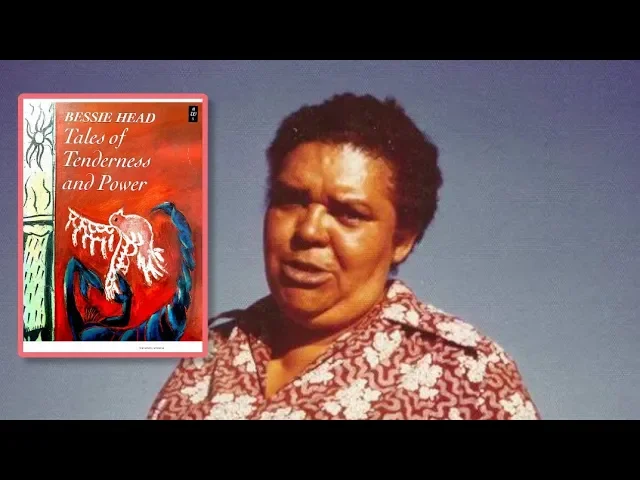
I thought I was just picking up a short story collection. Something light. Something I could dip into and put down.
Instead, I found myself sitting in silence after certain pages—like I had just overheard something deeply private. A confession. A truth people don’t usually say out loud.
The first crack came early, when Bessie Head admits she wants to write about ordinary people—just people—but history won’t let her. That honesty unsettled me. Because you realize, very quickly, this isn’t just storytelling.
It’s resistance.
And once you see that, every story feels heavier. Not in a burdensome way—but in a way that demands you pay attention.
What Kind of Book Is This?
This is a literary, political, and deeply human short story collection about what it means to live under power—and still choose tenderness.
-
Tone: Reflective, quietly intense, sometimes unsettling
-
Pace: Moderate (but emotionally lingering)
-
Themes: Power, identity, colonialism, community, resistance, love, dignity
This book is for readers who:
-
Like fiction that thinks as much as it feels
-
Are drawn to African literature and postcolonial voices
-
Enjoy stories that blur the line between personal and political
This book is NOT for readers who:
-
Want fast-paced, plot-driven narratives
-
Prefer clear heroes and villains
-
Read purely for escape
👉 The edition I read is available here:
Tales of Tenderness and Power on Amazon
Summary (No Spoilers)
Tales of Tenderness and Power is a collection of 21 stories set across South Africa and Botswana.
Rather than one continuous plot, the book offers glimpses into different lives—neighbors in tense townships, prisoners resisting authority, lovers defying tradition, leaders corrupted by power.
Across these stories, a pattern emerges:
-
Communities trying to survive under pressure
-
Individuals caught between tradition and change
-
Systems of power quietly shaping everyday life
At its core, the collection explores a simple but difficult question:
What happens to ordinary human tenderness when it exists inside oppressive systems?
Analysis & Review
1. The Strength: A Rare Kind of Honesty
What makes this book powerful is not dramatic storytelling—it’s truthful seeing.
Bessie Head doesn’t romanticize anything. Not village life. Not politics. Not even resistance.
Instead, she observes.
You feel it in stories like The Prisoner Who Wore Glasses, where intelligence quietly outmaneuvers authority. Or Sorrow Food, where politics becomes less about ideals and more about opportunism.
She doesn’t shout her arguments. She lets them sit with you.
And somehow, that makes them louder.
2. Tenderness vs Power (The Emotional Core)
The title is not poetic decoration—it’s the entire point.
There is tenderness in these stories:
-
People trying to love each other despite social pressure
-
Communities holding themselves together under strain
-
Small acts of kindness that feel almost radical
And then there is power:
-
Laws that decide who belongs and who doesn’t
-
Leaders who forget the people who put them there
-
Systems that turn human beings into categories
What stayed with me most is this:
Power in this book is loud. But tenderness is stubborn.
Even when institutions fail, people don’t entirely lose their humanity. And that tension—between what crushes people and what refuses to die—is what gives this collection its emotional weight.
3. The Weakness: Not Always Easy to Read
This isn’t a “bingeable” book.
Some stories feel more like reflections than narratives. Others end without closure. And if you’re expecting a strong plot in every story, you might feel slightly lost.
But I don’t think that’s a flaw as much as it is a choice.
This is a book you sit with, not rush through.
4. Personal Insight
Knowing Bessie Head’s background changes how you read everything.
Born into apartheid laws. Exiled. Living in poverty in Botswana.
This isn’t imagination—it’s lived experience reshaped into fiction.
And that’s why the stories feel so grounded. So specific. So… real.
You don’t just read them.
You recognize them.
Conclusion & Recommendation
This is not a perfect collection—but it’s an honest one.
And that honesty is rare.
If you’re looking for stories that entertain you, there are easier books. But if you’re looking for stories that stay with you, that quietly challenge how you see power, history, and human dignity—this is worth your time.
👉 If this sounds like your kind of book, you can find it here:
Tales of Tenderness and Power on Amazon
Final Thoughts
I keep going back to that opening desire—to write about people as just people.
This book proves how difficult that is in a world shaped by history. But it also shows why it matters.
Because beneath politics, beneath systems, beneath everything—we are still human.
And maybe that’s the quiet rebellion running through every page of Tales of Tenderness and Power.
👉 If you’d like to read the same edition I did, here’s the link:
Tales of Tenderness and Power on Amazon