 English
 French
 German
 Russian
 中文
中文

Testament of the Seasons by Mawuli Adzei: A Poetry Collection That Struts, Strikes, and Stuns
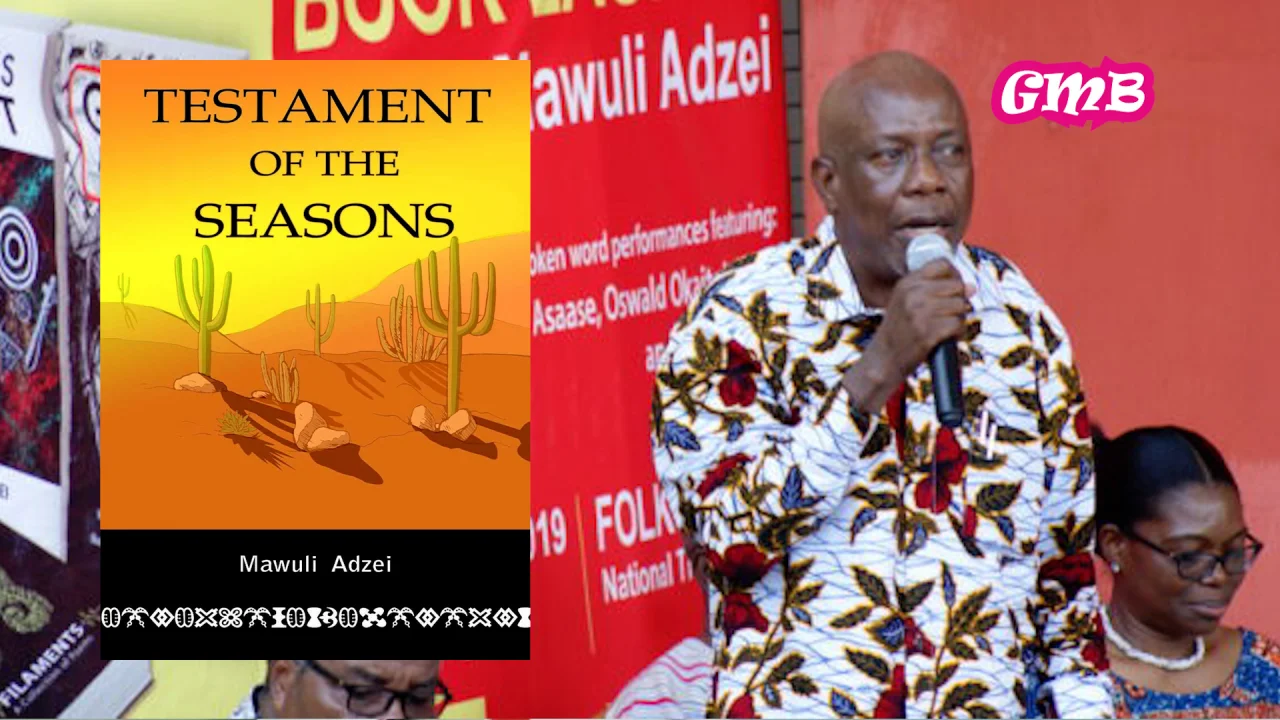
What happens when a poet decides to distill three decades of history, politics, natural disasters, love, death, and even the mystery of the “G-thing” into a single book? The result is Testament of the Seasons, a poetry collection by Ghanaian author Mawuli Adzei that refuses to sit still. From the Arab Spring to the Berlin Wall, from the deserts of Arabia to the slums of Accra, Adzei’s poems leap across continents, histories, and human emotions—all while occasionally making you blush, laugh, or pause in awe.
This is a collection that can take you from a hurricane’s fury to the intimate folds of memory, all in one breath. And yes, there’s literally a poem in here that does a catwalk. Stick with me—it’s a wild ride.
👉 Grab your copy of Testament of the Seasons here on Amazon.
A Journey Through Time, Nature, and Culture
Winds of Change: Revolution and Reality
The collection kicks off with Winds of Change, a section that sweeps you straight into the heart of the Arab Spring. Adzei doesn’t mince words, capturing both the hope and the chaos of uprisings:
“The new dawn stole upon their nightmares / With fire enough to power their adrenalin / Indignation ripe like mangoes.”
Through poems like Dance of the Dinosaurs, tyrants and demonstrators alike face the harsh truths of revolution: power is fleeting, and history rarely rewards the righteous. The imagery is vivid, humorous, and politically sharp—making the poetry feel alive, urgent, and unforgettable.
Arabian Nights: Beauty Amid Struggle
In Arabian Nights, the tone softens. Here, Adzei paints landscapes of Arabian minarets, bustling streets, and music-filled nights. The hope is tangible:
“They embrace the new day / Not with clenched fists anymore / But with open arms and bouquets.”
Even amidst turmoil, he finds moments of beauty that feel almost tangible, reminding us of humanity’s enduring capacity to hope.
Nature’s Fury: Hurricanes, Tsunamis, and Human Resilience
Next comes Nature’s Fury, where Adzei confronts the overwhelming power of natural disasters, from Hurricane Katrina to the Indian Ocean Tsunami. In Kamikaze, waves are almost mythical enemies:
“They’ll come back again and again, these marauding waves / Bearing the anger and swords of malevolent sea gods…”
Yet hope persists: humans, he suggests, can “domesticate storms in calabashes”—a metaphorical flex of resilience and creativity that is as playful as it is profound.
Africa: Complexity, Contradiction, and Power
Adzei doesn’t shy away from Africa’s contradictions. In Madness with a Method, he captures wealth, poverty, violence, and history in a single, searing stanza:
“The gods glower down the deathscapes of the Great Lakes… Leopold’s heirloom of diamond and ivory… This crucible of a continent seething with mysteries…”
From the assassination of Patrice Lumumba to Mobutu’s infamous kleptocracy, his verse is a thesis, a witness, and a mirror for a continent in motion.
Dreams, Liberty, and Memories
In sections like Dreams and Statu(t)es of Liberty, Adzei turns his gaze to America, freedom, and power. The poems interrogate concepts like liberty and human rights while maintaining rhythm, wit, and sharp critique. And in Memories, the personal surfaces, reflecting on birth, survival, and the passage of time with lines like:
“One headstrong spermatozoon / like the proverbial camel / passes through the eye of the needle / leaving millions to die in seminal battlefields.”
This is poetry that makes you pause, think, and sometimes laugh nervously at the audacity of it.
Humor, Desire, and the “G-Thing”
Adzei isn’t all heavy. In Dressed to Kill and Catwalk, he explores sexuality, fashion, and desire with wit and clever imagery:
“Femininity on parade—waspish frames starved to the marrow / shoulder blades carved into sickles / legs chiseled taut in envy of the giraffe and the gazelle.”
It’s provocative, playful, and occasionally scandalous—but always deliberate, blending cultural critique with artful storytelling.
Analysis & Review: Poetry That Punches
Mawuli Adzei writes poetry that moves—literally and figuratively. His use of language is rich and playful, mixing English with Ewe and Akan, bending the language into shapes and rhythms that match the subject matter. Lines in Catwalk strut, lines in Empire form swords—this is poetry as performance.
Strengths:
-
Bold, sweeping themes: politics, nature, African history, sexuality, and memory all find a home here.
-
Inventive language: English is stretched, Ewe and Akan flow seamlessly, and imagery leaps off the page.
-
Structural genius: poems are visual, musical, and kinetic.
Weaknesses:
-
The density of references—historical, political, cultural—may overwhelm casual readers.
-
Some readers might find the frank sexuality and provocative humor challenging.
Personal Insight: This is poetry that demands engagement. It’s not background reading. You read it, experience it, and let it linger. It’s unapologetic, unflinching, and unforgettable.
About the Author: Mawuli Adzei
Mawuli Adzei is a Ghanaian poet and novelist whose work reflects his deep connection to African history, culture, and storytelling. His novel Taboo is another example of his narrative brilliance, and in poetry, he brings the same storyteller’s instinct to every line. He’s a mirror for his people, chronicling the joys, struggles, and contradictions of Africa and the wider world.
👉 Explore more of Mawuli Adzei’s work, including Testament of the Seasons, on Amazon.
Who Should Read Testament of the Seasons
You’ll love this book if:
-
You want poetry that challenges, entertains, and educates simultaneously.
-
You enjoy exploring global politics, history, and African culture through literature.
-
You read poetry to experience rhythm, structure, and play with language—not just escapism.
You might struggle with this book if:
-
You prefer light, conventional poetry focused on love or nature.
-
Dense political and historical references feel intimidating.
-
You dislike open-ended or provocative works.
Final Thoughts
Testament of the Seasons is more than a poetry collection—it’s an experience. From revolutions to hurricanes, from African heritage to intimate humor, Mawuli Adzei delivers a work that walks, struts, dances, and sometimes even winks at the reader. It’s unapologetic, complex, and utterly alive.
If you’re ready for poetry that challenges your worldview, delights your imagination, and refuses to be ignored, Testament of the Seasons is a must-read. Dive in, let it move you, and maybe—just maybe—become obsessed with the minuscule flags of life.
👉 Grab your copy of Testament of the Seasons here on Amazon and experience poetry like never before.