 English
 French
 German
 Russian
 中文
中文

The Dangerous Illusion That Words Alone Can Change the World
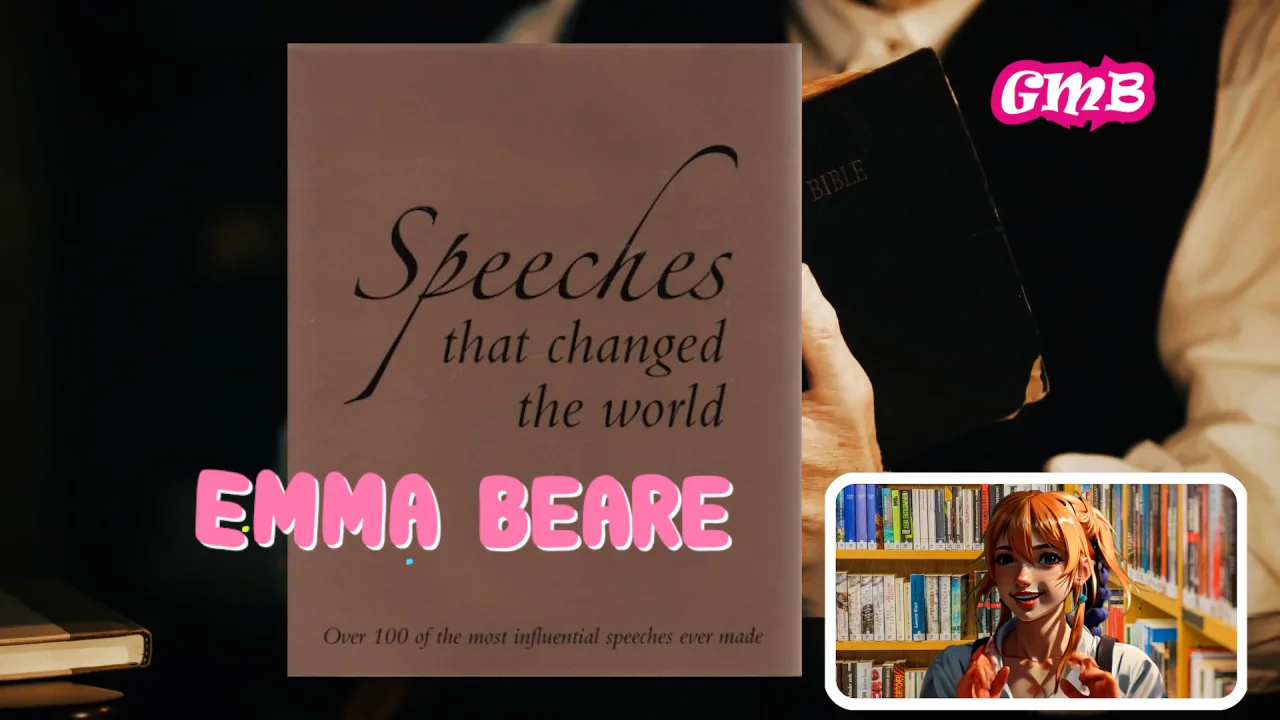
I remember pausing halfway through this book and thinking: Do words really change anything… or do we just like believing they do?
There’s something intoxicating about a powerful speech. A few sentences, delivered at the right moment, and suddenly history feels like it’s bending. You can almost hear the crowd holding its breath.
But as I kept reading, that feeling started to shift. Some speeches felt monumental. Others… felt like echoes that never quite left the room they were spoken in.
And that tension is exactly what makes Speeches That Changed the World such an interesting — and slightly frustrating — reading experience.
What This Book Is About
Edited by Emma Beare and published in 2006, Speeches That Changed the World is a curated collection of historic speeches, declarations, and influential words from across time.
👉 The edition I read is available here:
https://amzn.to/4ppit8Q
The book is organized into ten themed sections, including:
-
Ancient History
-
Love
-
Religion
-
Science
-
Patriotism
-
Philosophy
-
Humanity and Liberty
-
Sport
-
Politics
-
War
It brings together voices as varied as John F. Kennedy, Albert Einstein, Nelson Mandela, Adolf Hitler, and Karl Marx — which makes for a reading experience that feels like an impossible dinner party of history’s most influential (and controversial) voices.
At just under 200 pages, it’s designed to be accessible. Speeches are often trimmed to keep them readable, making this more of a sampler than a deep dive.
A Quick Summary (No Spoilers)
This isn’t a story-driven book — it’s a collection.
Each entry presents a speech or excerpt that supposedly had a significant impact on history. Some truly reshaped the world — like Kennedy’s call to reach the moon — while others are included more for their rhetorical power or cultural significance.
The core idea here isn’t plot, but influence:
-
How words inspire action
-
How language shapes belief
-
And how history decides which voices matter
Analysis & Review: Where the Book Shines — and Falls Short
1. The Power of Words (At Its Best)
At its strongest, this book reminds you why speeches matter.
Reading Kennedy’s moon speech, you don’t just see ambition — you feel momentum. It’s one of those rare moments where language didn’t just describe the future… it helped create it.
The same goes for figures like Martin Luther King Jr., whose words carry emotional and moral weight that still resonates today.
These moments justify the book’s title.
2. But “World-Changing” Is Doing a Lot of Work
Here’s where things get complicated.
Not every speech in this collection feels like it changed the world. Some feel more like they briefly stirred emotions rather than reshaped reality.
There’s a difference between:
-
Words that inspire action
-
And words that simply sound powerful
The book doesn’t always make that distinction clear.
3. A Noticeably Western Lens
This is probably the book’s biggest weakness.
For a collection that claims to represent world-changing speeches, it leans heavily toward Western voices. Beyond Mandela and F. W. de Klerk, African perspectives are almost absent.
And it makes you wonder:
Who decides which voices “changed the world”?
Because history, as this book quietly reveals, is often selective.
4. Lack of Context Hurts the Impact
Another missed opportunity is the lack of context.
You read a speech… and then you move on.
But questions linger:
-
What did this speech actually do?
-
Did it spark change, or just reflect it?
-
Did it influence policy, culture, or nothing at all?
Even a short explanation after each entry would have deepened the experience significantly.
5. Still, It’s a Great Starting Point
Despite its flaws, the book does something valuable:
it sparks curiosity.
You’ll find yourself wanting to:
-
Look up full speeches
-
Explore historical contexts
-
Question the narratives you’ve been taught
And in that sense, it succeeds — not as a definitive collection, but as an invitation.
Why This Book Feels Relevant
What stayed with me after finishing this book wasn’t any single speech.
It was a question:
Do words change the world — or do people change the world using words as tools?
Because this collection shows both sides:
-
Moments where language ignited real transformation
-
And moments where it simply sounded important
In today’s world — where speeches, tweets, and statements travel instantly — that distinction feels more important than ever.
Final Thoughts & Recommendation
This isn’t a perfect book — but it’s an interesting one.
It works best as a gateway, not a conclusion. A starting point for readers who want to explore the power of language without diving into dense historical texts.
👉 If you’d like to read the same edition I did, here’s the link:
https://amzn.to/4ppit8Q
You’ll enjoy this book if:
-
You’re curious about history and influential figures
-
You like bite-sized, thought-provoking reads
-
You enjoy exploring ideas rather than following a story
You might struggle with it if:
-
You want deep historical context
-
You’re looking for a truly global perspective
-
You prefer narrative-driven books
In the end, this book left me with a quiet realization:
Words matter — but not all words carry the same weight.
And sometimes, what we call “world-changing” says just as much about us… as it does about history.