 English
 French
 German
 Russian
 中文
中文

Our Husband Has Gone Mad Again — And Honestly, He Has
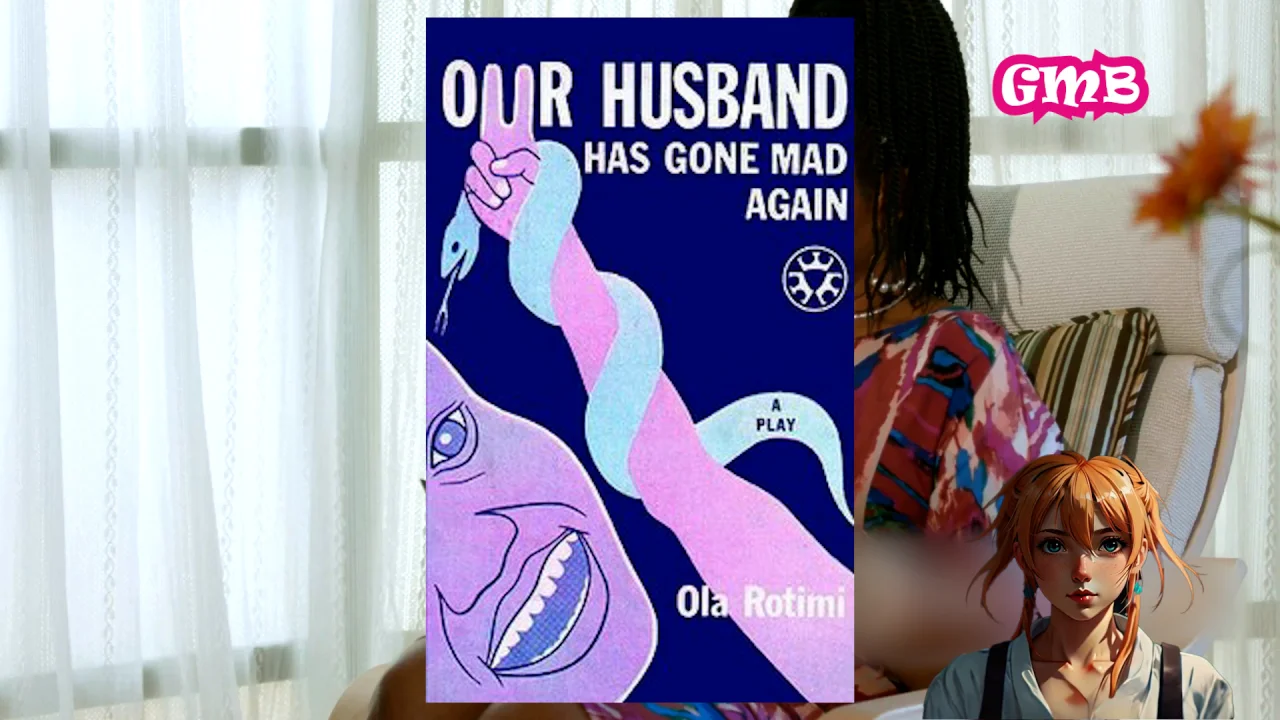
There are book titles that whisper.
And then there are book titles that grab you by the collar and say, “Sit down. You’re reading this.”
That’s exactly what happened to me with Our Husband Has Gone Mad Again by Ola Rotimi. I hadn’t even opened the book yet, and I was already smiling. A title like that promises chaos, comedy, and a little bit of truth hiding behind laughter—and Ola Rotimi delivers on all three.
This is one of those books you start for fun and finish realizing it had a lot more to say than you expected.
What Kind of Book Is This?
This is a satirical stage play about marriage, politics, power, and cultural transition in post-independence Nigeria.
Tone: Humorous, sharp, playful
Pace: Fast and lively
Length: Short (just 86 pages)
Themes:
-
Tradition vs modernity
-
Gender roles
-
Political opportunism
-
Love versus power
This book is for readers who:
-
Enjoy African comedy with depth
-
Love social satire wrapped in laughter
-
Appreciate short, impactful reads
This book is not for readers who:
-
Prefer long, plot-heavy novels
-
Dislike plays or stage directions
-
Need everything to be serious and solemn
👉 The edition I read is available here:
Our Husband Has Gone Mad Again on Amazon
Meet the Man Who Has Truly Lost Control
At the center of the madness is Major Lejoka-Brown—a retired soldier who decides that politics is his next big mission… despite barely understanding how it works.
He also happens to have three wives:
-
Lizzy, the educated wife studying medicine in America—modern, outspoken, and blissfully unaware that she’s not alone.
-
Mama Rashida, inherited after the death of Lejoka-Brown’s older brother, because tradition demands it.
-
Sikira, the political wife—married not for love, but for votes, thanks to her powerful mother, leader of the market women’s union.
Everything is chaotic, but manageable—until Lizzy comes home unannounced, believing she’s returning to a monogamous marriage.
She is not.
When Comedy Turns Into Cultural Commentary
One of the funniest—and smartest—things Ola Rotimi does is use Lizzy as a symbol of change.
She laughs with her husband.
She teases him.
She chases him around the house playfully.
And this completely breaks the system.
Sikira, raised with traditional expectations of how a wife should behave, is horrified. This is not submission. This is not silence. This is not how an African wife is supposed to act.
At one point, overwhelmed and confused, Sikira runs away screaming:
“Our husband has gone mad again!”
That line isn’t just funny—it’s the heart of the play. It captures the shock of tradition colliding with modernity inside the most intimate space of all: the home.
Politics, Power, and a Very Bad Campaign Strategy
Yes, this is a comedy—but it’s also sharp political satire.
Lejoka-Brown’s political ambitions are built on shallow alliances and empty slogans. His marriage to Sikira is nothing more than a transaction: votes in exchange for a husband. And as the play unfolds, it becomes clear that he understands power far better than responsibility.
Ola Rotimi gently mocks post-independence Nigerian politics, showing how authority can be loud, confident, and completely hollow at the same time.
And yet, the play never feels bitter. It laughs with society, not just at it.
A Surprisingly Human Transformation
What surprised me most is how Lejoka-Brown actually changes.
At the start, he’s the stereotype: loud, proud, authoritarian, emotionally clueless. But Lizzy’s presence forces him to confront something deeper—what he actually wants versus what he thinks he’s supposed to want.
By the end, he makes a choice that feels genuinely human. He lets go of political ambition and chooses love instead.
It’s not a perfect redemption—but it’s an honest one.
A Quick Note on Reading a Play
One thing worth mentioning: this is a play, not a novel.
That means you’ll encounter stage directions like “spoken off-stage” or “moves toward the window.” At first, it can interrupt the flow if you’re not used to reading plays.
But honestly? It just made me wish I could see it performed live.
👉 If you’re curious to experience it yourself, you can find it here:
Buy Our Husband Has Gone Mad Again on Amazon
Why This Story Still Matters
This play isn’t just about one man with too many wives.
It’s about:
-
African families evolving
-
Old traditions being questioned
-
Women claiming agency
-
Power being exposed as fragile
Most of all, it asks a quiet question beneath all the laughter:
What happens when society changes faster than the people trying to control it?
That question still feels very relevant today.
My Honest Verdict
This isn’t a perfect book—but it’s a joyful, insightful, and incredibly smart one.
What worked:
-
Sharp humor
-
Memorable characters
-
Cultural depth packed into a short read
What didn’t (slightly):
-
Adjusting to stage directions if you’re new to plays
And yet, I still wholeheartedly recommend it.
👉 If this sounds like your kind of book, here’s the same edition I read:
Our Husband Has Gone Mad Again – Amazon
Final Thoughts
Ola Rotimi understood something crucial: laughter opens doors that seriousness can’t.
Our Husband Has Gone Mad Again makes you laugh first—and then quietly makes you think about marriage, power, gender, and change long after you’ve closed the book.
If you enjoy African literature that entertains without talking down to you, this one is absolutely worth your time.
Happy reading