 English
 French
 German
 Russian
 中文
中文

Smouldering Charcoal by Tiyambe Zeleza: A Darkly Funny Portrait of Poverty, Corruption, and Manhood
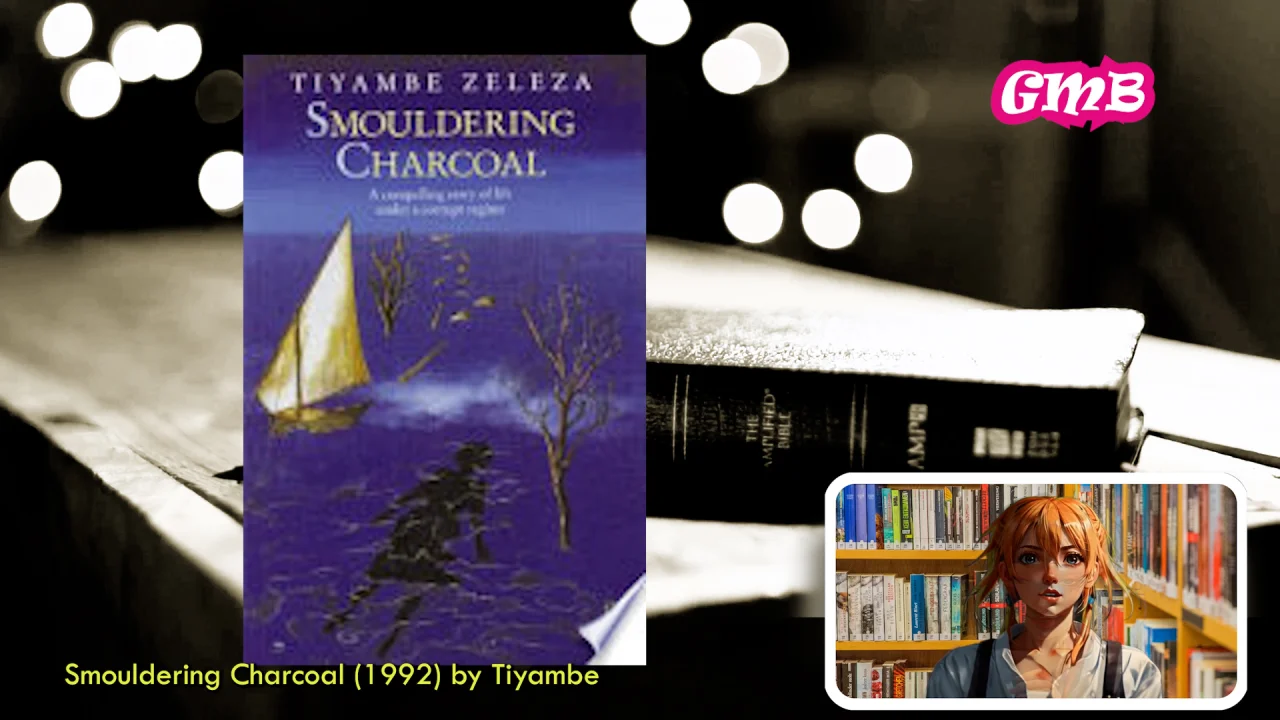
Living in a Country of Broken Promises
Imagine walking through a city where every street corner whispers poverty, every billboard shouts “development,” yet the only thing growing is the government’s talent for excuses. Now layer on top of that a society where most men are drunk, abusive, or painfully incompetent—and you’re halfway into the world of Smouldering Charcoal by Tiyambe Zeleza.
This isn’t just a novel about hardship—it’s a darkly humorous, frustrating, and occasionally tragic exploration of life under post-independence African governance. Zeleza doesn’t shy away from depicting corruption, societal decay, and human folly, and the result is a story that’s as uncomfortable as it is unforgettable.
👉 You can find the edition I read on Amazon here.
Two Worlds, Two Couples
The story centers on two households in an unnamed African country, representing starkly contrasting realities.
On one side, we have Chola and Catherine, middle-class intellectuals. Chola is a journalist, a “been-to” who studied abroad and returned with lofty ideas about justice and accountability. His editor, however, is unimpressed by his activist-style reporting. Catherine, a sharp university student, is equally intelligent and determined not to be confined by societal expectations. Together, they embody hope, ambition, and the desire for change—but their relationship is tested by impatience, differing worldviews, and the oppressive society around them.
Miles away, we meet Mchere and Nambe, whose lives are dominated by poverty, domestic violence, and endless struggle. Mchere is irresponsible and violent, yet occasionally bursts into moments of heroism. Nambe, burdened with children and a husband who undermines her at every turn, shows resilience in the face of relentless adversity. Their story is one of despair, survival, and the absurdities of everyday life in a country where corruption is routine.
Through these two households, Zeleza explores themes of poverty, corruption, gender dynamics, and the tension between hope and despair.
A Novel That Oscillates Between Tragedy and Comedy
Smouldering Charcoal is as much about the ridiculous as it is about the tragic. From a husband who botches his wife’s small business venture to a cheating man caught by the cunning alliance of his wife and girlfriend, the book is full of moments so absurd they’re almost comic—if they weren’t also heartbreaking.
Chola’s journalistic pursuits eventually bring him face-to-face with Mchere, linking the lives of the educated middle class and the struggling poor. Meanwhile, Nambe’s life spirals into violence and vengeance when her son is injured and her community fails to support her. The story escalates to prison, activism, and political crackdowns, culminating in tragedy, exile, and a sense of unresolved tension.
It’s a novel where no one is safe from despair—but Zeleza balances darkness with dry, ironic humor that makes the pain strangely compelling.
Themes and Social Commentary
At its core, Smouldering Charcoal is a critique of post-independence African governance. Zeleza examines:
-
Corruption and “development”: Prestige projects take precedence over basic needs.
-
Gender dynamics: Men are depicted almost universally as selfish or violent, while women navigate survival, agency, and occasional heroism.
-
The human cost of poverty: From leaky huts to underpaid labor, the novel doesn’t flinch in showing how ordinary people suffer.
-
The role of civil society: Journalists, workers, and community members struggle against oppressive systems that value bureaucracy over life.
However, this focus on negative portrayals of men can feel heavy-handed. While the social critique is important, the near-uniform misrepresentation of male characters risks turning the novel into a caricature of “manhood gone wrong.”
What Works—and What Doesn’t
Strengths:
-
Vivid depiction of poverty and corruption—Zeleza’s imagery makes you feel the despair of Njala.
-
Dark humor that exposes human absurdity in a tragic context.
-
Themes that resonate with post-independence African literature, comparable to works like Ayi Kwei Armah’s The Beautyful Ones Are Not Yet Born and Ngugi wa Thiong’o’s A Grain of Wheat.
Weaknesses:
-
Almost every male character is a stereotype: drunk, abusive, or selfish.
-
Structural flaws, including rushed endings and unlikely plot developments.
-
Occasionally heavy-handed social commentary that overshadows character complexity.
Ultimately, it’s a novel that is provocative, even infuriating, but hard to ignore.
About the Author
Tiyambe Zeleza is a Malawian historian, academic, and writer with a diverse body of work spanning fiction, essays, and scholarly publications. While Smouldering Charcoal is his best-known novel, Zeleza’s influence lies primarily in his critical studies on African history, politics, and the diaspora. His dual perspective as both intellectual and novelist informs the novel’s mix of social commentary and storytelling.
Who Should Read Smouldering Charcoal
You’ll appreciate this novel if you:
-
Enjoy post-independence African literature and social critique.
-
Don’t mind morally flawed or exaggerated characters.
-
Want a story that blends dark comedy with political commentary.
You might struggle with it if you:
-
Prefer subtlety in social critique.
-
Dislike one-dimensional depictions of gender.
-
Need a tightly plotted or fast-paced story.
👉 Check out the latest edition on Amazon here.
Final Thoughts
Smouldering Charcoal is a challenging read, unafraid to depict the failures of leadership, society, and human behavior. It’s at once tragic, absurd, and occasionally unintentionally funny. The novel captures the oppressive weight of poverty, the hopelessness of corruption, and the complexity of survival in a society that often fails its citizens.
For me, the book’s overemphasis on villainous men and structural inconsistencies held it back. Yet, as a piece of African literary history, it remains compelling—a snapshot of the post-independence disillusionment that shaped many writers of the era.
If you can embrace its flaws, Smouldering Charcoal offers a raw, unfiltered view of a society struggling with its ideals versus its reality—one darkly humorous page at a time.