 English
 French
 German
 Russian
 中文
中文

She Was Searching for a Man — But Found a System Rotting Beneath Her Feet
Have you ever had someone disappear on you?
No goodbye. No closure. No dramatic final argument. Just… silence.
Now imagine that silence stretching beyond a relationship. Imagine it swallowing a city, a workplace, even your sense of self. That’s the feeling that lingered with me while reading Searching. Not sadness exactly. Not even anger.
More like being slowly erased.
This is one of those books that creeps into your thoughts long after you close it. I kept asking myself: Was he ever real? Or was she just trying to survive in a world that makes women invisible?
What Kind of Novel Is This?
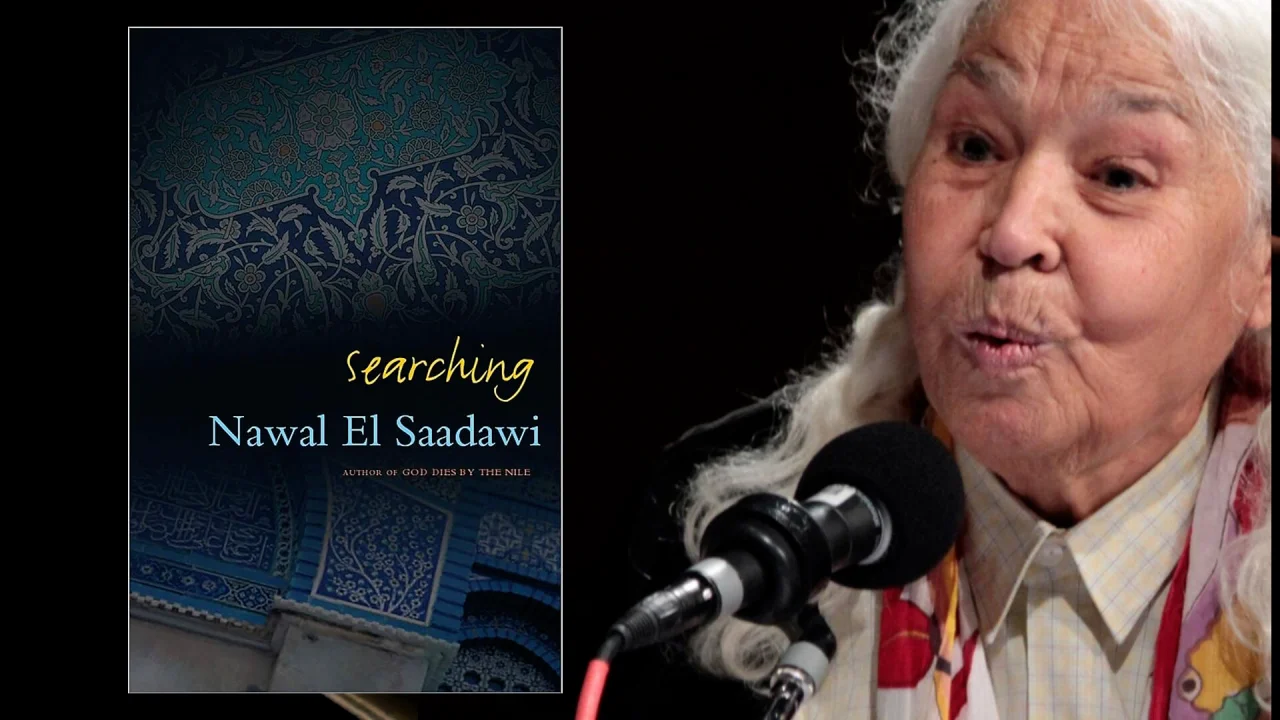
Searching by Nawal El Saadawi is a psychological, political, and feminist novella about absence — the absence of love, of purpose, of justice, of change.
Tone: Dark, ironic, quietly disturbing
Pace: Slow and internal
Themes: Patriarchy, stagnation, bureaucracy, invisibility, existential despair
This book is for readers who:
-
Like introspective fiction that feels claustrophobic on purpose
-
Enjoy political allegory disguised as personal drama
-
Don’t mind ambiguity
This book is NOT for readers who:
-
Need fast-paced plots
-
Want clear answers
-
Prefer tidy endings
👉 The edition I read is available here:
Searching by Nawal El Saadawi (Amazon)
Why This Story Matters (The Emotional Core)
On the surface, this is a story about a woman looking for her missing boyfriend.
But that’s not really what it’s about.
Fouada is a trained chemist working at the Ministry of Biochemistry — a place that sounds impressive until you realize it functions as a graveyard for ambition. She does nothing. Day after day. Paid to exist. Paid to disintegrate quietly.
She believes she “could not live and die without the world changing at all.”
But everything around her is designed to ensure she does exactly that.
When Farid — the one bright spot in her routine — disappears without explanation, the search begins. But the more she looks, the less certain she becomes that she ever truly knew him. She doesn’t know his full name. His family. His work.
Just a restaurant. A five-digit phone number. And a feeling.
Then the restaurant is demolished by the municipality.
In its place? A wall with the municipal name stamped across it like a bureaucratic gravestone.
Love replaced by concrete. Memory replaced by administration.
That moment hit me harder than I expected.
Because this isn’t just about one woman losing one man.
It’s about how systems erase people. How institutions flatten desire. How hope can be quietly bulldozed and replaced with official signage.
And what terrified me most? Fouada begins to doubt her own reality. Did Farid exist? Or was he something she created to survive the suffocating stillness of her life?
That question lingers long after the final page.
A Glimpse of the Story (No Spoilers)
Fouada lives in Cairo. She works in a ministry that does nothing. She meets a man every Tuesday. He disappears.
She searches for him across streets, buses, phone lines, and memories — only to realize she might be searching for something much larger: meaning, identity, resistance.
As her search deepens, her world collapses piece by piece — professionally, personally, psychologically.
That’s the setup.
Everything else is tension.
The Grotesque Men — And Why They Matter
One thing that stands out immediately is how men are portrayed in this novella.
Fouada’s father is described with brutal, almost comedic disgust — filthy handkerchief, loud nose-blowing, flooding bathrooms, coughing and spitting. It’s exaggerated, almost absurd.
Then there’s the Director at the Ministry — emerging from his car limb by limb, his head gleaming in the sun, his body moving like a malfunctioning machine.
And Saati, the landlord — reptilian, bird-legged, frog-eyed.
None of these men feel fully human.
And that’s deliberate.
They are embodiments of rot. Authority without dignity. Power without substance. Patriarchy as grotesque theater.
The only exception is Farid — and he may not even exist.
That irony is sharp.
Who This Book Is Perfect For
You’ll enjoy this novel if:
-
You like books that make you uncomfortable in quiet ways
-
You appreciate symbolism more than plot
-
You read fiction to understand systems, not escape them
You might struggle with this book if:
-
You prefer clearly defined heroes and villains
-
You need romantic closure
-
You dislike open-ended interpretations
👉 If this sounds like your kind of book, you can get it here:
Searching by Nawal El Saadawi (Amazon)
About the Author
Nawal El Saadawi was not just a novelist. She was a physician, public health director, and one of the Arab world’s most fearless feminist voices.
Born in Kafr Tahla, Egypt, she qualified as a doctor in 1955 and later became Director of Public Health. Her outspoken critiques of patriarchy, religious extremism, and state oppression cost her dearly. She was dismissed from her government position. In 1980, she was imprisoned under the regime of Anwar Sadat.
But she did not stop writing.
Her nonfiction work Women and Sex caused controversy across the Arab world. Her fiction continued to challenge structures of power. Searching, first published in 1968 and translated into English in 1991 by Shirley Eber, is part of that legacy.
You feel her defiance on every page.
My Honest Verdict
This isn’t a pleasant read.
There were moments I felt suffocated. Moments I wanted more balance in the character portrayals. The male caricatures can feel heavy-handed.
But this isn’t a novel trying to be balanced.
It’s a protest.
And protests are rarely polite.
What worked:
-
The symbolism
-
The psychological unraveling
-
The tight, compressed intensity
What didn’t:
-
Some exaggerations feel repetitive
-
The emotional distance can be draining
Still — I recommend it.
Because it’s honest.
And honest books are rare.
Final Thoughts & Recommendation
Searching is a small book that echoes loudly.
It asks what happens when a woman’s intelligence is wasted. When love disappears without explanation. When institutions slowly erase individuality. When hope is demolished and replaced with concrete.
If you’ve ever felt invisible in a system that doesn’t care whether you thrive or fade away, this novella will resonate.
It’s not light reading. But it is necessary.
👉 If you’d like to read the same edition I did, here’s the link:
Searching by Nawal El Saadawi (Amazon)
And when you finish it, ask yourself:
Was Farid real?
Or was he the last fragile thing holding her together?
Sometimes, searching is not about finding someone.
It’s about realizing what the world has taken from you.