 English
 French
 German
 Russian
 中文
中文
The Novel That Made Me Question Whether Life Has a Plot at All
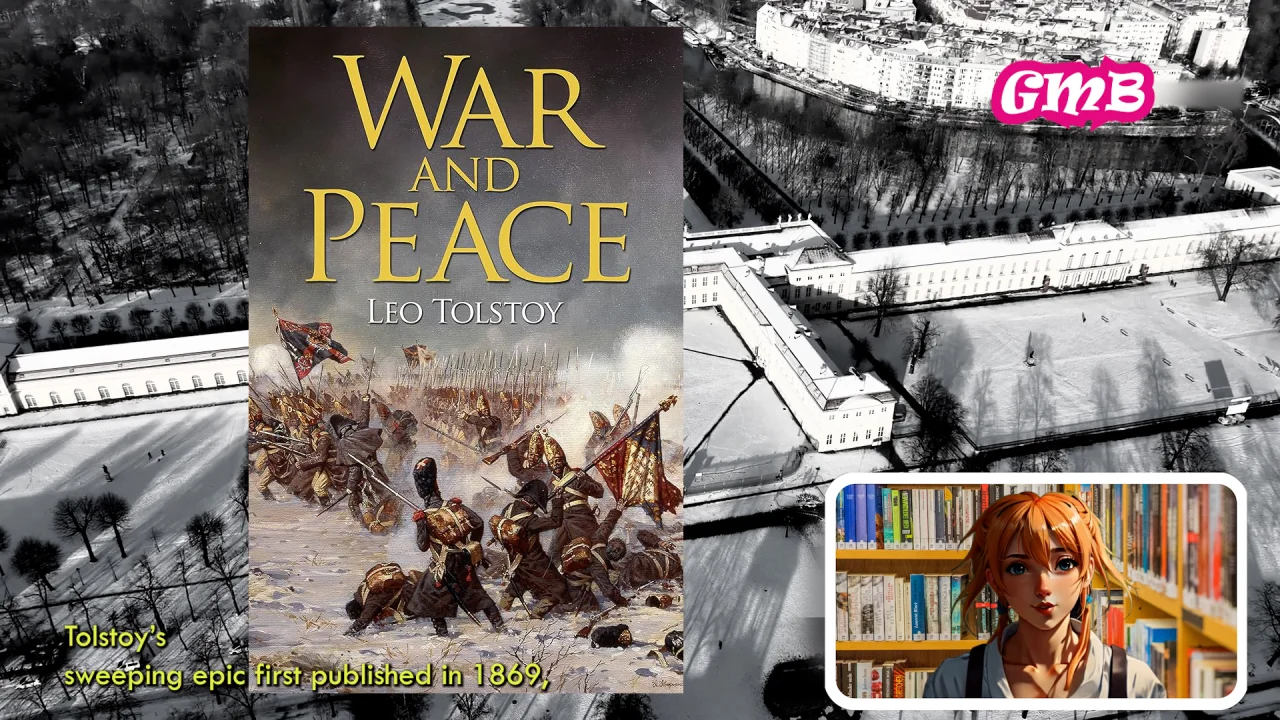
I remember pausing halfway through this book—not because I was tired, but because I suddenly felt small.
Not in a bad way. Just… aware.
Aware that while I sit here trying to plan my life, control outcomes, make sense of everything—life itself might just be unfolding in ways I’ll never fully understand. And somehow, a novel written in 1869 made that realization hit harder than anything modern.
That novel is War and Peace by Leo Tolstoy.
And yes—it’s massive. Intimidating. Almost absurdly long.
But strangely… it’s also one of the most human books I’ve ever read.
What Kind of Novel Is This?
This is a historical, philosophical, deeply reflective novel about how people search for meaning in a world they don’t control.
Tone: Reflective, emotional, occasionally philosophical
Pace: Slow to moderate (with bursts of intensity)
Themes: Free will vs fate, love, war, identity, meaning, forgiveness
This book is for readers who:
-
Enjoy novels that make them think more than they entertain
-
Are curious about life’s deeper questions
This book is NOT for readers who:
-
Need fast-paced, plot-driven storytelling
-
Prefer clear resolutions and simple characters
👉 The edition I read is available here:
https://amzn.to/4rN1Qpe
Why This Story Matters (Emotional Core)
What stayed with me after finishing War and Peace wasn’t a specific battle or dramatic moment.
It was a feeling.
A quiet, unsettling realization that maybe life doesn’t follow a clean narrative. That maybe we’re all just like Pierre—searching, guessing, hoping we’re making the right choices… without ever really knowing.
Tolstoy challenges something we rarely question: the idea that great people shape history.
Instead, he suggests something almost uncomfortable—that history is chaos. That it’s built on thousands of small, random, human decisions. That even the most powerful people are just… reacting.
And that hit hard.
Because it means control might be an illusion.
But strangely, there’s comfort in that too.
Through Pierre’s confusion, Natasha’s mistakes, and Andrey’s disillusionment, Tolstoy keeps returning to one quiet truth: meaning isn’t something you find once—it’s something you stumble toward, imperfectly.
This book doesn’t give answers.
It sits with the questions.
And refuses to let you ignore them.
A Glimpse of the Story (Minimal, No Spoilers)
At its core, War and Peace follows several aristocratic families in Russia during the Napoleonic Wars.
There’s a man who inherits immense wealth but has no idea what to do with his life.
A soldier who goes to war searching for purpose—and comes back disillusioned.
A young woman whose impulsive choices nearly destroy her future.
All of this unfolds against the backdrop of war, where nations clash—but individuals quietly break, change, and rebuild.
It’s not just a story of conflict.
It’s a story of people trying to understand who they are… while the world refuses to slow down.
Who This Book Is Perfect For
You’ll enjoy this novel if:
-
You like books that explore existential questions
-
You enjoy rich, character-driven storytelling
-
You read fiction to reflect, not just escape
You might struggle with this book if:
-
You prefer quick, plot-heavy reads
-
You want clear heroes and villains
-
You dislike philosophical detours
👉 If this sounds like your kind of book, you can get it here:
https://amzn.to/4rN1Qpe
My Honest Verdict
This isn’t an easy novel.
And honestly—it’s not trying to be.
What worked for me was the depth. The way Tolstoy writes characters who feel painfully real. People who make bad decisions, regret them, grow… or don’t.
Pierre, especially, feels timeless. His confusion about life, purpose, identity—it all feels like something you could hear from someone today.
But not everything works.
The philosophical sections can feel heavy. At times, it feels like the story pauses so Tolstoy can lecture you about history. And depending on your patience, that can either be brilliant… or exhausting.
Still—
This isn’t a perfect novel. But it’s an honest one.
And those are rare.
Final Thoughts & Recommendation
I started War and Peace expecting a story about war.
What I got instead was something much quieter—and much more unsettling.
A novel that doesn’t just tell you what happened… but asks you why anything happens at all.
It’s for readers who are willing to slow down. To sit with uncertainty. To accept that not everything needs a neat conclusion.
And maybe that’s why it lingers.
Because long after the last page, you’re still thinking about it. Still questioning. Still trying to make sense of your own story.
👉 If you’d like to read the same edition I did, here’s the link:
https://amzn.to/4rN1Qpe
Optional: Best Format to Read This Book
Paperback – Best for immersion and the full experience
Kindle – More convenient (especially for a 1,300+ page novel)
If you’re intimidated by the size, Kindle might quietly save you.
But either way—you’re not just reading a book.
You’re entering a world.