 English
 French
 German
 Russian
 中文
中文

Ever Attended Your Own Funeral? A Review of Permit for Survival by Bill Marshall
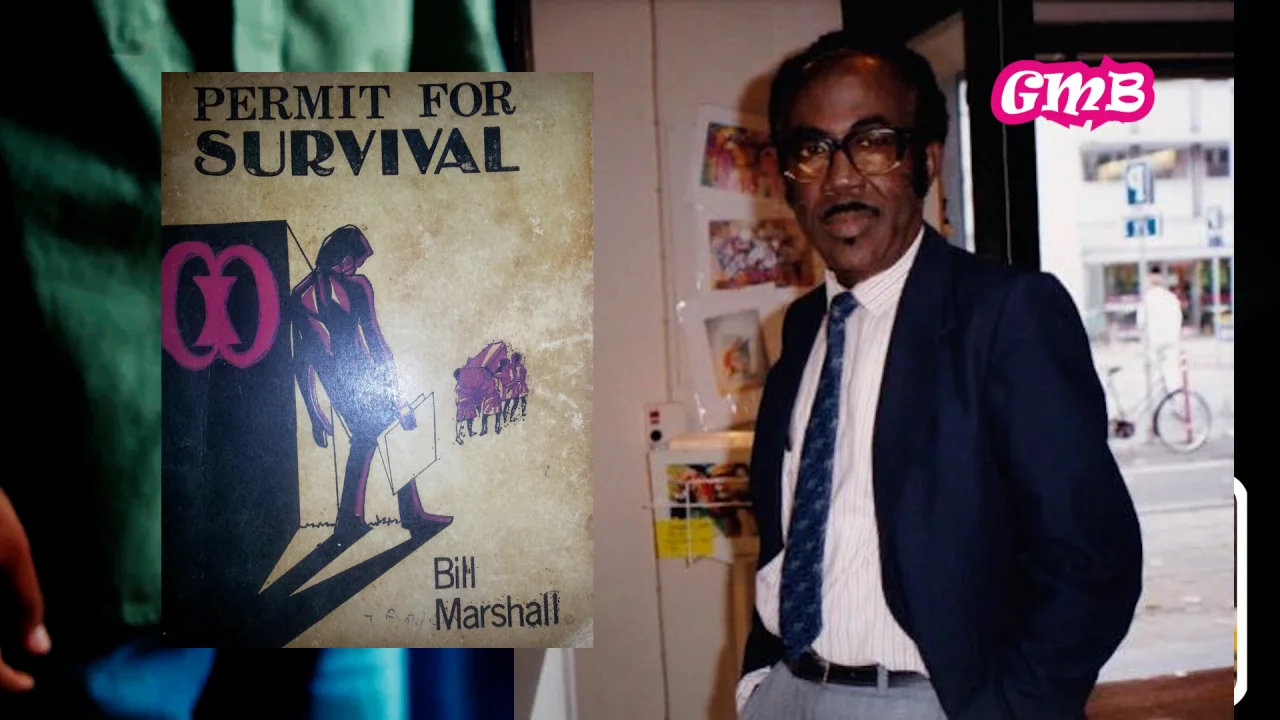
Have you ever had a nightmare so vivid it felt like the universe was playing a cruel joke on you? Imagine waking up one morning, sipping your tea, flipping through the newspaper… and there you are, smiling back at yourself from an obituary column. Dead. Buried. Gone. Except—you’re very much alive.
This is the chaotic, hilarious, and deeply human scenario that kicks off Bill Okyere Marshall’s novel, Permit for Survival (also reprinted as Brother Man). And let me tell you, it only gets wilder from there.
What This Novel Is About
At its heart, Permit for Survival is a humorous yet reflective slice-of-life novel set in Ghana during the late 1970s and early 1980s. It follows Joseph Jonathan Kofi Kuma, or Jojo, a 26-year-old clerk whose life is suddenly turned upside down when he discovers that the newspapers have declared him dead.
Instead of panicking—or fleeing to Miami—Jojo embarks on a mission to stop his own funeral. What follows is a chaotic journey across Ghana, dodging bureaucratic red tape, surviving dodgy bus rides, navigating romantic entanglements, and ultimately finding his place in a society undergoing rapid political and cultural change.
Through Jojo’s eyes, readers witness Ghana in flux: military coups, political unrest, street demonstrations, and the shifting tides of social norms. Yet amidst the chaos, there’s laughter, love, friendship, and moments of quiet humanity.
Themes at a Glance:
-
Survival & Adaptation: Jojo evolves from clerk to electrician to family man.
-
Identity & Modernity: Ghana moves from old traditions to new social realities.
-
Power & Politics: Ordinary people navigating bureaucracy and military rule.
-
Friendship & Love: Bonds with George, Karl, and Mina anchor Jojo’s journey.
👉 You can find this novel on Amazon here for the edition I read.
A Rollercoaster of Humor, Chaos, and Growth
The opening hook is nothing short of brilliant: a man racing to prevent his own burial. It’s funny, bizarre, and immediately gripping—think Amos Tutuola’s whimsical storytelling, but grounded in real-world absurdity rather than supernatural surrealism.
After this explosive start, the story transitions into a slower, more reflective pace. Jojo’s adventures continue, but the narrative becomes more of a slice-of-life chronicle: learning a trade, forming relationships, and navigating the quirks of civil service bureaucracy. While this shift may feel less adrenaline-packed, it allows the novel to explore social commentary and cultural change in Ghana.
One of the novel’s greatest strengths is its balance between chaos and insight. You witness Ghanaian society in transition: beauty standards evolving, extended families giving way to nuclear units, women asserting more autonomy—all without the story turning into a history lecture. Festivals, street life, and national landmarks pepper the narrative, grounding Jojo’s personal story in a vivid, lived reality.
Marshall’s writing style is engaging and versatile. The point of view alternates between first-person and omniscient narration, which initially feels unusual but ultimately enriches the story by offering multiple perspectives. Chapters read like individual stories strung together, creating a mosaic of life in a society in flux. And through it all, Marshall sprinkles subtle humor that makes even bureaucratic nightmares—like proving you’re alive—a relatable, comic experience.
What Works, and What Could Feel Slower
Strengths:
-
Imaginative premise and unforgettable opening scene.
-
Rich social and cultural commentary without losing the narrative’s humor.
-
Memorable characters with authentic Ghanaian voices.
-
Subtle humor that humanizes even absurd situations.
Potential Weaknesses:
-
After the initial chaos, the pace slows, which may disappoint readers craving nonstop action.
-
The slice-of-life sections occasionally meander, focusing on daily survival rather than suspenseful plot twists.
Overall, these “weaknesses” feel more like deliberate choices to explore identity, growth, and adaptation rather than flaws in storytelling.
About the Author
Bill Okyere Marshall, born in 1936 in Ghana, was a dramatist, novelist, and educator. He studied at London’s Guildhall School of Music and Drama, worked in television in the U.S., and eventually became head of the National Film and Television Institute in Accra. His plays, including The Son of Umbele (1973), and novels such as Bukom (1979), often examine Ghanaian life, identity, and the unpredictable nature of human existence.
Marshall’s work is marked by humor, social insight, and a recognition that life is never fully explainable—a theme that shines through in Permit for Survival.
Who Should Read Permit for Survival
You’ll enjoy this novel if:
-
You love humorous, character-driven stories that explore life and society.
-
You’re interested in Ghanaian culture and history through fiction.
-
You enjoy slice-of-life narratives with subtle social commentary.
You might struggle with this book if:
-
You prefer fast-paced, nonstop action.
-
You need clear-cut villains and heroes.
-
Open-ended storytelling feels unsatisfying.
👉 Grab your copy of Permit for Survival (or Brother Man) here on Amazon and start this unforgettable journey.
Final Thoughts
Permit for Survival is a novel that starts with pure chaos—a man racing to stop his own funeral—and evolves into a rich, human story of growth, love, and adaptation. Through Jojo, Bill Marshall captures a society in transition, blending humor, cultural insight, and subtle social critique.
If you’re looking for a story that makes you laugh, reflect, and care about life’s unpredictability, this book is a must-read. Whether you’re curious about Ghana’s past, fascinated by human resilience, or just in need of a wildly entertaining tale, Jojo’s journey is one you won’t forget.
If you want to explore this classic for yourself, check out Permit for Survival on Amazon and prepare to witness a man who refuses to be buried—literally or figuratively.