 English
 French
 German
 Russian
 中文
中文
The Day the World Went Blind — And Humanity Revealed Its Darkest Self
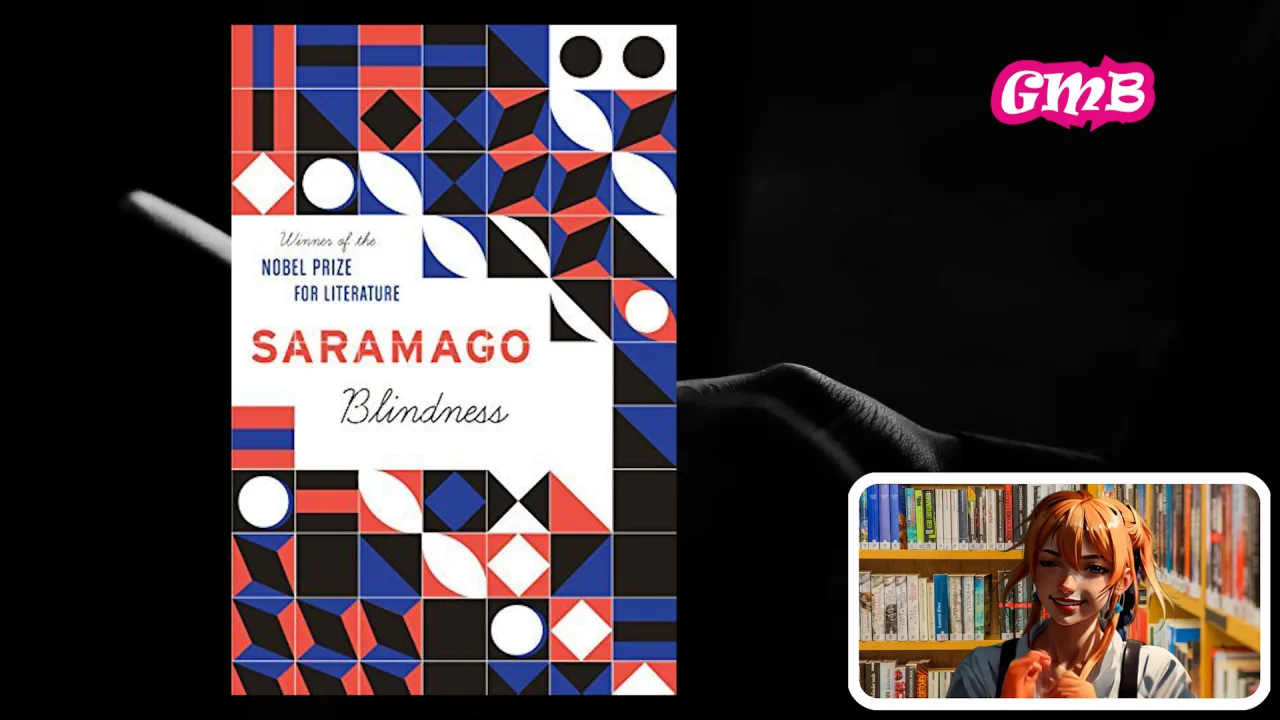
There’s a moment early in Blindness that made me stop reading and just stare at the page.
A man is sitting in traffic, waiting for the light to turn green. Nothing unusual. Then suddenly, his world disappears—not into darkness, but into a blinding white fog. He can’t see anything.
Within hours, his condition spreads to others.
Within days, society collapses.
And what follows is one of the most disturbing, thought-provoking novels I’ve ever read.
Written by the Portuguese Nobel Prize winner José Saramago, this novel isn’t really about blindness at all. It’s about what happens when the thin layer of civilization disappears and human beings are forced to confront who they really are.
👉 The edition I read is available here:
https://amzn.to/44dlOPQ
What Kind of Novel Is This?
This is a philosophical dystopian novel about the fragility of civilization and the uncomfortable truths about human nature.
Tone: Dark, disturbing, reflective
Pace: Moderate but emotionally intense
Themes: Power, morality, survival, social order, human cruelty, compassion
This book is for readers who:
-
Enjoy deep, unsettling literary fiction
-
Like novels that explore big philosophical questions
-
Appreciate experimental storytelling
This book is NOT for readers who:
-
Prefer fast-paced action stories
-
Want clear heroes and villains
-
Dislike unconventional writing styles
👉 You can find the same edition here:
https://amzn.to/44dlOPQ
A Glimpse of the Story (No Spoilers)
The story begins in an unnamed city when a man suddenly goes blind while waiting in traffic. His blindness isn’t darkness—it’s a strange, milky whiteness.
Soon the condition spreads.
A doctor examines the man but cannot explain the disease. Then the doctor himself goes blind.
Terrified of the epidemic, the government quarantines the infected in an abandoned mental asylum. Soldiers guard the gates and issue brutal instructions:
-
Do your own laundry
-
Bury your own dead
-
Don’t try to escape
Food is dropped off sporadically.
Inside the asylum, chaos quickly replaces order.
With hundreds of blind people trapped together, hygiene collapses, resources become scarce, and some inmates form violent gangs that seize control of the food supply.
The story follows a small group of characters—most notably the doctor’s wife, the only person who mysteriously retains her sight—as they struggle to survive in a world that has quite literally lost its vision.
But the real conflict isn’t blindness.
It’s what people do when they believe no one is watching.
Why This Story Matters
What stayed with me long after finishing Blindness is the terrifying simplicity of its premise.
Remove sight.
Remove authority.
Remove accountability.
And watch how quickly society unravels.
The novel asks a haunting question: Are we truly moral, or are we only moral because we are seen?
Inside the quarantine facility, the worst parts of human nature emerge—greed, cruelty, exploitation. One group of inmates takes control of the food supply and begins demanding payment. First valuables.
Then something far worse.
But Saramago refuses to present humanity as purely evil. Alongside brutality, we also see compassion, sacrifice, and quiet acts of courage.
The doctor’s wife becomes the moral center of the story. Because she can see, she witnesses everything—the suffering, the humiliation, the degradation. Yet she also chooses to help, guide, and protect the others.
Her dilemma is deeply uncomfortable: what responsibility comes with seeing the truth when everyone else is blind?
Saramago’s Brilliant (and Strange) Writing Style
One of the most striking things about Blindness is its unusual narrative style.
There are:
-
No quotation marks
-
Very little punctuation
-
No character names
Instead, characters are identified by descriptions:
-
The doctor
-
The doctor’s wife
-
The girl with dark glasses
-
The boy with the squint
-
The old man with the eyepatch
At first, the style feels disorienting.
But gradually you realize this is intentional. The long, flowing sentences mirror the confusion and chaos of blindness itself. You feel as lost as the characters.
The narrator also frequently interrupts the story with philosophical reflections, almost like a wise observer commenting on humanity’s behavior.
This narrative voice is one of the reasons José Saramago won the Nobel Prize in Literature.
The Moral Complexity of the Characters
Another thing I deeply appreciated is how Saramago refuses to reduce people to simple labels.
Take the character known as “the girl with dark glasses.”
She is a sex worker, but the novel challenges readers to reconsider how quickly society judges people. Saramago emphasizes her agency and autonomy, reminding us that identity is more complex than a single label.
In fact, many of the most compassionate characters in the story are those society might normally dismiss or ignore.
Meanwhile, some of the most “respectable” people behave in horrifying ways once civilization disappears.
The message is clear: social status means very little when survival is at stake.
Strengths of the Novel
1. A Brilliant Concept
The idea of a blindness epidemic may sound simple, but Saramago uses it to explore profound questions about society, morality, and power.
2. Brutally Honest Social Commentary
The novel exposes how fragile our systems are. Governments panic, institutions fail, and ordinary people must rebuild meaning from chaos.
3. Deep Philosophical Insight
This is one of those rare novels that doesn’t just tell a story—it forces you to think about the world differently.
Weaknesses (or Challenges)
To be honest, this is not an easy book.
The writing style can feel confusing at first, especially without quotation marks or traditional dialogue formatting.
And the story contains several deeply disturbing scenes that may be difficult for some readers.
But in many ways, that discomfort is the point.
Saramago wants readers to confront realities we often prefer to ignore.
Who Should Read This Book?
You’ll enjoy Blindness if:
-
You enjoy philosophical literary fiction
-
You like books that explore human nature under extreme pressure
-
You appreciate bold, experimental storytelling
You might struggle with it if:
-
You prefer fast-paced plots
-
You dislike unconventional formatting
-
You want simple moral answers
👉 If this sounds like your kind of novel, you can check it out here:
https://amzn.to/44dlOPQ
My Honest Verdict
This isn’t a comfortable novel.
But it’s an important one.
Blindness forces readers to confront a difficult truth: civilization is much more fragile than we like to believe.
What makes the book powerful is that it doesn’t just show the darkness in human nature—it also shows the small, stubborn sparks of compassion that survive even in the worst circumstances.
It’s disturbing, philosophical, and unforgettable.
Not a perfect novel—but an honest one.
Final Thoughts
The question at the heart of this book is simple but terrifying:
What would you do if the world suddenly stopped seeing?
Would you help others survive?
Or would you take advantage of the chaos?
By the time I finished Blindness, I realized the story isn’t really about blindness.
It’s about vision.
About seeing the truth about ourselves, our societies, and the fragile systems that keep everything from falling apart.
And once you see that truth, it’s very hard to look away.
👉 If you’d like to read the same edition I did, here’s the link:
https://amzn.to/44dlOPQ
Similar books you might enjoy
-
Lord of the Flies – A classic exploration of civilization collapsing under pressure
-
The Road – A bleak but powerful look at survival and morality in a ruined world