 English
 French
 German
 Russian
 中文
中文

If I’m So Successful, Why Do I Feel Like a Fake? – A Deep Dive into the Impostor Phenomenon
You know that awkward moment when someone compliments you for doing something amazing, and instead of saying “thank you,” your brain goes, “Haha, if only you knew I’m just winging it!”
Yeah, me too. I often feel like life is just a long con where I’ve convinced people I know what I’m doing, when in reality, I’m holding everything together with duct tape, caffeine, and sheer willpower.
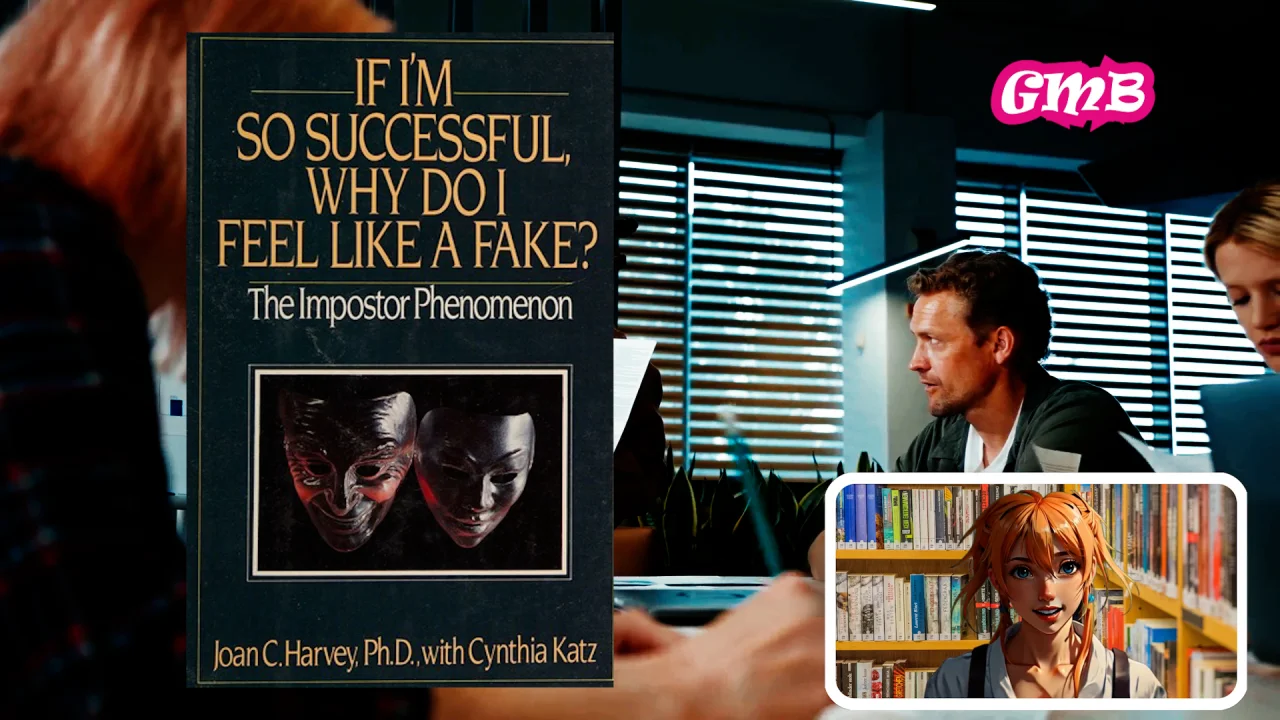
Turns out, this feeling of being a fraud has a name – and it’s not just overthinking. It’s called the Impostor Phenomenon. And the book that opened my eyes to this invisible shadow is If I’m So Successful, Why Do I Feel Like a Fake? by Joan C. Harvey and Cynthia Katz. They dissect why so many of us – high achievers, over-preparers, and hard workers – secretly feel like we’re one misstep away from being exposed as total fakes.
What This Book Is About
At its core, If I’m So Successful, Why Do I Feel Like a Fake? is a psychology-driven self-help book exploring the Impostor Phenomenon (IP). Harvey and Katz examine why competent people often attribute their success to luck, charm, or hard work – anything but their actual talent or intelligence.
Tone: Reflective, informative, occasionally humorous
Pace: Moderate, easy to digest in bite-sized chapters
Themes: Self-perception, perfectionism, family influence, mental health
This book is for readers who:
-
Struggle with self-doubt despite evidence of success
-
Are curious about the psychology of achievement
-
Want practical tools to overcome perfectionism
This book is NOT for readers who:
-
Prefer fast-paced plots or dramatic storytelling
-
Need a purely motivational, no-nonsense guide
👉 The edition I read is available here: Amazon link
Understanding the Impostor Phenomenon
Picture this: You’re at work, killing it, getting praise, maybe even a promotion. Everyone thinks you’re brilliant. And yet… inside your head, you’re thinking, “This is luck. They’ll find out I’m just making it up as I go.”
Harvey and Katz explain that IP isn’t a quirky self-esteem issue. It’s a pervasive mental pattern that whispers, “You’re not good enough,” regardless of your achievements.
People experiencing IP often credit external factors for success rather than their own abilities. A promotion isn’t proof of competence – it’s just a late-night effort, a lucky break, or charm. And this distorted self-view keeps them trapped in a cycle of overwork and self-doubt.
The Signs You Might Have IP
Harvey outlines three big red flags:
-
Feeling like a fraud: You believe you’ve tricked everyone into overestimating your abilities – the Leonardo DiCaprio of your workplace.
-
Attributing success to luck or charm: Intelligence or talent? Never. It’s always something external.
-
Fear of exposure: You’re waiting for someone to announce, “You’re not actually competent. Step aside.”
Sound familiar? You’re not alone. IP affects people across industries and success levels, from students to CEOs.
Hyperactive Perfectionism – The Coping Mechanism
People with IP don’t sit still—they overcompensate. Late nights, double-checking every detail, second-guessing themselves. The irony? Success achieved through overwork only reinforces the impostor feelings. You think, “See? If I hadn’t worked to exhaustion, I wouldn’t have pulled this off. I’m faking it.”
Harvey calls this the hyperactive perfectionist mode, and it’s exhausting both mentally and physically.
Family Influence and Early Conditioning
Where does IP originate? Often, in family dynamics.
For example, kids labeled “the helper” may internalize the belief that their worth depends on meeting others’ expectations. Over time, this role transforms into a relentless drive to prove themselves, creating fertile ground for impostor feelings.
Not everyone with a strong work ethic develops IP, but for those who do, early family expectations can shape a lifelong internal pressure to over-perform.
Measuring Your Impostor Experience
Harvey provides the Harvey IP Scale, a self-assessment tool that places you on a spectrum from mild self-doubt to full-blown impostor mode. This scale emphasizes that IP isn’t a yes-or-no condition, but a continuum. Recognizing where you fall is the first step toward managing it.
The Real Danger of IP
Feeling like a fraud isn’t harmless. It can:
-
Hold you back from pursuing bigger opportunities
-
Lead to chronic anxiety and depression
-
Reinforce overwork and perfectionism
Harvey stresses the importance of awareness and professional support to prevent these negative outcomes. The book itself is a guide, but it’s not a replacement for therapy when needed.
My Take on the Book
If I’m So Successful, Why Do I Feel Like a Fake? is honest, insightful, and timeless. Harvey doesn’t shame readers for their impostor feelings. Instead, she explains where these feelings come from, how they manifest, and practical ways to address them.
The most valuable takeaway for me: IP isn’t about a lack of competence—it’s about distorted self-perception. You can be highly skilled yet convinced your success is a fluke.
Even though the book was written in the 1980s, its message is more relevant than ever. In a world dominated by social media highlight reels, the feeling of faking it is nearly universal.
Themes and Insights
-
Self-awareness: Recognizing IP is the first step to overcoming it.
-
Breaking perfectionism: You don’t have to prove yourself constantly.
-
Family dynamics: Early roles and labels can shape adult self-perception.
These insights are practical and reflective, making you reconsider how your own upbringing, habits, and thought patterns contribute to self-doubt.
About the Authors
Joan C. Harvey was a psychologist specializing in workplace dynamics and personal development. Alongside Cynthia Katz, she explored the unspoken struggles of high-achievers, giving a name and framework to the silent battle many of us face.
Final Thoughts – Who Should Read This Book
If you’ve ever felt like you’re just one slip-up away from being exposed as a fraud, this book is for you. It’s not heavy, but it’s packed with insight, humor, and practical advice.
Harvey reminds us that success isn’t luck, and our talents deserve acknowledgment. The tools she provides help challenge that impostor voice, making it easier to see your accomplishments clearly.
👉 If this resonates, you can find the book here: Amazon link
Recommended for readers who:
-
Want to understand why they feel like frauds despite success
-
Enjoy psychology and self-help combined with storytelling
-
Are ready to reflect on family influences and personal patterns
Might struggle if:
-
You prefer fast-paced advice without reflection
-
You dislike introspective books that focus on subtle mental patterns
This book was a revelation for me. Reading it, I kept thinking, “Yes… that’s me. That’s exactly what I feel.” And while seeing yourself reflected can be uncomfortable, Harvey gives the tools to take control, reclaim confidence, and finally recognize that your success is real.