 English
 French
 German
 Russian
 中文
中文

When Coming Home Becomes a Trap: No Longer at Ease by Chinua Achebe
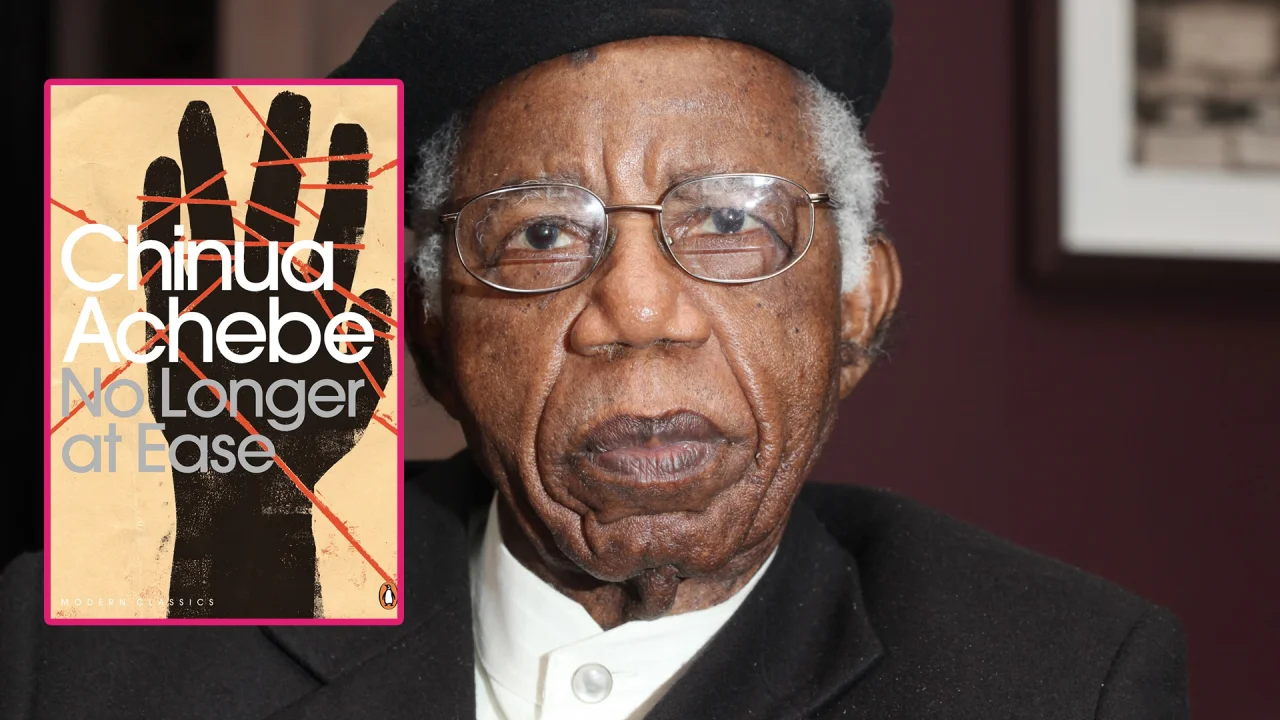
There’s something deeply unsettling about coming home as a hero… and slowly realizing the crown is a burden.
While reading No Longer at Ease, I kept thinking about that moment when expectations start piling up so high you can’t see yourself anymore. Everyone is watching. Everyone is waiting. Everyone is counting what you owe them — emotionally, culturally, financially.
Obi Okonkwo’s story isn’t dramatic in the loud sense. It doesn’t shout. It presses quietly, persistently, until something inside you gives way.
And when it does, Achebe doesn’t let you look away.
What Kind of Novel Is This?
No Longer at Ease is a quietly tragic, reflective novel about expectation, moral compromise, and the cost of belonging.
-
Tone: Subdued, ironic, quietly devastating
-
Pace: Moderate, steady, almost inevitable
-
Themes: Corruption, tradition vs modernity, obligation, identity, societal pressure
This book is for readers who:
-
Enjoy character-driven stories over action
-
Like novels that examine systems, not just individuals
-
Are interested in African literature beyond folklore and myth
This book is not for readers who:
-
Prefer fast-paced plots or dramatic twists
-
Want clear heroes and villains
-
Need neat moral resolutions
👉 The edition I read is available here:
No Longer at Ease by Chinua Achebe – Amazon
A Glimpse of the Story (No Spoilers)
Obi Okonkwo returns to Nigeria after studying in England, armed with a university degree and a government job in the colonial civil service. His village, Umuofia, proudly funded his education and now expects him to repay that faith — materially and symbolically.
But Lagos is expensive. Expectations are relentless. And love complicates everything.
When Obi decides to marry Clara, a woman his family considers osu — socially forbidden — tradition pushes back hard. At the same time, debt tightens its grip. Slowly, the values Obi once held firmly begin to bend.
Not because he is evil — but because the system leaves him very little room to breathe.
Why This Story Matters (The Emotional Core)
This novel refuses to ask whether Obi is good or bad.
Instead, Achebe asks something far more uncomfortable:
What happens when society sets you up to fail — then punishes you for failing?
Obi wants to be honest. He wants to resist corruption. But honesty doesn’t pay debts. Integrity doesn’t impress relatives. And ideals don’t survive long in a system built on contradiction.
Achebe doesn’t portray corruption as a personal flaw — he presents it as a social inheritance. Colonial bureaucracy, traditional obligations, Christian morality, and modern ambition all pull Obi in different directions until something snaps.
What stayed with me after finishing this book wasn’t Obi’s downfall — it was how predictable it felt.
That inevitability is Achebe’s sharpest weapon.
Achebe’s Nigeria: A Cultural Tug-of-War
Set in pre-independence Lagos, No Longer at Ease captures a society suspended between worlds:
-
Traditional Igbo customs that refuse to loosen their grip
-
Colonial institutions that demand obedience but offer little support
-
A new elite class obsessed with appearances and status
Achebe shows how these forces collide inside one man’s life. Obi becomes the battleground where modernity and tradition fight — and neither really wins.
My Honest Thoughts
This isn’t Achebe’s most expansive novel — and it doesn’t try to be.
Compared to Things Fall Apart, the story feels more focused, more contained. The characters sometimes serve ideas more than complexity. But that narrow focus is exactly why the novel works.
By zooming in on Obi, Achebe exposes the emotional cost of transition — not just for societies, but for individuals trapped inside them.
This isn’t a spectacular tragedy. It’s a quiet one. And those are often the hardest to shake.
👉 You can read the same edition I did here:
No Longer at Ease – Paperback Edition on Amazon
Who This Book Is Perfect For
You’ll enjoy this novel if:
-
You like books that linger in your mind long after reading
-
You enjoy moral dilemmas without easy answers
-
You read fiction to understand society, not escape it
You might struggle with it if:
-
You prefer fast-moving plots
-
You need emotional payoff or redemption
-
You dislike restrained, ironic storytelling
👉 If this sounds like your kind of book:
Check availability on Amazon
A Word on Chinua Achebe
Chinua Achebe didn’t just write stories — he documented transitions.
With No Longer at Ease, he shows how independence, education, and progress come with invisible costs. His genius lies in refusing to romanticize either tradition or modernity. Both, he suggests, can fail people when applied without compassion.
This novel may be quieter than his others — but its questions are just as sharp.
Final Thoughts
No Longer at Ease isn’t a perfect novel — but it’s an honest one.
It doesn’t comfort. It doesn’t absolve. It simply holds up a mirror and asks you to sit with what you see.
If you’ve ever felt crushed by expectations, conflicted between who you are and who you’re supposed to be, or uneasy about the systems we inherit — this book will feel uncomfortably familiar.
👉 If you’d like to read the same edition I did, here’s the link:
No Longer at Ease by Chinua Achebe – Amazon
Similar Books You Might Like
-
Things Fall Apart — Chinua Achebe
-
The Beautyful Ones Are Not Yet Born — Ayi Kwei Armah
Best Format to Read This Book
Paperback. The slow, reflective nature of the novel benefits from pauses, re-reading, and margin notes.