 English
 French
 German
 Russian
 中文
中文

Mr. Happy and the Hammer of God — When Guilt, Faith, and Madness Refuse to Stay Quiet
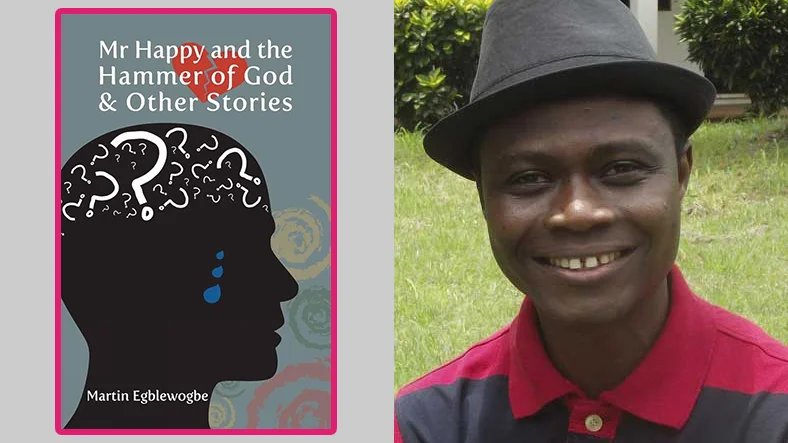
There’s a moment when you’re reading Mr. Happy and the Hammer of God where you stop, stare at the page, and think: Why does this feel uncomfortably familiar? Not because you’ve met a demon from your childhood (hopefully), but because Martin Egblewogbe has a way of digging into emotions most of us would rather keep buried—guilt, doubt, paranoia, regret—and dragging them into the light.
This isn’t the kind of book you “consume.” It’s the kind that interrupts your thoughts. One minute you’re calmly reading, the next you’re questioning your beliefs, your memories, and whether peace of mind is ever really permanent. That uneasy intimacy is exactly what makes this collection unforgettable.
What Kind of Book Is This?
Mr. Happy and the Hammer of God is a literary, surreal, and psychologically charged short story collection about the invisible forces that shape human behavior—faith, fear, guilt, and the stories we tell ourselves to survive.
Tone: Dark, reflective, occasionally playful
Pace: Measured, thoughtful, unpredictable
Themes:
-
Guilt and moral consequence
-
Faith versus skepticism
-
Mental instability and self-deception
-
Death, memory, and metaphysical fear
This book is for readers who:
-
Enjoy literary fiction that leans philosophical
-
Appreciate ambiguity and open endings
-
Like stories that linger long after the final page
This book is not for readers who:
-
Need clear resolutions
-
Prefer fast-paced, plot-driven narratives
-
Dislike surreal or psychologically unsettling fiction
👉 The edition I read is available here:
Mr. Happy and the Hammer of God on Amazon
Stories That Refuse to Let You Off Easy
One of the earliest stories that hits hard is “Pharmaceutical Intervention.” On the surface, it’s about a young woman who chooses abortion to preserve social respectability. But Egblewogbe isn’t interested in the act itself—he’s interested in what follows. The guilt doesn’t fade. It mutates. It embeds itself into her consciousness until it becomes a permanent psychological resident. The horror here isn’t supernatural. It’s internal, intimate, and relentless.
Then comes “Small Changes within the Dynamic,” a painfully ironic tale of love and misplaced loyalty. A man defies everyone to marry the woman he loves, only to discover her infidelity after legally handing her power over his property. The betrayal isn’t dramatic—it’s almost casual. And that’s what makes it sting. This story quietly asks whether love is ever protection against self-destruction.
The title story, “Mr. Happy and the Hammer of God,” is where Egblewogbe fully leans into the metaphysical. A childhood warning about a demon—delivered in that familiar, ominous African-adult tone—becomes a lifelong psychological echo. No matter how the protagonist evolves spiritually, intellectually, or emotionally, the demon keeps resurfacing. Faith doesn’t banish it. Skepticism doesn’t either. The implication is unsettling: some fears don’t disappear because they were never external to begin with.
Why This Book Matters
What makes this collection powerful isn’t what happens—it’s what refuses to resolve.
Egblewogbe writes about people trapped inside their own minds, desperately searching for meaning, forgiveness, or certainty. Stories like “Twilight” quietly meditate on death—not as spectacle, but as an intimate conversation with the unknown. Meanwhile, “Three Conversations with Ayuba” portrays desperation in its rawest form: a neurotic man searching for answers, only to sink deeper into existential despair.
And then there’s “Down Wind,” perhaps the most unsettling story of all. A man believes he has committed a crime—but neither he nor the reader knows what it is. There is no confession, no clarity, no relief. The story ends, and the uncertainty remains. It’s frustrating. It’s brilliant. It mirrors real life in a way most fiction avoids.
This book exists to remind us that closure is a luxury, not a guarantee.
A Glimpse of the World (No Spoilers)
These stories revolve around:
-
People haunted by decisions they can’t undo
-
Minds unraveling under moral pressure
-
Faith colliding with reason
-
The quiet terror of not knowing who—or what—is in control
Egblewogbe doesn’t explain. He observes. And then he steps back, leaving you alone with your thoughts.
Who This Book Is Perfect For
You’ll enjoy this collection if:
-
You like fiction that feels philosophical rather than entertaining
-
You enjoy writers who trust the reader’s intelligence
-
You read to reflect, not escape
You might struggle with it if:
-
You prefer clear moral conclusions
-
You need plot-driven momentum
-
You dislike stories that end mid-thought
👉 If this sounds like your kind of book, you can find it here:
Mr. Happy and the Hammer of God on Amazon
My Honest Verdict
This isn’t a perfect collection.
Some stories end abruptly—just as you’re fully immersed. At times, you’ll wish Egblewogbe stayed longer with certain characters. But maybe that discomfort is intentional. Life rarely gives us neat endings, and this book refuses to pretend otherwise.
What does work is the language—poetic, controlled, quietly intense—and the emotional honesty. These stories feel lived-in, not constructed. They don’t beg for your attention. They demand it.
Final Thoughts
Mr. Happy and the Hammer of God is the kind of book you recommend carefully—not because it’s inaccessible, but because it isn’t casual. It asks something of you. Attention. Patience. Reflection.
If you enjoy short stories that blur the line between psychology, philosophy, and spiritual unease, this collection will reward you. It’s brief (just 126 pages), but its ideas are heavy—and they linger.
👉 If you’d like to read the same edition I did, here’s the link:
Mr. Happy and the Hammer of God on Amazon
When you finish it, don’t rush to the next book. Sit with it. One of these stories will stay with you longer than you expect.