 English
 French
 German
 Russian
 中文
中文

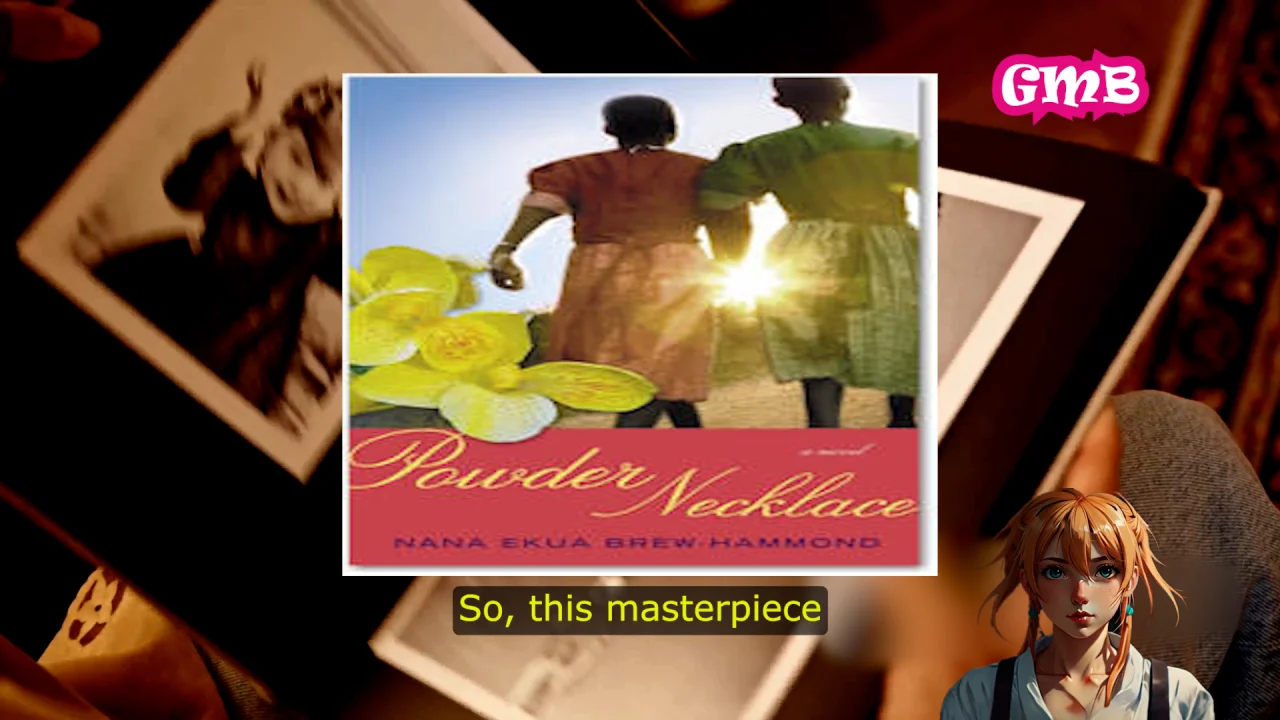
Powder Necklace by Nana Ekua Brew-Hammond — When Home Is Everywhere and Nowhere at Once
Imagine you’re just living your teenage life. School. Friends. A little harmless chatting with a boy. Then one day your mum decides you’ve crossed a line—and her solution isn’t grounding you or confiscating your phone.
She sends you to another continent.
No warning. No discussion. Just: Pack your bags, you’re going to Ghana.
That’s how Powder Necklace begins, and honestly, that opening situation alone already tells you what kind of book this is going to be: unsettling, emotionally raw, and painfully honest.
A Girl Caught Between Worlds
Lila, the novel’s main character, is a British-born teenage girl to Ghanaian parents who are divorced and emotionally distant from each other. Her mother lives in England, her father in the U.S., and Ghana exists mostly as a vague idea—something cultural, something other, but not home.
Until it suddenly is.
When her mother catches her with a boy in the house, panic sets in. The response? Ship Lila off to Ghana “to learn discipline,” to reconnect with her roots, to be “fixed.”
Everyone there greets her warmly with “Welcome home.”
Lila’s reaction is basically: Home? According to who?
And that tension—between what others insist you are and what you feel yourself to be—sits at the heart of this novel.
👉 You can find the edition I read of Powder Necklace here:
Powder Necklace on Amazon
Culture Shock, No Filters
Nana Ekua Brew-Hammond doesn’t romanticize the experience. Ghana isn’t presented as some magical return-to-roots fantasy. It’s dusty roads, bucket baths, broken school desks, unfamiliar rules, and constant frustration.
Lila misses warm showers. She hates the food at first. She notices everything that feels inconvenient, uncomfortable, or just plain unfair.
And yet—slowly—things begin to shift.
She makes friends. She eats kenkey (even if reluctantly). Her accent starts to soften. Ghana doesn’t suddenly become home, but it becomes less foreign. There’s a quiet, realistic adaptation happening, and it feels earned.
Just as Lila begins to settle, though—because of course—her mother pulls her back to England.
No closure. No choice.
The Most Unexpected Emotional Turn
From England, Lila is sent yet again—this time to the U.S. to live with her father, a man she barely knows. Their relationship is distant, almost abstract. At one point, Lila describes him with a line that genuinely stopped me:
“My father had become to me like something I had left on the bus.”
That sentence alone tells you how sharp Brew-Hammond’s writing is.
Ironically, it’s with this emotionally absent parent that Lila begins to find some stability. Not perfection—but space. Space to breathe. Space to reflect. Space to start figuring out who she is without being constantly yanked in different directions.
Why This Story Hits So Hard
This isn’t just a novel about moving countries. It’s about what it does to a child when adults make life-altering decisions “for their own good” without ever asking how it feels.
At one point, Lila resents her mother deeply:
“I resented mum for putting me in this situation again and for not being strong enough to handle her full responsibility to me.”
If you’ve ever blamed your parents for something—anything—while growing up, this book will feel uncomfortably familiar.
And that’s what makes Powder Necklace special. It refuses to paint anyone as a cartoon villain. Parents are flawed. Children are confused. Everyone is trying—and failing—in very human ways.
👉 If stories about identity and belonging speak to you, you can check out the book here:
Get Powder Necklace on Amazon
Writing That Feels Alive
Nana Ekua Brew-Hammond’s prose is vivid, unfiltered, and deeply observant. The imagery is so strong it feels cinematic, but never overdone. Her metaphors are unusual and precise—the kind that make you pause and reread a sentence just to appreciate it.
More importantly, she tells the truth.
She shows what’s difficult about England, Ghana, and the U.S. She shows how identity can feel like a burden when everyone keeps trying to define it for you. And she shows how growth doesn’t come from sudden realizations, but from endurance.
Who This Book Is For (and Not For)
You’ll love Powder Necklace if:
-
You enjoy coming-of-age stories that focus on inner change, not plot twists
-
You’re interested in diaspora, migration, and identity
-
You like novels that sit with discomfort instead of resolving everything neatly
You might struggle with this book if:
-
You prefer fast-paced, action-heavy stories
-
You need clear heroes and villains
-
You expect a tidy, feel-good ending
👉 If this sounds like your kind of read, here’s the link again:
Powder Necklace by Nana Ekua Brew-Hammond
Final Thoughts
Powder Necklace is one of those novels that doesn’t shout—but it lingers. Long after finishing it, I kept thinking about Lila. About how many kids grow up negotiating identities they didn’t choose. About how often adults mistake control for care.
This isn’t a perfect book—but it’s an honest one. And those are rare.
If you’ve ever asked yourself, Where do I really belong?—this novel might feel like it’s quietly asking that question right alongside you.