 English
 French
 German
 Russian
 中文
中文

Midnight’s Children by Salman Rushdie: A Magical Tale of India, Fate, and Chaos
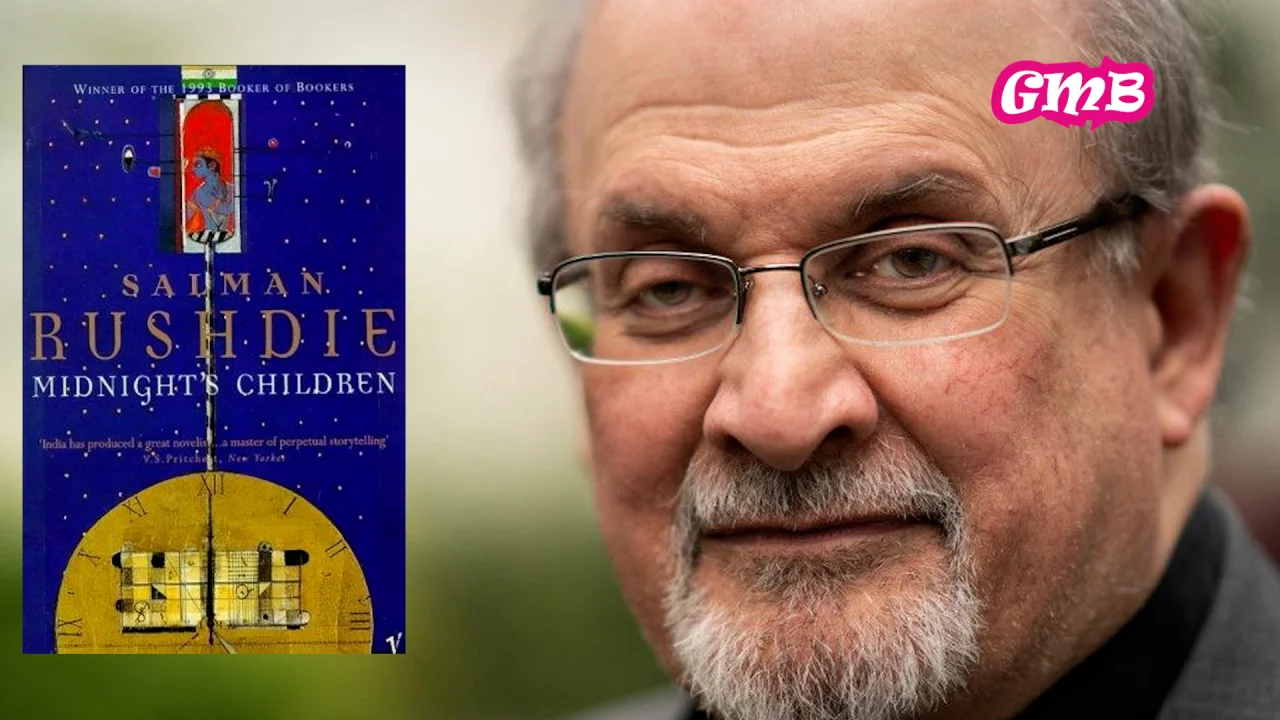
Born at Midnight, Tied to Destiny
What if the very moment your country was born, you were born too—and that moment gave you powers tied to its destiny? Imagine discovering that a thousand others shared this midnight birth, each with their own extraordinary abilities, and that your role was to unite them while history itself tried to tear you apart.
It sounds like a superhero story. But it isn’t. It’s far messier, more absurd, and more tragic than any Marvel or DC saga. This is the life of Saleem Sinai, the man with a perpetually runny nose, telepathic powers, and a destiny entwined with India itself. Salman Rushdie’s Midnight’s Children is a novel where family, magic, and history collide in a story that’s as chaotic and beautiful as the country it mirrors.
👉 You can find the edition I read here on Amazon.
A Family Saga Entangled with History
The story begins, as all great family sagas do, not with the hero but with his grandfather. Dr. Aadam Aziz, a man with a large nose and a larger frustration with life, lives in Kashmir. One fateful moment, while bending to pray, his nose bumps the ground. Frustrated, he abandons religion in favor of science, skepticism, and a touch of bitterness. That nose, symbolic and hereditary, will echo throughout generations.
Aziz falls for Naseem, a woman shrouded behind a sheet with a hole through which he glimpses her—sometimes an ankle, sometimes an arm—until they marry. Their union is far from blissful; Naseem grows into a domineering matriarch, while Aziz is left perpetually grumpy and emasculated. Together, they have daughters, including Mumtaz (later Amina), whose life leads directly to Saleem’s birth.
Amid family dramas, history crashes in. The Partition of India violently tears communities apart, uprooting lives overnight. Love, marriage, and children continue, but always under the shadow of upheaval. Amina marries Ahmed Sinai, a businessman with big dreams, and they move to Bombay. On August 15, 1947, the night India gains independence, Saleem Sinai is born.
But Saleem is not alone. That midnight hour produces 1,001 children across India, each mysteriously endowed with powers. Saleem, born exactly at the stroke of midnight, gains telepathy—the ability to hear others’ thoughts—but also a constantly runny nose. Among these children is Shiva, a boy with destructive knees and a thirst for personal power. Saleem dreams of uniting the children to build a better India, while Shiva seeks individual glory. Their conflict mirrors the nation’s struggle between unity and fragmentation.
The story weaves together magical powers, personal ambitions, and historical events. Wars, riots, elections, betrayals, and dictatorships all unfold through Saleem’s eyes. And then there’s a twist: a nurse swaps Saleem and Shiva at birth, changing their destinies and showing how chance and history intersect to shape lives.
Why Midnight’s Children Matters
This novel is dense, chaotic, and playful. Rushdie combines family drama, national history, politics, religion, and even Bollywood-level melodrama, all layered with magical realism. At its core, Saleem is an allegory for India: his body and mind fracturing as the nation fractures, his telepathy reflecting the hope of unity, and Shiva representing the brutal individualism left by colonialism.
Themes of fate versus choice run deep. Saleem’s life is shaped by accidents and history’s whims—his swapped birth, his powers, his place in pivotal events. The novel asks whether we can escape our destinies or are forever swept along by forces bigger than ourselves.
Religious and cultural symbolism is everywhere, from Saleem’s runny nose to the sheet hiding his grandmother. Even humor plays a vital role: absurdity and tragedy coexist, reminding readers that history is often both cruel and ridiculous.
About Salman Rushdie
Born in Bombay in 1947, the same year as India’s independence, Salman Rushdie was uniquely positioned to tell this story. Published in 1981, Midnight’s Children won the Booker Prize, and later the Booker of Bookers as the best of all Booker winners. It remains Rushdie’s masterpiece—a sprawling, audacious, and unforgettable portrayal of a nation and its people.
Rushdie’s life itself has been shaped by politics and controversy, particularly after The Satanic Verses, but Midnight’s Children stands apart as a celebration of storytelling, history, and imagination.
Who Should Read Midnight’s Children
You’ll enjoy this novel if:
-
You love magical realism blended with historical fiction.
-
You’re fascinated by India’s postcolonial history and its human stories.
-
You enjoy complex, layered narratives with humor, tragedy, and allegory.
You might struggle with this book if:
-
You prefer linear, fast-paced plots.
-
You need clear heroes and villains.
-
You dislike open-ended, symbolic storytelling.
👉 Check out the edition I recommend here on Amazon.
Final Verdict
Midnight’s Children isn’t just a book—it’s an experience. It’s chaotic, overwhelming, hilarious, and heartbreaking all at once. Rushdie’s writing captures the messy complexity of India and the fragility of human lives caught in history’s tide.
If you’re ready to dive into a novel where magic meets reality, personal destiny meets national history, and humor dances with tragedy, this is the book to read. It will confuse you, amaze you, and leave you pondering long after the last page.
Affiliate Links: