 English
 French
 German
 Russian
 中文
中文

Stranded on an Island: A Deep Dive into Lord of the Flies by William Golding
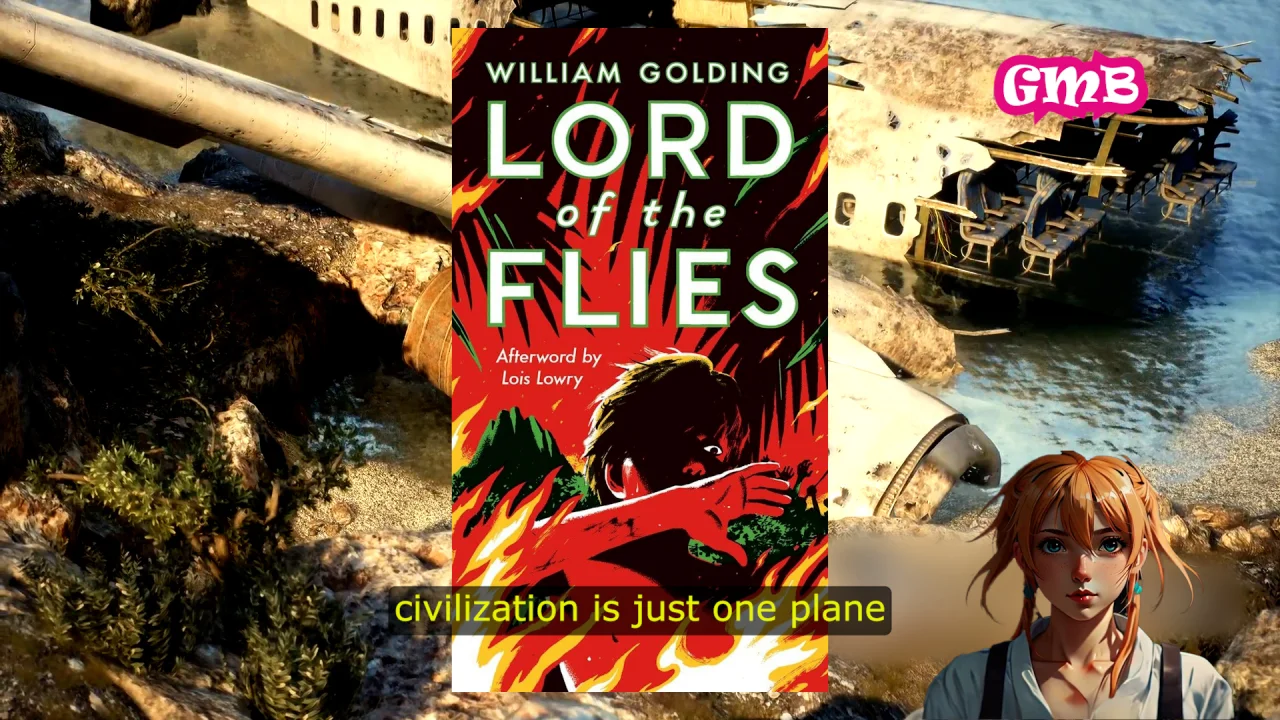
Imagine this: You’re on a plane, probably bored out of your mind, daydreaming about getting home, when BAM! Your plane gets shot down. You crash on a deserted island. No adults, no rules—just you and a bunch of other kids. Sounds fun, right? Like a tropical vacation? Oh, you sweet summer child… you have no idea.
This is a story of leadership, betrayal, wild pig hunting, and… well… let’s just say things escalate FAST. Welcome to my deep dive into Lord of the Flies by William Golding —a novel that shows just how fragile civilization really is.
Arrival & The Attempt at Civilization
A group of British schoolboys crash-land on a deserted island during a war. And since there are no teachers, no homework, and no cafeteria food, you’d think they’d be living their best life. But, of course, kids being kids, chaos is inevitable.
Two boys, Ralph and Piggy, discover a conch shell—basically an ancient megaphone. Piggy, the brains of the bunch, realizes it can be used to gather everyone. One loud blast later, and the boys hold their very first “school assembly.” Ralph is elected leader because he looks the part, while Jack, head of the choirboys, quietly seethes.
They try to organize a society: some hunt, some build shelters, and one group keeps a signal fire burning to attract rescue. Sounds simple, right? Nope. Turns out building civilization is hard when your main concern is playing tag and hunting pigs.
The Descent Into Madness
Then things spiral. The fire—their only hope of rescue—goes out just as a ship passes by. Why? Because the boys in charge, led by Jack, were too busy hunting pigs. Ralph is furious. Jack is like, “Bro, but we got bacon.” Priorities, right?
Fear takes hold when the boys start believing in a mysterious “beast” on the island. In reality, it’s just a dead parachutist, but in their minds? Full-blown horror movie. Jack uses this fear to consolidate power, splitting off to form his own tribe. They even stick a pig’s head on a spike as an offering to the beast—introducing the infamous Lord of the Flies. In a haunting vision, the pig’s head tells Simon, the sensitive observer, that the real beast isn’t out there—it’s inside them all.
Complete Chaos
From here, things are out of control. Simon discovers the truth about the “beast” and tries to warn the others—but the boys, lost in their own frenzy, mistake him for the monster. Tragedy strikes.
The struggle over Piggy’s glasses, the symbol of logic and survival, ends violently. A boulder crushes Piggy, shattering the conch, the very emblem of order. Ralph is hunted like an animal, and Jack’s tribe sets the forest ablaze to smoke him out. Just when all seems lost, a British naval officer arrives, stunned by the chaos. The boys, suddenly small and frightened again, are rescued—but at what cost?
Why Lord of the Flies Matters
At first glance, Lord of the Flies might seem like a story about children stranded on an island. But it’s really a brutal exploration of human nature. Without rules, without order, what do we become? Golding suggests that the veneer of civilization is thin, and beneath it lies something darker, something primal.
Politics, fear-mongering, and the corrupting influence of power are central. Jack transforms from an ordinary boy into a dictator, while Ralph struggles to maintain democracy. The Lord of the Flies—the fly-covered pig’s head—represents the darkness in all of us. It whispers to Simon: “You can’t escape me. I’m inside you.”
William Golding, a schoolteacher and World War II veteran, had a cynical view of humanity. His experiences in war shaped the novel, showing that left unchecked, people might destroy one another.
Some interpretations even suggest the entire story could be a staged experiment—a concept that adds another layer to this already rich classic.
Who Should Read This Book
You’ll enjoy Lord of the Flies if you:
-
Love thought-provoking stories about human nature
-
Enjoy psychological and social dynamics explored through fiction
-
Read to reflect on society, morality, and power
You might struggle with this book if you:
-
Prefer fast-paced adventure over introspection
-
Need clear-cut heroes and villains
-
Dislike dark, ambiguous endings
Grab your copy here: Lord of the Flies on Amazon.
Final Thoughts
Lord of the Flies is more than just a tale of stranded schoolboys—it’s a mirror held up to humanity. It asks difficult questions about morality, civilization, and the fragility of order. Reading it is equal parts unsettling and fascinating.
So, what do you think? Are we all one bad day away from savagery, or does goodness prevail in humanity? This novel doesn’t give easy answers, and that’s exactly why it’s a timeless classic.
If you want a story that’s dramatic, darkly humorous, and deeply reflective, Lord of the Flies is a must-read.