 English
 French
 German
 Russian
 中文
中文

She Planned Two Murders Before Breakfast
A deeply unsettling reading experience
Let me tell you a story.
It starts with a father who comes home one day and casually announces, almost as an afterthought, that he has taken a wife. No warning. No ceremony. Just a sentence dropped into the air.
For his daughter, Magda, this is not just bad news — it’s catastrophic. So catastrophic, in fact, that she immediately begins planning his murder. Actually, two murders. Because why stop at one?
This isn’t melodrama. It isn’t shock for shock’s sake. And it definitely isn’t a Lifetime movie plot.
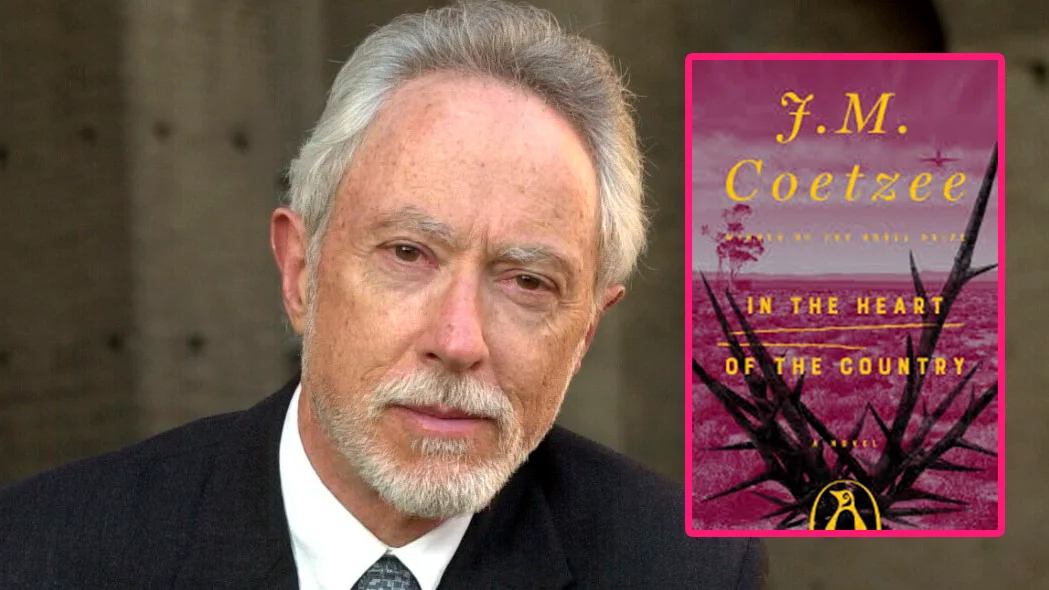
This is In the Heart of the Country, a novel that crawls into your mind, rearranges the furniture, and refuses to leave quietly.
👉 The edition I read is available here:
In the Heart of the Country by J.M. Coetzee (Paperback)
What Kind of Novel Is This?
This is a psychological, dystopian, deeply unsettling novel about isolation, power, sexual repression, and the terrifying unreliability of the human mind.
-
Tone: Dark, disturbing, introspective
-
Pace: Slow, deliberate, claustrophobic
-
Themes: Loneliness, desire, power, colonial violence, madness, gender, control
This book is for readers who:
-
Enjoy unreliable narrators
-
Like fiction that makes them uncomfortable on purpose
-
Appreciate dense, layered prose that rewards patience
This book is not for readers who:
-
Want a clear plot or tidy resolution
-
Prefer likable protagonists
-
Read fiction mainly for comfort or escape
A Glimpse of the Story (No Spoilers)
We’re in the middle of nowhere — a remote, barren South African farm.
Magda is an older, unmarried woman living with her father. She has never been in love. Never had sex. Never left this isolated world. Her inner life, however, is loud, chaotic, and violent.
When her father brings home a new “bride,” Magda refuses to accept reality as it is. The woman isn’t actually his wife — she is Klein-Anna, the wife of Hendrik, the farm’s Black servant. But Magda insists on calling her a bride anyway. Language, in this novel, is power.
The story unfolds through fragmented, numbered journal entries, and from the very beginning, you sense something is off. One moment Magda murders her father with a hatchet. The next, she shoots him and lets him die slowly. Later, he may not be dead at all.
Truth becomes slippery. Reality fractures. And the reader is left stranded inside Magda’s mind.
Why This Story Matters
What stayed with me long after I finished this book wasn’t the violence — it was the loneliness.
Magda describes herself as having “the hole that has never been filled.” That sentence alone explains everything. Her fantasies, her cruelty, her longing, her rage — all of it comes from a life starved of connection.
She envies Klein-Anna’s youth and sexuality. She despises her for the same reason. She obsesses over Hendrik, imagining violent, degrading encounters that eventually seem to occur — though even then, you’re never sure whether you’re reading fact or fantasy.
And that’s Coetzee’s quiet brilliance.
He never tells you what really happened. Instead, he forces you to confront how easily the mind can rewrite reality when isolation becomes unbearable.
One passage that stopped me cold reads:
“...the truth is that he needs our opposition, our several oppositions, to hold the girl away from him, to confirm his desire for her, as much as he needs our opposition to be powerless against that desire. It is not the privacy that he needs but the helpless complicity of watchers.”
That’s not just about Magda’s father. That’s about power, desire, and spectatorship — about how domination often requires witnesses.
This is not a novel that answers questions. It’s one that refuses to let you escape them.
Coetzee’s Writing: Precision as Violence
J.M. Coetzee doesn’t guide you gently. He dissects.
His prose is restrained, poetic, and unsettlingly precise. He blurs the line between psychosis and reality so effectively that you start doubting your own interpretations. You’re constantly asking yourself: Did this happen? Or did Magda need it to happen?
The language itself has a rhythm — subtle alliteration, quiet repetition, a hypnotic flow that mirrors Magda’s spiraling thoughts. It’s compact but dense, spare but loaded with meaning.
This was only my second Coetzee novel, and it firmly confirmed something for me: this is an author who understands power, pain, and isolation at a frighteningly deep level.
If you’re exploring his work, this edition is a solid place to start:
In the Heart of the Country – J.M. Coetzee (Amazon paperback edition)
My Honest Verdict
This is not an easy book.
It’s depressing. It’s disturbing. At times, it’s suffocating. Magda is not a character you root for — she’s someone you observe with a mix of horror and pity.
What worked:
-
The psychological depth
-
The fearless exploration of desire and isolation
-
The masterful use of an unreliable narrator
What didn’t:
-
The emotional heaviness can be exhausting
-
Some readers may find the ambiguity frustrating
And yet, I still recommend it — cautiously, deliberately — because books like this are rare.
This isn’t a comfortable novel — but it’s an honest one.
And honesty, in literature, is far more valuable than comfort.
Final Thoughts & Recommendation
In the Heart of the Country is not interested in entertaining you. It wants to unsettle you, provoke you, and leave you alone with uncomfortable thoughts.
It circles back to that opening moment — a father’s casual announcement — and shows how a single sentence can collapse an already fragile world.
If you enjoy novels that linger in your mind, that refuse clear answers, and that explore the darker corners of human consciousness, this book is worth your time.
👉 If you’d like to read the same edition I did, you can find it here:
In the Heart of the Country by J.M. Coetzee
And when you finish it, ask yourself the same question I couldn’t shake:
Was Magda’s father really dead…
or was everything already dead long before?
Similar Books You Might Like
-
Disgrace — J.M. Coetzee
-
The Grass Is Singing — Doris Lessing
Best Format
Paperback — this is a book you’ll want to underline, pause over, and sit with.