 English
 French
 German
 Russian
 中文
中文

The Girl They Refused to Touch: A Haunting Look at Prejudice in Maru
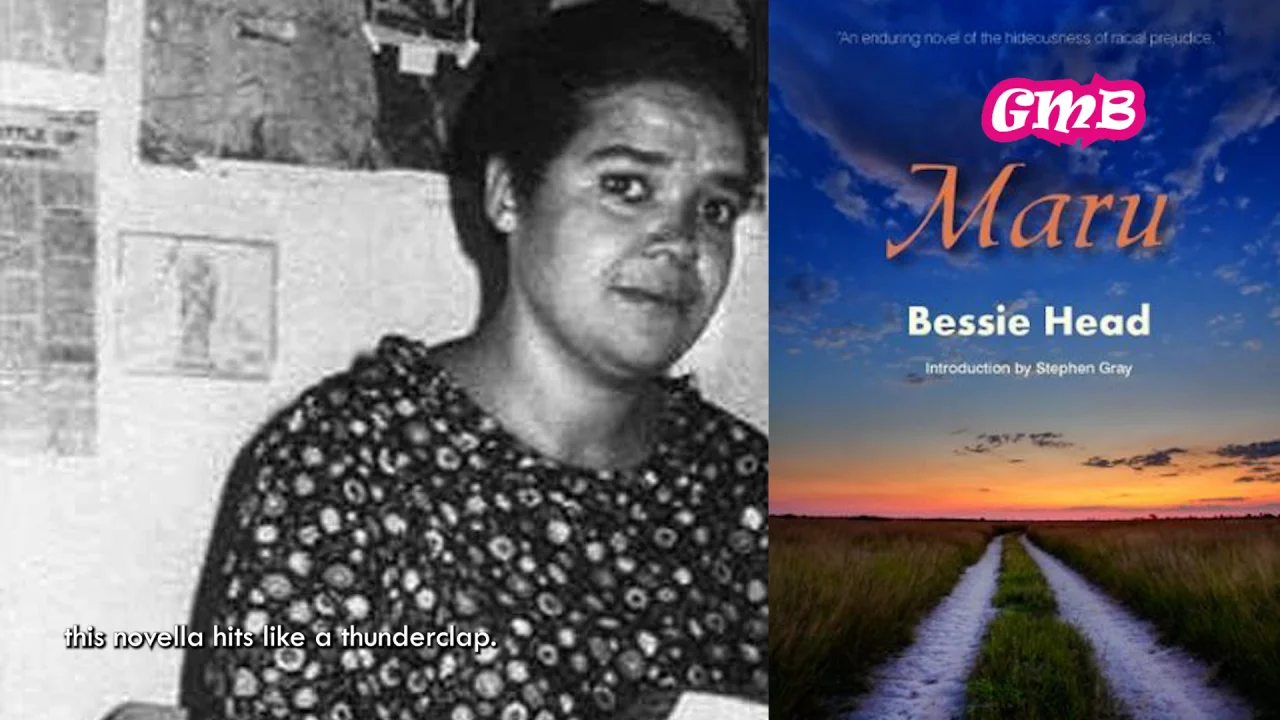
Sometimes a novel begins with a quiet moment that tells you everything about the world you’re about to enter.
In this one, a woman dies giving birth. Instead of mourning her, the people around her stare at the newborn child with unease. No one wants to touch the baby. They whisper and hesitate, as if the infant were a curse rather than a life.
Why?
Because the child is Basarwa.
Then a white schoolteacher steps forward. Calmly, almost casually, she decides she’ll raise the baby herself. She gives the child her own name and takes responsibility for a life that everyone else has already rejected.
That small act of defiance sets the stage for one of the most quietly powerful African novellas ever written: Maru by Bessie Head.
👉 The edition I read is available here:
https://amzn.to/490ucVi
What Kind of Novel Is This?
Maru is a short but deeply unsettling literary novel about prejudice, power, and identity.
It isn’t a long book—barely over a hundred pages—but the emotional weight it carries is enormous.
Genre: Literary fiction
Tone: Quiet, reflective, occasionally unsettling
Pace: Fast but intense
Themes: Racism, tribalism, identity, power, social hierarchy
At its heart, the story asks a simple but disturbing question:
What happens when someone society refuses to see as human suddenly becomes impossible to ignore?
This book is for readers who:
-
Enjoy thoughtful African literature
-
Like novels that explore social injustice and identity
-
Prefer short but powerful stories that stay with you
This book is not for readers who:
-
Want fast-paced action plots
-
Need clear heroes and villains
-
Prefer light or purely entertaining fiction
👉 You can check out the same edition here:
https://amzn.to/490ucVi
A Glimpse of the Story (No Spoilers)
The story centers on Margaret Cadmore, a young teacher who arrives in the village of Dilepe.
She’s intelligent, educated, polite, and speaks English with perfect clarity. On the surface, she appears to be an ideal schoolteacher.
But Margaret carries a secret that soon becomes impossible to hide.
She is Masarwa—a member of a group the dominant Tswana society treats as less than human.
When the truth spreads through the village, the reaction is immediate and uncomfortable. The school authorities panic. Parents begin whispering. People start looking for ways to remove her.
But Margaret refuses to hide her identity.
And that simple act of honesty becomes dangerous.
Meanwhile, two powerful men in the village—Moleka and Maru—find themselves drawn to her in very different ways. What follows is a complex web of attraction, politics, manipulation, and social upheaval.
What begins as a quiet teaching appointment slowly becomes a confrontation between a single woman and an entire system of prejudice.
Why This Story Matters
On the surface, Maru looks like a love triangle.
But that’s not really what the novel is about.
The romantic tension is only the doorway. What the book truly examines is internal racism, or what we often call tribalism in Africa.
One of the most uncomfortable truths the novel exposes is this:
Even societies that suffered under colonial racism sometimes reproduce the same prejudice within their own communities.
In the world of the novel, the Basarwa people are viewed as incapable of thinking. They are treated as servants, outsiders, or even something closer to animals than human beings.
The irony is painful.
While many Africans were fighting European colonial racism, similar hierarchies continued inside their own societies.
Bessie Head doesn’t lecture the reader about this problem. Instead, she simply introduces Margaret into the village and lets the reactions unfold.
And suddenly everyone’s prejudice becomes visible.
Teachers panic.
Parents fear contamination.
Leaders worry about reputation.
And the existence of one educated Basarwa woman quietly exposes the lie that her people are inferior.
That’s what makes the novel so powerful.
Margaret doesn’t lead a revolution. She doesn’t deliver speeches.
She simply exists.
And that existence forces the entire village to confront its own hypocrisy.
The Writing Style: Short, Sharp, and Uncomfortable
One of the most interesting things about Maru is its structure.
The book opens with Margaret already married to Maru. From there, the story unfolds as a long flashback explaining how everything happened.
There are no chapters, no sections, no pauses—just one continuous narrative.
The effect is surprisingly intense.
The story moves quickly, but emotionally it feels heavy. You feel the pressure of the social tension building around Margaret.
Despite the serious themes, the book is also extremely readable. It avoids unnecessary subplots and stays focused on the central conflict.
In fact, this may be the most accessible of Bessie Head’s novels.
👉 If you’d like to read the same edition I did, here’s the link:
https://amzn.to/490ucVi
My Honest Thoughts on the Story
There is a lot to admire about Maru.
The biggest strength is its moral clarity. Bessie Head confronts tribal prejudice without hesitation, and she does so in a way that feels both compassionate and brutally honest.
Margaret herself is a fascinating character.
She isn’t loud or rebellious in the conventional sense. Her resistance is quieter than that. She refuses to deny who she is, even when hiding would make life easier.
That quiet defiance becomes the novel’s emotional center.
However, one aspect of the story did leave me slightly unsettled.
The way Margaret eventually marries Maru feels ambiguous, almost unsettling. Maru’s motivations remain mysterious, and the decision seems less like a mutual choice and more like something orchestrated around her.
That ambiguity might be intentional. The novel isn’t trying to give us a perfect love story.
Instead, it reflects how power operates in complex ways—even in relationships that appear romantic.
In that sense, the discomfort might actually be part of the point.
About the Author: Bessie Head
The life of Bessie Head is almost as remarkable as her fiction.
She was born in South Africa to a white mother and a Black father during apartheid—a circumstance that left her socially isolated from both communities.
Later, she moved to Botswana, where she spent most of her life and produced some of the most important literature in southern Africa.
Her work often explores:
-
exile
-
belonging
-
mental struggle
-
racism and identity
Novels like Maru and A Question of Power remain deeply influential in African literature.
Her writing is fearless. She addresses painful social realities that many writers prefer to avoid.
Conclusion: A Small Book With a Thunderous Message
Maru is a short novel, but it leaves a lasting impression.
It isn’t flashy. It doesn’t rely on dramatic twists or elaborate storytelling.
Instead, it quietly dismantles an entire system of prejudice by placing one person at its center.
Margaret Cadmore begins life as a child no one wanted to touch.
By the end of the story, her existence forces an entire society to rethink what it means to be human.
That transformation—subtle but powerful—is what makes the novel unforgettable.
If you enjoy African literature that confronts difficult social truths with intelligence and courage, Maru is absolutely worth your time.
👉 If you’d like to read the same edition I did, you can find it here:
https://amzn.to/490ucVi