 English
 French
 German
 Russian
 中文
中文

He Held Death in His Pouch — And Dared the Government to Try
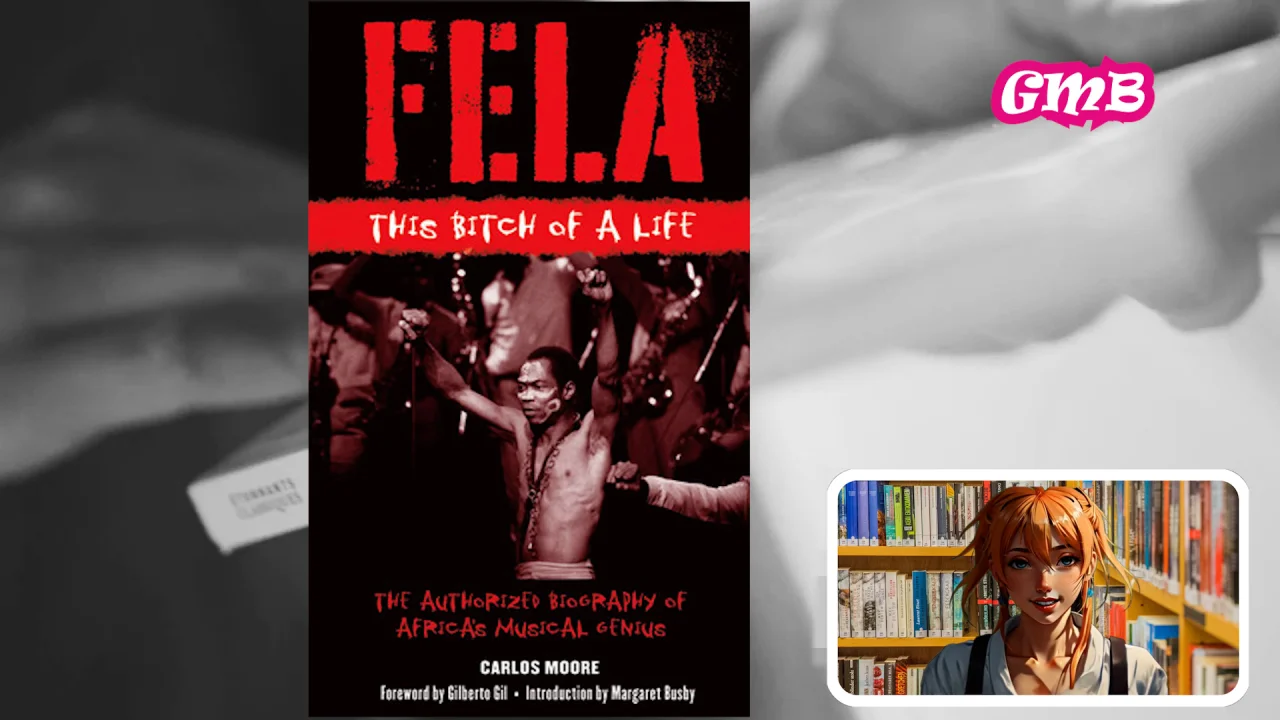
There’s a moment in this book where I had to stop reading and just stare at the wall.
Not because I was confused.
Not because I was bored.
But because I realized I was reading the life of a man who genuinely believed he could not be killed — and then lived like it.
You ever encounter someone so fearless it almost feels reckless? So unfiltered it borders on madness? Someone who looks power in the eye, insults it publicly, and then turns the insult into a hit song?
That was Fela.
And this isn’t just a biography. It’s a revolution written in first person. A saxophone screaming against soldiers. A son arguing with his dead mother. A man daring an entire government to silence him — and surviving long enough to tell the story himself.
Well… almost himself.
What Kind of Novel Is This?
This is a political autobiography disguised as a confession — raw, rhythmic, and unapologetically loud.
Tone: fiery, confrontational, spiritual
Pace: fast but intense — it reads like a long interview you can’t pause
Themes: resistance, colonial trauma, corruption, masculinity, spirituality, artistic freedom
This book is for readers who:
-
Are fascinated by revolutionary artists
-
Love African political history told without academic filters
-
Can handle messy, contradictory, larger-than-life personalities
This book is NOT for readers who:
-
Need their heroes morally polished
-
Prefer neutral, detached biographies
-
Get uncomfortable with profanity or blunt opinions
👉 The edition I read is available here:
Fela: This Bitch of a Life by Carlos Moore
Why This Story Matters (Emotional Core)
What stayed with me after finishing this book wasn’t just the music.
It was the refusal.
Fela — born Fela Anikulapo-Kuti — could have lived comfortably. His father was a Reverend. His mother, Funmilayo Ransome-Kuti, was a political force — one of the first Nigerian women to drive, a global traveler, a fearless organizer. His siblings became doctors and professionals.
He had every opportunity to become respectable.
Instead, he chose confrontation.
After traveling to America and encountering Black radical thought — the Black Panther Party, the teachings of Malcolm X — something in him shifted. Jazz and highlife weren’t enough anymore. He didn’t want to entertain power. He wanted to expose it.
Afrobeat was born — not just as a genre, but as a weapon.
Songs like “Zombie” and “Vagabonds in Power” weren’t metaphors. They were accusations. And the Nigerian military responded exactly how threatened power always responds — with violence.
They raided his Kalakuta Republic. Burned it down. Beat his wives. Threw his mother from a window.
And still, he kept singing.
What this book refuses to answer is simple:
Was Fela crazy? Or was he the only sane person in a corrupt system?
That question lingers long after the final page.
This isn’t a neat story about a hero. It’s a portrait of a man who was brilliant, arrogant, spiritual, tender, reckless, loving, impossible — and utterly unwilling to bow.
And in a world where most of us compromise to survive, that kind of defiance feels almost mythological.
A Glimpse of the Story (Minimal, No Spoilers)
The setup is simple but explosive:
A musician in 1970s Nigeria declares his compound an independent republic — the Kalakuta Republic — and publicly challenges a military regime through music.
The conflict?
Art versus authority.
Truth versus propaganda.
One man versus the state.
The moral dilemma?
How far can you push resistance before it destroys you — and the people around you?
The book unfolds in Fela’s own voice — through long, blazing interviews conducted by Carlos Moore. It’s unfiltered. Profane. Contradictory. Sometimes visionary. Sometimes unsettling.
And that’s exactly the point.
Who This Book Is Perfect For
You’ll enjoy this novel if:
-
You like books that feel like listening to someone rant brilliantly at 2 a.m.
-
You enjoy political memoirs that don’t sanitize the subject
-
You read nonfiction to understand power — not just personalities
You might struggle with this book if:
-
You prefer structured, chronological storytelling
-
You need your revolutionaries morally tidy
-
You dislike mystical or spiritual digressions
👉 If this sounds like your kind of book, you can get it here:
Fela: This Bitch of a Life
The Black Pages & The Wives — The Parts That Surprised Me
The edition I read includes what are known as the “black pages.”
These sections feel almost otherworldly. Fela speaks to his deceased mother. Not metaphorically — directly. They read like spiritual dialogues, grief pouring out in raw form. It’s eerie, intimate, and unexpectedly tender.
Then there are interviews with his wives — yes, all 27 of them.
I expected bitterness.
Instead, I found complexity. They speak honestly about hardship — about poverty, raids, instability — but also about loyalty and belief. It doesn’t glamorize polygamy. It doesn’t excuse neglect. It simply presents reality as it was lived.
And that honesty gives the book weight.
About the Author
Carlos Moore isn’t a random biographer parachuting into a story.
He’s a Cuban-born ethnologist exiled for criticizing racial policies in Cuba. A scholar of African, Caribbean, and Latin American struggles. A man who understands systems of oppression firsthand.
He met Fela during FESTAC ’77 in Lagos. Later, Fela summoned him back to write this book. He didn’t want to die without telling his story — on his terms.
Moore’s greatest strength here is restraint. He doesn’t polish Fela. He doesn’t soften him. He simply gives him the microphone.
My Honest Verdict
This isn’t a perfect book.
It’s repetitive at times.
It’s chaotic.
It’s unapologetically one-sided.
But it’s honest.
And honest books are rare.
You don’t come away with a clean moral summary. You come away feeling like you’ve met someone unforgettable — someone who may have been flawed beyond comfort, but whose courage was undeniable.
I recommend it — cautiously — to readers who can sit with contradiction.
Final Thoughts & Recommendation
When I think back to that moment — staring at the wall after reading about the raid on Kalakuta — I realize what shook me wasn’t the violence.
It was the stubbornness.
Fela truly believed he was an Abiku — a spirit child who had already cheated death once. So he lived like he had nothing to lose.
Most of us don’t live that way.
Most of us can’t.
And maybe that’s why this story matters.
If you’re ready for a biography that feels like a protest march in book form — loud, imperfect, impossible to ignore — then this is for you.
👉 If you’d like to read the same edition I did, here’s the link:
Fela: This Bitch of a Life by Carlos Moore
Put on some Afrobeat while you read it.
And see if you finish the book feeling exactly the same as when you started.
I doubt you will.