 English
 French
 German
 Russian
 中文
中文

Why “The Rational Optimist” Will Make You Rethink Humanity’s Future
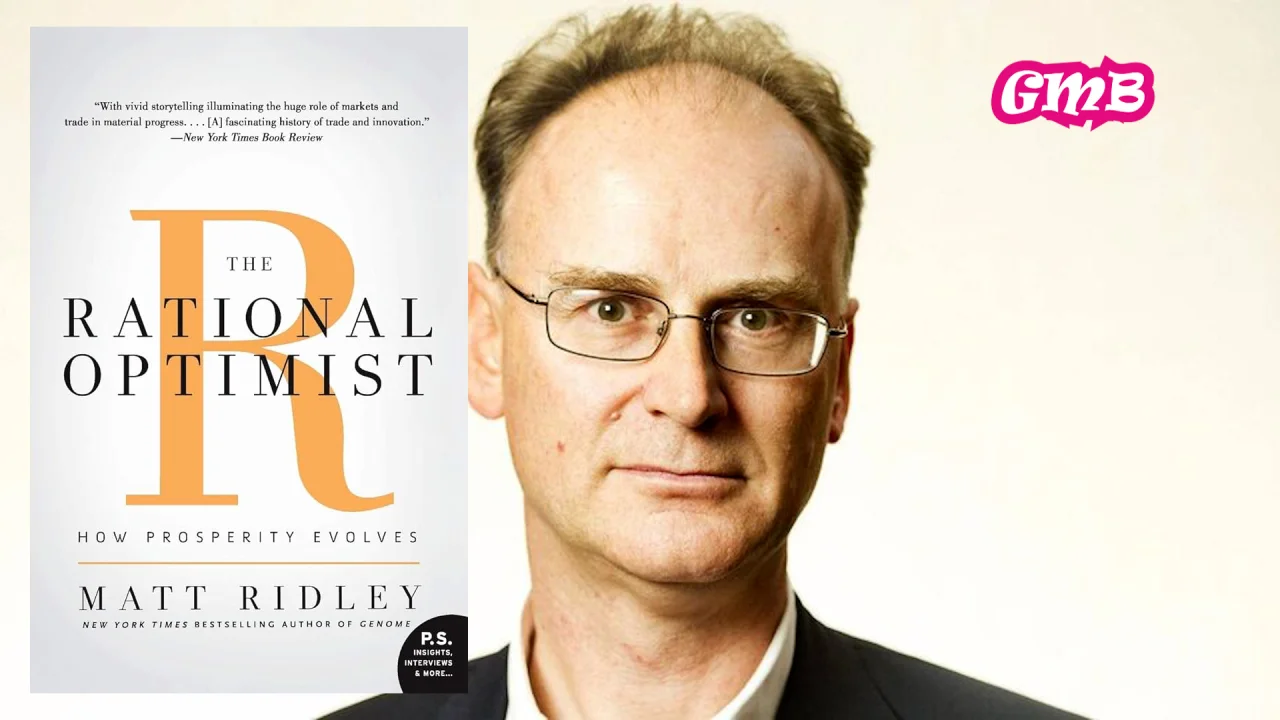
Humans have this uncanny habit of predicting the end of the world every generation. From ancient Rome to Y2K panic, doom has always been in fashion. Yet here we are—lights on, fridges humming, cat videos streaming uninterrupted.
Enter Matt Ridley, a man who took one look at centuries of apocalyptic predictions and said, “Hold my beer. Let me show you the data.” His 2010 book, The Rational Optimist: How Prosperity Evolves, is a 453-page deep dive into why, despite all the doom-and-gloom headlines, humanity is actually doing pretty well—and getting better.
A Concise Look at the Story Behind the Optimism
Ridley’s book is less a narrative and more a historical argument built on evidence. He examines over 200,000 years of human civilization and finds a pattern: every time society faces a crisis—famine, disease, war, economic collapse—we innovate, trade, and adapt.
Consider the Irish Potato Famine. While it claimed a million lives, humans responded by developing disease-resistant crops and diversifying agriculture. The Great Depression? Similarly, a period of hardship ultimately sparked innovations that transformed economies. Ridley’s key message is clear: human ingenuity and cooperation have repeatedly rescued us from the brink.
He credits trade and exchange as the driving forces behind this progress. Governments, he argues, often stifle innovation, whereas the freedom to trade ideas, goods, and services unleashes unprecedented prosperity.
Why This Book Matters
At its core, The Rational Optimist challenges the pessimistic narratives that dominate media and popular discourse. Ridley confronts long-standing beliefs about inevitable famine, environmental collapse, and Africa’s perpetual poverty, demonstrating instead that human creativity, coupled with trade, often defies these doomsday predictions.
He introduces the concept of the “collective brain”, explaining that innovation is rarely about lone geniuses. Instead, progress emerges from communities sharing ideas and building on each other’s discoveries. The book argues that isolation and over-regulation can hinder this natural process.
Ridley doesn’t shy away from controversy. He critiques well-meaning environmental policies that might inadvertently worsen outcomes, and he questions conventional wisdom about philanthropy and corporate influence. Even when you disagree, the book pushes you to critically examine your assumptions about human progress.
Strengths, Weaknesses, and Personal Insights
Strengths:
-
Data-Driven Optimism: Ridley backs his arguments with statistics and historical examples rather than mere wishful thinking.
-
Global Perspective: From Europe to Africa, he examines real-world cases that challenge popular pessimistic narratives.
-
Engaging Concepts: The “collective brain” and the trade-as-innovation thesis are thought-provoking ideas that make you see human history differently.
Weaknesses:
-
Correlation vs. Causation: Sometimes the link between trade and progress is oversimplified.
-
Government Role Underplayed: Ridley occasionally downplays how regulations and public institutions have supported stability and growth.
-
Philanthropy Oversight: He highlights generous giving but may overstate altruism while underestimating systemic incentives like tax benefits.
Even with these critiques, the book’s value lies in its ability to broaden your perspective and spark thoughtful debate.
A Glimpse of the Book
Without spoiling anything, here’s what you can expect:
-
Exploration of how humanity repeatedly overcomes crises through trade, innovation, and cooperation.
-
Examination of historical fears—from Malthusian famine predictions to the supposed doom of developing nations.
-
Data-backed arguments that challenge conventional wisdom about economics, environment, and society.
If you’ve ever wondered whether progress is inevitable—or just wishful thinking—this book gives you a framework to decide for yourself.
Who Should Read This Book
You’ll enjoy this book if:
-
You like books that challenge conventional wisdom.
-
You enjoy data-driven arguments blended with history and sociology.
-
You read to think critically about society, economics, and innovation.
You might struggle with this book if:
-
You prefer fast-paced narratives or fictional drama.
-
You need clear-cut heroes and villains to navigate complex issues.
-
Open-ended conclusions frustrate you more than they enlighten you.
👉 Grab the edition I read here: The Rational Optimist on Amazon
My Honest Verdict
This isn’t a perfect book. Ridley sometimes oversimplifies, and his optimism may feel naive in today’s climate of inequality and environmental concern. Yet, the book’s greatest strength is its reminder: humans are incredibly adaptive. We’ve survived plagues, wars, and countless predictions of doom, often emerging stronger than before.
Whether or not you agree with every argument, The Rational Optimist will make you reconsider your assumptions about progress, innovation, and the role of free trade in shaping our world.
About Matt Ridley
Matt Ridley is a British author, journalist, and businessman who specializes in evolution, genetics, and human behavior. His work consistently highlights how complex systems—whether genes, economies, or societies—emerge from simple interactions among individuals. He’s known for taking bold, sometimes unpopular positions, and this book is no exception.
Final Thoughts
In a world obsessed with doom-scrolling and daily catastrophe headlines, The Rational Optimist offers a refreshing counterpoint. It reminds us that progress is often messy, unpredictable, and driven by ordinary people doing extraordinary things.
Whether Ridley is right or not, the conversation about humanity’s future is too important to be dominated by fear or blind optimism. This book forces you to look at history, data, and society in a new way—and for that reason alone, it’s worth your time.
👉 Check out the latest edition here: The Rational Optimist on Amazon