 English
 French
 German
 Russian
 中文
中文

This Book Made Me Grieve a Country I’ve Never Lived In
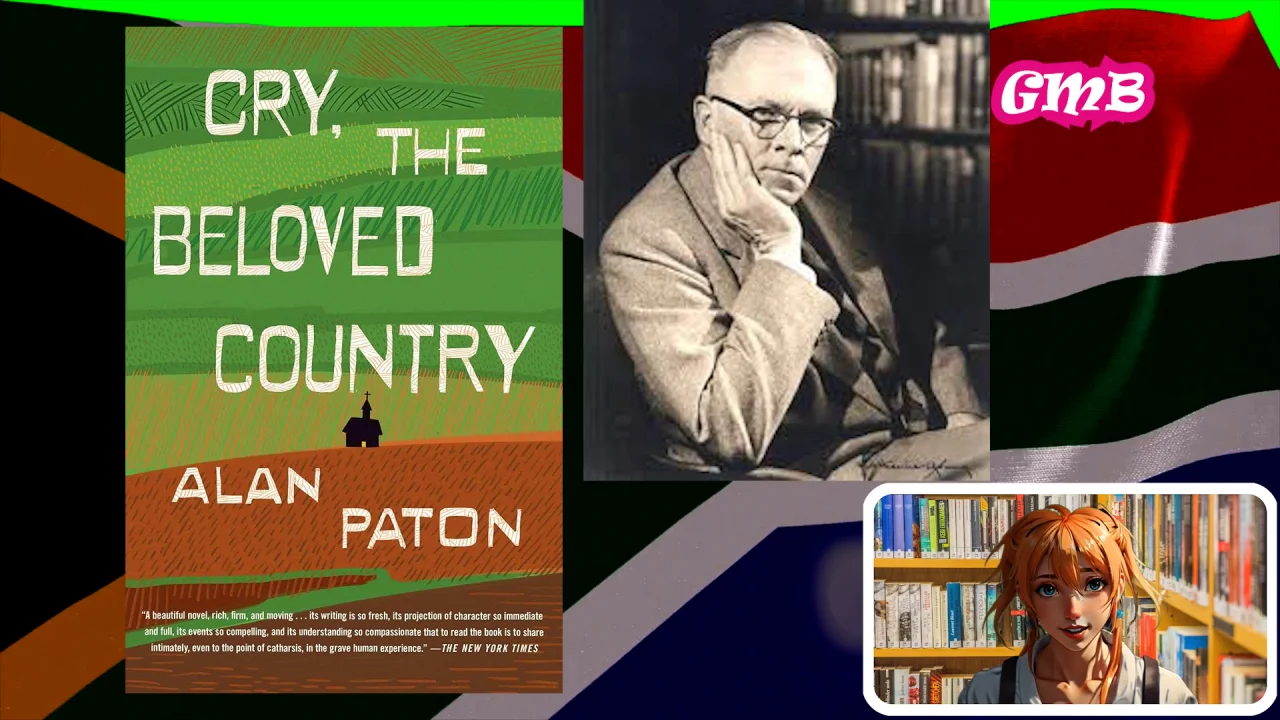
There’s a moment in this novel where I had to stop reading.
Not because it was confusing. Not because it was boring.
But because it hurt.
I found myself staring at a single paragraph, rereading it slowly, almost reluctantly — the kind of paragraph that feels less like fiction and more like a quiet accusation. It wasn’t loud. It didn’t shout. It simply existed — heavy with sorrow.
Imagine living peacefully in a small rural village, where the loudest scandal is probably a wandering cow. And then, one by one, everyone you love leaves for the big city. Your brother. Your sister. Your only son.
You tell yourself they’ll write.
They don’t.
That slow unraveling — of family, of community, of a nation — is what this novel made me sit with.
What Kind of Novel Is This?
This is a literary, reflective social novel about the cost of injustice — not just politically, but spiritually.
Tone: Poetic, mournful, deeply compassionate
Pace: Slow and deliberate
Themes: Racial inequality, fear, forgiveness, fatherhood, social decay, hope
This book is for readers who:
-
Love lyrical, almost biblical prose
-
Enjoy novels that wrestle with moral and social questions
-
Don’t mind slowing down to feel a story
This book is NOT for readers who:
-
Need fast-paced plots and constant action
-
Prefer clear villains and heroes
-
Want a neatly wrapped, emotionally easy ending
👉 The edition I read is available here:
Cry, the Beloved Country by Alan Paton
Why This Story Matters (Emotional Core)
This novel isn’t really about crime.
It isn’t even primarily about apartheid — though it was published in 1948, the very year apartheid was formally instituted in South Africa.
It’s about what happens when fear governs a society.
Through the journey of Stephen Kumalo — a humble village priest searching for his lost family in Johannesburg — we see how systems quietly break people long before they break laws.
One of the most striking parts of the book comes through the writings of Arthur Jarvis, a white South African who advocates for education and equality. He argues that denying education to Black South Africans is not only morally wrong — it is socially dangerous.
And reading those passages today?
They still sting.
There’s a line that essentially says: educate people, pay them fairly, and they might start reading more, thinking more, demanding more. That fear — the fear of equality — feels painfully timeless.
What stayed with me after finishing the book wasn’t the crime at its center.
It was the silence.
The grief of a father.
The quiet dignity of people trying to remain humane in an inhumane system.
The realization that injustice damages both the oppressed and the oppressor.
Paton refuses to demonize entirely or sanctify entirely. There are kind white characters. There are flawed Black characters. There is generosity. There is failure.
That complexity feels honest.
And rare.
A Glimpse of the Story (Minimal, No Spoilers)
A rural priest receives troubling news: his sister has fallen into destructive habits in Johannesburg.
He travels to the city to bring her home.
Instead, he discovers his son has been caught in something far darker — a robbery that ends in tragedy.
The victim? A white activist who fought for racial equality.
The conflict is not just legal.
It’s moral.
It’s spiritual.
It’s national.
Who This Book Is Perfect For
You’ll enjoy this novel if:
-
You like books that make you sit quietly after finishing
-
You appreciate restrained, poetic writing
-
You read fiction to understand people, not just to escape
You’ll especially love it if you enjoy novels like Things Fall Apart by Chinua Achebe — stories that examine a society under pressure.
You might struggle with this book if:
-
You prefer rapid plot twists
-
You need constant dialogue and action
-
You dislike reflective, almost sermon-like prose
👉 If this sounds like your kind of book, you can get it here:
Cry, the Beloved Country – Amazon Edition
My Honest Verdict
This isn’t a perfect novel — but it’s an honest one.
What worked:
-
The poetic, almost biblical rhythm of the prose
-
The moral complexity of its characters
-
The emotional restraint (which somehow makes it more powerful)
What didn’t fully work for me:
-
The pacing can feel very slow if you’re not in the right mindset
-
The structure, with dashes instead of quotation marks, takes adjustment
But that slowness? It forced me to absorb every word. It made me read at what I’d call “snail pace” — and for once, that was a gift.
Paton’s Christianity is visible in the tone — but it never feels preachy. Instead, it feels humanistic. It’s about forgiveness, shared futures, and the possibility of redemption even when systems seem irredeemable.
For a 240-page novel, it carries astonishing emotional weight.
Final Thoughts & Recommendation
There’s a passage in the book that says:
“Cry for the broken tribe… Cry, the beloved country…”
That line stayed with me.
This is not just a story about South Africa. It’s about any nation fractured by fear. Any society that convinces itself that keeping others small will somehow make it safer.
If you’re the kind of reader who doesn’t mind slowing down — who wants to feel literature instead of racing through it — this novel will reward you deeply.
It made me grieve a country I’ve never lived in.
And that’s the power of great fiction.
👉 If you’d like to read the same edition I did, here’s the link:
Cry, the Beloved Country by Alan Paton
Similar Books You Might Like
-
Things Fall Apart by Chinua Achebe
-
Too Late the Phalarope by Alan Paton
If you’ve read this classic, I’d genuinely love to know:
Did it break you a little too?