 English
 French
 German
 Russian
 中文
中文

Breaking Silence: From Chains to Love – A Poetic Journey Across Generations
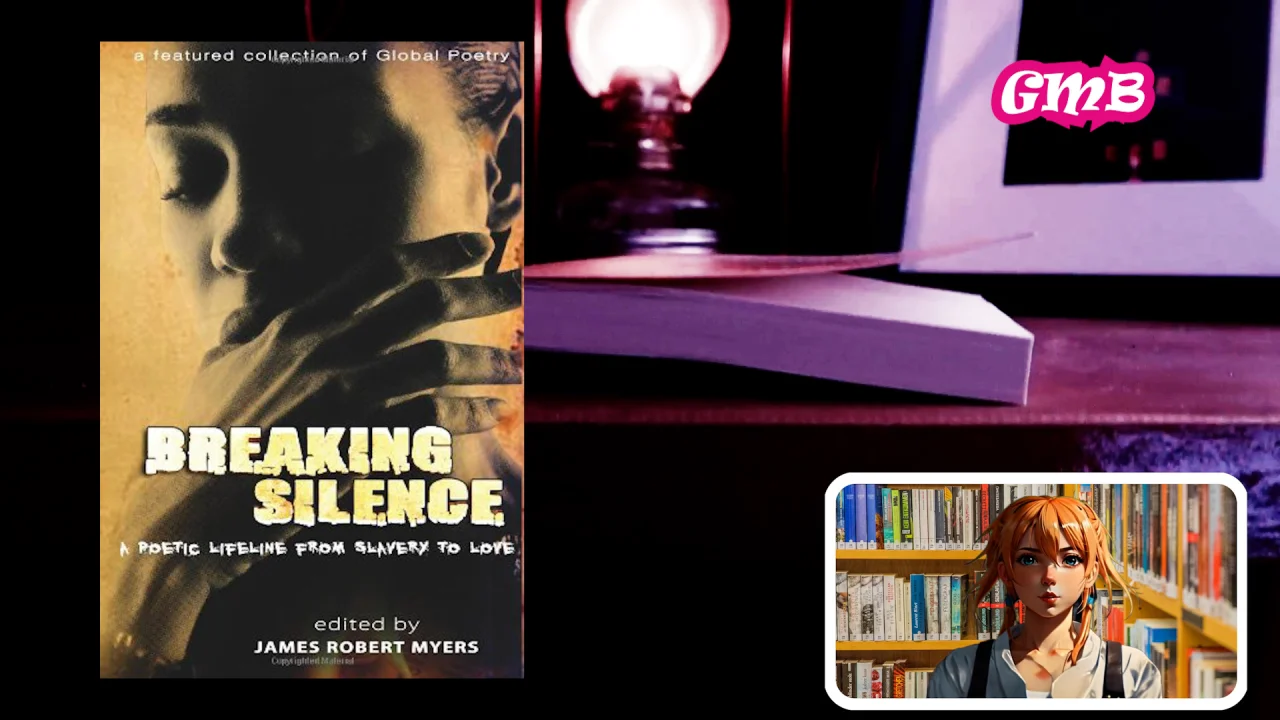
Have you ever tried mixing two things that really shouldn’t go together? Pineapple on pizza. Coke with milk. Or, my personal favorite, trying to teach your grandma how to use TikTok. Surprisingly, some combinations work—against all odds. Breaking Silence: A Poetic Lifeline from Slavery to Love, edited by James Robert Myers, is one of those unexpected successes. This 2013 anthology daringly places the horrors of slavery alongside the tenderness of love, creating a journey that is haunting, healing, and utterly human.
From the first page, you are carried from the dungeons and chains of history to the heartbeat of love, identity, and hope. Myers, a young Ghanaian editor at the time, brought together voices from across the globe—Ghana, Zimbabwe, Kenya, Australia, India, Spain, the U.S., Belgium—but the strongest, most resonant voices are undeniably Ghanaian. The anthology features veterans like Mbizo Chirasha and Phillip Oyinka (better known as Nana Asaase) alongside emerging poets whose words cut deep, despite their relatively new pens.
Let’s explore this powerful collection.
Slavery and Memory: Voices That Refuse to Forget
The opening poems of Breaking Silence are heavy, often written in the first person, capturing either the direct experience of enslavement or the ghostly observations of descendants. Here, memory itself becomes a vessel.
In Nii Ayi Solomon’s The Forgotten Soul, the speaker feels weak, powerless, and bound by history. The poem embodies the “we” of generations: the voices of ancestors speaking through their descendants. Kwabena Agyare’s Jero, My Brother powerfully captures the agony of separation:
“Distant relatives we seem to be
But time will welcome you
Back to the heart of your motherland”
The poems do more than recount history—they question it. Can someone forcibly removed from their homeland ever truly return? And even today, some African Americans reject the term “slavery” entirely, seeking identity separate from painful history. Through these poems, Breaking Silence reminds us that hope and memory are inseparable.
Colonial Anger and Finger-Pointing: History Confronted
Some of the anthology’s poems read like they could have been written during the colonial era. Turkson Adu Darkwa, for instance, mourns a lost pastoral life while condemning the betrayals of colonizers. Emmanuel Kwabena Woyome’s To Host an Enemy cuts sharply:
“We served you fine hospitality,
When you sold us a pot of slavery”
Symbols of slavery—slave castles, dungeons, shackles, Cape Coast, Elmina—populate the collection, reminders that history is etched in stone. Charles “Kwame Write” Aidoo’s Head Nigger in Charge refuses to shy away from uncomfortable truths, calling out African chiefs who sold their people for trinkets. The anthology confronts the full complexity of history: not all villains wore foreign skin, yet injustice left no distinction.
Language, Culture, and Resistance: Poetic Rebellion
Shittu Fowora takes a unique approach, interrogating the politics of language in Father Tongue. Why should an Englishman mock him for speaking “poor English” when he cannot speak Igbo? Fowora highlights cultural imperialism with subtle precision. In Usurpers, he turns geometric metaphors into a lens for exploitation, proving that great poetry can transform even abstract forms into rebellion.
Rising Above: Empowerment and Hope
Ghanayobi Nii Saki Sackey’s Dza Nyonmo is a rallying cry, a declaration that the era of slavery is over and the time for rising has arrived:
“…no one can stand in our way.
No one, absolutely none
Dza Nyonmo”
The poem vibrates with drums and rhythm, an anthem of empowerment that connects the past to a hopeful present.
From Pain to Love: A Delicate Transition
Phillip “Nana Asaase” Oyinka masterfully bridges the anthology’s darker beginning to its luminous second half. In Sojourner, a weary traveler searches for rest, reflecting on the hardships endured but ultimately finding hope. With calm lyricism and Twi interspersed, the poem embodies the shift from trauma to healing.
Love in All Its Forms: The Anthology Blossoms
The second half of Breaking Silence is a rich buffet of love poems:
-
Love for a mother
-
Unrequited love (All the Man that I Am by James Robert Myers)
-
Deserted lovers (To My Araba by Shakiru Akinyemi)
-
Won and lost love (Sunset at Noon by Alhassan A. K. Jacob)
-
Unattainable love (Ode to Akosua by Jacob)
-
Intoxicating, stupifying love (Madora by Caleb Kudah)
-
Love for Africa itself (Africa in Me by Cheryl Faison)
Ransford Nana Kwame Boateng’s My Head captures longing in a line you won’t forget:
“But I would kill to be able to hear what a blind man sees.”
Richard Henry Quist Sr’s Insolence reverberates with spirituality:
“Angels are mothers cleaved out of spirit.”
Gabriel Edzordzi’s vivid local metaphors—like weeping under leafless coconut trees—ground love in African soil. Gopal Lahiri’s Heart and Soul, with non-rhyming couplets, delivers sharp, reflective insights. Some poems, like Redscar MvOdindo K’Oyuga’s It’s the Africa in Me, step outside the slavery-love dichotomy to explore identity itself.
My Thoughts: Strengths, Weaknesses, and Impact
Breaking Silence is a brave, ambitious project. Combining slavery and love in one anthology is daring—and it largely succeeds. The strongest poems—Dreams from Atlantis by Dante Poet, Rhapsody on a Windy Afternoon by Madhumita Ghosh, Sackey’s Dza Nyonmo, and Oyinka’s Sojourner—linger long after the last page.
However, the collection is sprawling. Some poems suffer from poor diction, clumsy structure, or semantic slips. A stricter editorial hand could have amplified the anthology’s impact. Still, the book’s core message resonates: descendants of those enslaved can rise, hope, and love, even after unspeakable wrongs.
About the Editor: James Robert Myers
James Robert Myers, a Ghanaian student at O’Reilly Senior High School in Accra when he edited this anthology, pulled together voices from across continents. His own literary work focuses on romance and life circumstances, blending imagery, symbolism, and heartfelt sentiment. His vision reminds us that history may have shackled our ancestors, but words still set us free.
Who Should Read This Book
Breaking Silence is perfect for readers who:
-
Love poetry that tackles both history and emotion
-
Are interested in African literature, identity, and diaspora experiences
-
Enjoy anthologies that challenge, reflect, and inspire
You might struggle with this book if you:
-
Prefer fast-paced narratives over reflective poetry
-
Need clear, straightforward heroes and villains
-
Dislike open-ended explorations of history and emotion
Final Thoughts
Breaking Silence is more than an anthology—it’s a journey from chains to the heart. It forces you to confront the weight of history, the complexity of identity, and the power of love to heal. It’s a reminder that while we cannot change the past, we can give voice to memory and hope for the future.
👉 If you want to explore this anthology yourself, you can find Breaking Silence: A Poetic Lifeline from Slavery to Love on Amazon.
So, what do you think? Can love truly emerge from the ashes of slavery? This anthology dares to answer that question—and leaves room for each reader to find their own response.