 English
 French
 German
 Russian
 中文
中文

The Heinemann Book of South African Short Stories: A Window into a Nation’s Soul
Imagine standing at Nelson Mandela’s funeral, surrounded by a sea of black suits and solemn faces. You hear someone declare, “We loved him! He was a man of peace!”—and then it hits you: half the people crying were once his oppressors. The irony is almost unbearable. Mandela spent 27 years in prison for daring to say, “Hey, maybe black people are also human?” Yet, by the time of his funeral, even those who once supported apartheid are celebrating his legacy.
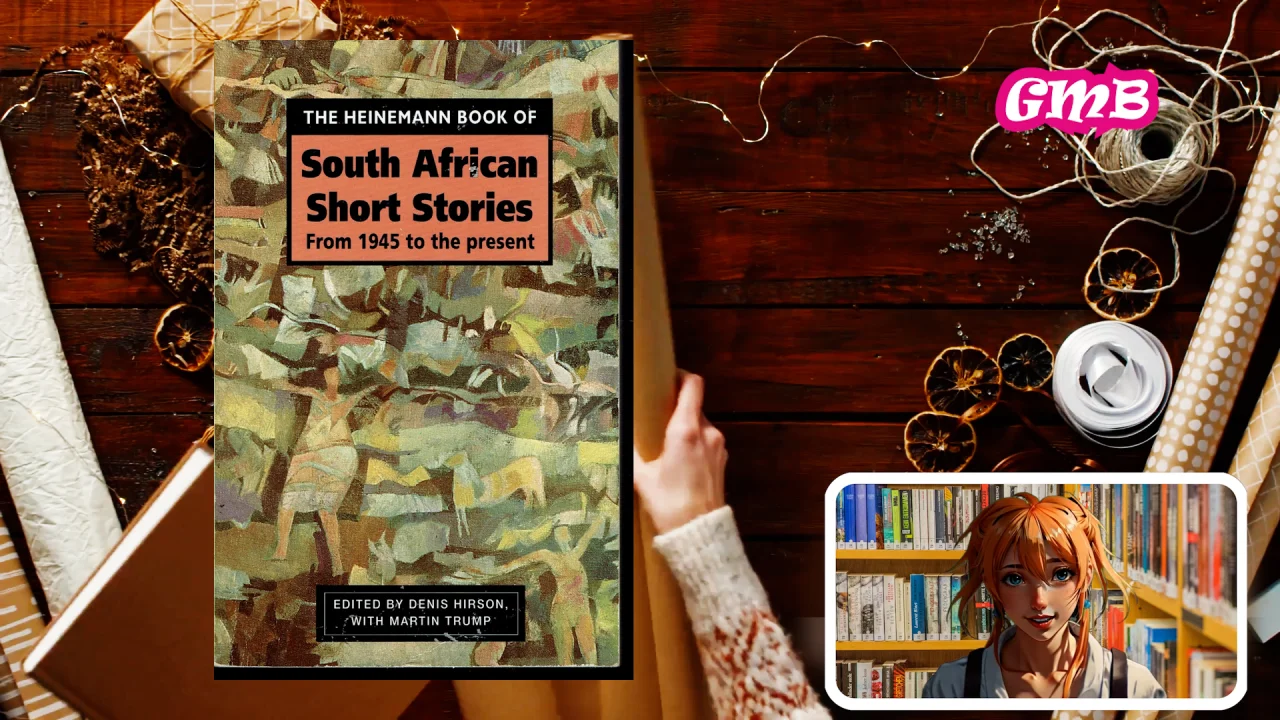
This paradox—pain and resilience, cruelty and compassion—is at the heart of South Africa’s complex history. And it’s precisely the world captured in The Heinemann Book of South African Short Stories: From 1945 to the Present, edited by Denis Hirson with Martin Trump. This 1994 anthology takes readers on a journey through the country’s darkest and most extraordinary years, revealing the human spirit in the face of oppression.
👉 You can find this edition here on Amazon.
Setting the Stage: South Africa 1945–1994
Before diving into the stories, it’s essential to understand the context. The anthology spans from just before apartheid’s official start in 1948 through its final years in 1994. Apartheid wasn’t just casual discrimination—it was a state-sanctioned system that tried to convince an entire nation that black people were inferior and that racial mixing was unnatural.
Yet amid this madness, ordinary South Africans lived, loved, suffered, and sometimes found ways to resist—even in the smallest acts. What makes this anthology remarkable is its perspective: it doesn’t hit readers over the head with politics. Instead, it offers 22 unique windows into life during apartheid, capturing both the absurdities and the resilience of a nation under siege.
Stories of Childhood and Survival
The collection opens with “The Prophetess” by Njabulo Ndebele, a story that has traveled widely in other anthologies for good reason. But it’s Dugmore Boetie’s “Familiarity is the Kingdom of the Lost” that truly grips the heart. Here, a young boy navigates the streets, storm drains, and orphanages, his life a constant struggle for survival. His family is trapped in systemic poverty, his father haunted by hunger and violence, his mother laboring endlessly to feed their children.
These stories remind us that apartheid’s cruelty wasn’t just political—it was deeply personal, shaping lives from the earliest moments of childhood.
Glimmers of Hope: What Could Have Been
Not all stories dwell in despair. Ernst Havemann’s “Bloodsong” explores what might have been in a world without racial prejudice. A young white boy on his father’s farm unknowingly crosses racial boundaries with compassion and curiosity. He helps local tribesmen during a festival and shows simple humanity in moments that adults—paranoid and indoctrinated—cannot comprehend.
It’s a quiet rebellion against oppression, showing how innocence and empathy can transcend the most rigid social barriers.
Love, Death, and Madness
The anthology also examines the pressures of expectation and societal constraints. In Jack Cope’s “Escape from Love,” Franz, a white farmer, turns to a fetish priest amid family and romantic pressures, ultimately finding escape in tragedy. Elise Muller’s “Night at the Ford” contrasts arrogance with humility, as a modern woman learns generosity and kindness in an unexpected setting.
These stories blend personal drama with social critique, showing the intersection of individual lives and systemic pressures.
Dark Humor and Harsh Realities
Herman Charles’s “Bekkersdal Marathon” delivers absurdist humor, chronicling a church congregation caught in a seemingly endless psalm recital. Meanwhile, Breyten Breytenbach’s “The Double Dying of an Ordinary Criminal” delivers stark, haunting depictions of execution, highlighting the racial injustices underpinning apartheid.
Here, humor and horror coexist, reflecting the strange, often cruel reality of life under a repressive system.
Symbolism, Separation, and Family
Stories like Ivan Vladislavic’s “The Brothers” explore betrayal and the fracturing of relationships, paralleling South Africa’s political divisions. Hennie Aucamp’s “For Four Voices” examines identity and the tragic consequences of societal pressure through a story of deception, gender disguise, and suicide.
Etienne van Heerden’s “Mad Dog” and Barto Smit’s “I Take Back My Country” continue this theme, highlighting the intersection of family, survival, and the reclamation of identity in the face of systemic oppression.
Psychological Warfare and Consequences
Can Themba’s “The Suit” showcases psychological punishment at its most inventive and cruel, while Bheki Maseko’s “Mamlambo” delivers karma in a story of magical retribution. These tales show how human emotions—pride, vengeance, love—intersect with societal pressures, often with devastating outcomes.
Fear, Freedom, and Friendship
Mango Tshabangu’s “Thoughts in a Train” flips the conventional power narrative, showing the irony of fear among the oppressors and freedom among the oppressed. Dan Jacobson’s “The Zulu and the Zeide” demonstrates the transcendent power of friendship across cultural and linguistic barriers.
Death, Dignity, and Justice
Nadine Gordimer’s “Six Feet of the Country” examines ownership, ancestry, and injustice, while Ahmed Essop’s “The Hajji” explores pride, forgiveness, and the tragedy of timing. Each story is a meditation on the moral and social complexities of a divided nation.
Cycles of Violence and Reflection
Christopher Hope’s “Learning to Fly” and Alan Paton’s “A Life for a Life” show the cyclical nature of violence and revenge, while Zoe Wicomb’s “A Trip to the Gifberge” explores the tension between those educated abroad and families who remained in oppressed communities. Together, these stories provide a full spectrum of South African life under apartheid.
Why This Book Matters
The Heinemann Book of South African Short Stories is more than literature; it’s a historical document. Edited by Denis Hirson, a South African writer who grew up amid apartheid’s injustices, the collection preserves voices that might otherwise have been lost. Each story reflects not just survival, but dignity, creativity, and resilience in the face of a system designed to crush humanity.
Hirson’s careful curation ensures that readers gain insight into South African life from multiple perspectives—black and white, male and female, young and old—without feeling preached to. It’s raw, unfiltered, and unforgettable.
Final Thoughts and Recommendation
This anthology is essential reading for anyone seeking to understand South Africa beyond headlines, Mandela’s iconic smile, or the “Rainbow Nation” narrative. It will challenge, move, and enlighten you—but it works best if you have some historical context.
You’ll laugh, you’ll cry, and you’ll see the human side of history that textbooks often leave out. For those ready to confront both the absurdities and horrors of apartheid through compelling storytelling, this is a must-read.
👉 Grab your copy of The Heinemann Book of South African Short Stories here on Amazon and immerse yourself in the lives that history almost forgot.
Related Reads:
-
No Easy Walk to Freedom by Nelson Mandela – The classic collection of Mandela’s writings.
-
I Write What I Like by Steve Biko – Insightful essays on resistance and identity.