 English
 French
 German
 Russian
 中文
中文

Fourteen Stories. One Book. Infinite Conversations.
Some books feel like a single, long conversation.
Others feel like walking into a crowded room where everyone has something urgent, strange, or beautiful to say.
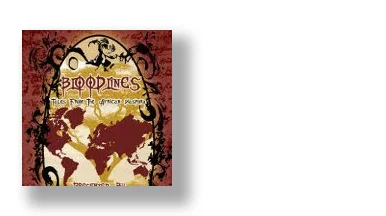
Bloodlines: Tales from the African Diaspora, Vol. 1 is the second kind.
When I picked it up, I didn’t feel like I was starting a book—I felt like I was approaching a table already buzzing with voices. Fourteen of them, to be exact. Different accents, different moods, different worlds. All connected by history, memory, imagination, and that complicated thing we call identity.
This isn’t a collection you rush through. It’s one you taste. One story at a time.
👉 The edition I read is available on Amazon
Bloodlines: Tales from the African Diaspora
A Literary Buffet (And Every Dish Works)
What struck me immediately is how unafraid this anthology is.
It refuses to stay in one lane. Realism sits comfortably next to science fiction. Folklore leans into futurism. Quiet emotional pain shares space with bold political imagination.
Take “The Other Wife” by Cranston Livingston, for instance. A polygamous marriage—but not the version most people expect. One woman chooses to bring another wife into the home. What follows isn’t melodrama, but memory, grief, and a deep meditation on loss. I didn’t agree with the choices—but I understood them. And that’s good writing.
Then there’s “Skyboat Strangers” by Ronald T. Jones, which casually asks:
What if aliens invaded the Benin Kingdom?
Yes. Aliens. In Benin.
Flying saucers hovering over calabashes and royal palaces.
It sounds wild—and it is—but it works. This story proves that African history doesn’t need to stay locked in the past. It can be futuristic, strange, and playful without losing its soul.
Magic, Myth, and the Quiet Weight of Being Human
Several stories linger because they ache softly.
“The Old Black Magic” by Barbara Jenkins feels like a song sung in a low voice—mystical, tender, and sad in that restrained way that hits harder later. A mysterious illness. A relationship under pressure. No cheap drama. Just emotional gravity.
In “Near But Far” by Igodiame Soumana, a baby taken by Djinns returns as a Native Doctor. Set in Niger, this story leans deeply into spiritual transformation and folklore—not as decoration, but as lived reality.
And “To Rest” by Sarah Bass floats somewhere between dream and inevitability. A woman dreams of clouds. Prepares for them. The narrator knows more than they let on. It’s calm, unsettling, and beautifully written.
These are stories that don’t shout.
They sit with you.
Power, Race, and Uncomfortable Truths
This anthology doesn’t flinch when things get uncomfortable.
“No World Order” by Jeff Carroll imagines a future where the developed world collapses—and the so-called “less developed” nations rise. Told through interviews and reports, it feels disturbingly plausible. A reset of global power that forces you to ask: Who really gets to lead the world?
“Along Racial Lines” by Eleanor Adams is painfully honest. A Black woman reflects on being left—twice—by Black men who went on to marry white women. There’s no neat moral bow here. Just raw emotion and questions most people are afraid to voice.
And in “Fein, The Jew” by Raymond Hill, a child asks a man why Jews killed Jesus. What follows isn’t outrage—but an unexpected human connection. It’s one of the quietest stories in the book, and one of the most affecting.
Identity, Transformation, and Survival
Some stories explore how identity shifts under pressure—or opportunity.
In “African Queen” by Georgia Ijeoma Ugwu, a girl leaves her Nigerian village for London and suddenly becomes desirable. Her nickname transforms. So does her sense of self. It’s humorous, sharp, and observant.
“Black in Love” by Larrysha Jones is heartbreaking in a quieter way. A dark-skinned Black girl, mocked—often by Black men—finds affirmation from a white man. Yet she waits. Hoping for love that doesn’t feel like a betrayal of self or community.
Then there’s “Lunar Slam” by Kalunda Bockarie, which drops us into a futuristic Sierra Leone where criminals are sent to moon prisons. Yes—moon prisons. It’s dark, dystopian, and deeply unsettling.
Freedom, Finally
The final story, “My Soul to Free” by Veronica Henry, stayed with me the longest.
It reads almost like scripture. A meditation on freedom—what it means, how fragile it is, and how easily people remain enslaved even after the chains are gone.
“Only a true slave don’t know how to leave when set free.”
That line alone is worth sitting with.
Why This Anthology Matters
Bloodlines: Tales from the African Diaspora, Vol. 1 isn’t just a book.
It’s a meeting place.
It proves that African and diasporic stories don’t need permission to be bold, speculative, intimate, or strange. It also proves that the internet—when used well—can be a powerful literary space, not just a scroll of distractions.
Some stories will resonate more than others. That’s the nature of anthologies. But every piece adds to the larger conversation.
👉 If you enjoy fiction that explores identity, power, culture, and imagination, you’ll find a lot to love here.
Get Bloodlines: Tales from the African Diaspora on Amazon
My Honest Verdict
This isn’t a perfect anthology—but it’s an honest one.
It’s ambitious. Sometimes uneven. Often brave. And absolutely worth your time if you enjoy stories that challenge, surprise, and linger.
Huge credit to Veronica Henry for bringing these voices together. This collection feels curated with care—and respect.
If you’re looking for something safe and predictable, this might not be for you.
If you’re looking for stories that talk back to you—this one belongs on your shelf.
👉 Read the same edition I did here
Happy reading. And if you’ve got anthology recommendations, I’m listening.