 English
 French
 German
 Russian
 中文
中文
The Day I Realized I Don’t Actually Know Any Birds
The other day, a small brown bird landed on a powerline outside my window. It chirped loudly, looked around like it owned the neighborhood, and flew away.
My immediate thought?
“Ah yes… a sparrow.”
But the truth is, I had absolutely no idea what that bird was.
And if you’re honest, you’ve probably done the same thing. We tend to lump birds into vague categories: big bird, small bird, crow, pigeon, sparrow. Anything outside that short list becomes “some bird.”
Then I picked up a slim, colorful book that made me realize just how much we overlook in the natural world around us.
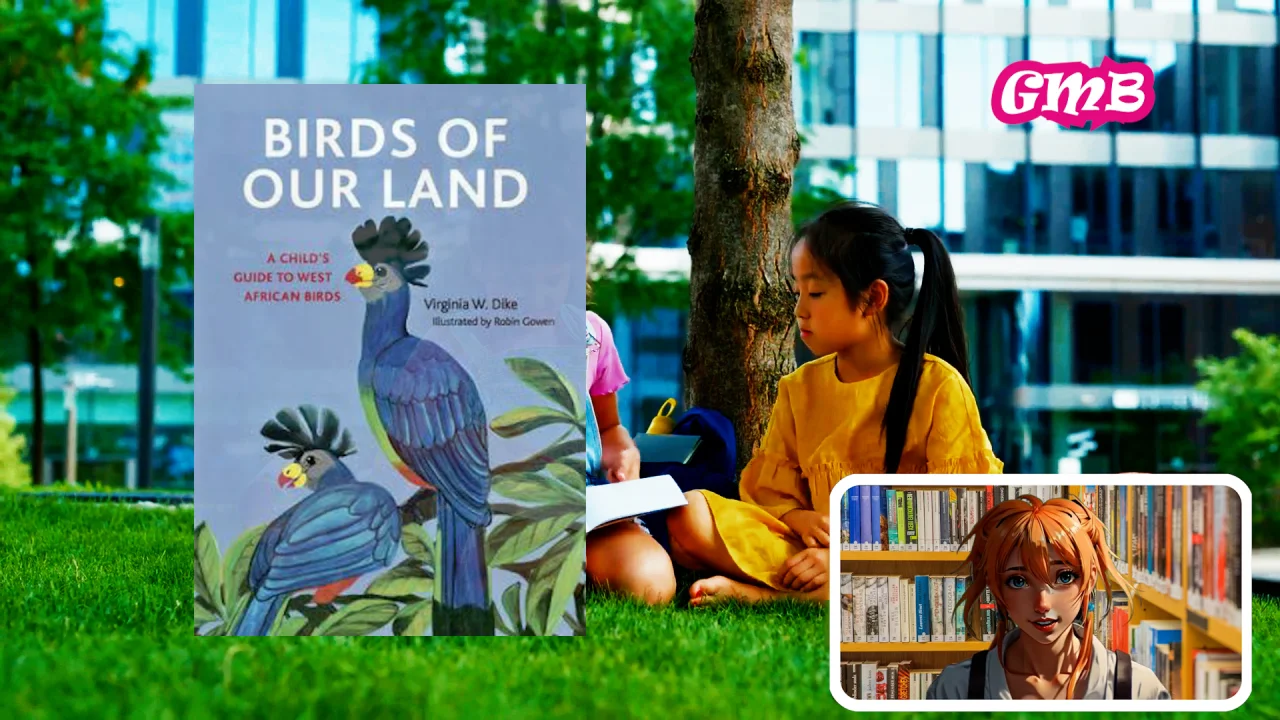
The book is Birds of Our Land by Virginia W. Dike, beautifully illustrated by Robin Gowen and published by Cassava Republic Press.
And surprisingly, this forty-page book managed to do what many thick science textbooks fail to do — it made me curious about birds.
👉 The edition I read is available here:
https://amzn.to/3Mrt1Wf
Introduction: A Small Book That Opens a Big World
At first glance, Birds of Our Land looks like a simple children’s book. It’s colorful, short, and filled with illustrations.
But once you start reading, you realize it’s something more thoughtful.
Instead of overwhelming readers with complicated scientific jargon, Virginia W. Dike begins with a very basic question:
What exactly is a bird?
It sounds simple, but the book gently explains the defining features — feathers, wings, beak, tail — supported by a clear, labeled illustration. Instantly, the learning feels approachable rather than intimidating.
From there, the book takes readers on a lively tour of twenty-five birds commonly found across Nigeria and West Africa, turning everyday wildlife into something fascinating.
And before long, you start noticing that birds you once ignored actually have names, personalities, and habits worth knowing.
Summary: A Journey Through the Birds Around Us
After introducing the basics of bird anatomy, the book begins presenting individual species one by one.
Each bird gets its own small spotlight — including:
-
The lively Plantain Eater, known for its loud and dramatic calls
-
The famously talkative Parrot
-
The sharp-eyed Kite, a powerful bird of prey
-
The delicate Sunbird, often compared to a hummingbird
-
The elegant Egret, frequently seen near cattle
-
The energetic Finch, always chirping in the background
The book also introduces birds like the Guinea Fowl, Crow, Coucal, Owl, Pipit, Mannikin, Whydah, and Thrush.
For each bird, readers learn:
-
What it looks like
-
Where it lives
-
What it eats
-
How it sounds
-
What makes it unique
One especially thoughtful touch is the inclusion of local language names. For example, the parrot is known as:
-
Ayekooto in Yoruba
-
Icheoku in Igbo
-
Aku in Hausa
-
Akoo in Akan (Ghana)
This cultural dimension makes the book feel rooted in African knowledge systems rather than simply borrowing from Western scientific traditions.
Toward the end, the book introduces two particularly engaging sections:
-
A birdwatching checklist where readers can record the birds they spot
-
A conservation guide that encourages protecting birds and their habitats
It even includes tips on how to observe birds carefully — noticing their beaks, feathers, calls, and behavior.
It’s a gentle but powerful invitation to pay attention to the natural world.
👉 You can check the illustrated edition here:
https://amzn.to/3Mrt1Wf
Analysis & Review: Why This Book Works So Well
What impressed me most about Birds of Our Land is how effortlessly it balances education and storytelling.
1. The Illustrations Bring the Birds to Life
The artwork by Robin Gowen deserves special praise.
Each bird is drawn with warmth and personality. The illustrations are detailed enough to teach identification, but lively enough to keep young readers engaged.
Instead of feeling like diagrams from a textbook, the birds feel alive — as if they might hop off the page.
2. The Language Is Simple Without Being Simplistic
Although the book is aimed at children (roughly ages five to fifteen), adults will learn plenty too.
Virginia W. Dike uses language that is:
-
Clear
-
Rhythmic
-
Friendly
-
Informative
She avoids heavy scientific terminology, making the information accessible to anyone curious about birds.
3. Cultural Identity Is Woven Into the Learning
One of the most meaningful elements is the inclusion of bird names in major Nigerian languages.
This small detail does something powerful: it reminds readers that knowledge of nature has always existed within local cultures.
Africa didn’t begin naming birds when Western biology arrived — communities have always observed, named, and understood their environment.
The book quietly celebrates that tradition.
4. It Encourages Observation
Beyond simply presenting facts, the book trains readers to look more carefully at the world around them.
It teaches you to notice things like:
-
The shape of a bird’s beak
-
The pattern of its feathers
-
The sound of its call
-
Where it likes to perch
These observation skills turn ordinary walks into little discoveries.
And suddenly, the birds you once ignored become interesting again.
A Small Weakness
If there’s one limitation, it’s simply the book’s length.
At around forty pages, it ends just as your curiosity is really building. A longer edition covering more birds would have been wonderful.
But perhaps that brevity is also its strength — it leaves readers wanting to explore further.
Themes in Birds of Our Land
Several meaningful themes run through the book.
Environmental Awareness
At its heart, the book encourages readers to care about wildlife and habitats.
It gently reminds us that birds are important indicators of environmental health.
Learning Through Curiosity
Instead of memorizing facts, the book invites readers to ask questions and observe.
Education becomes an adventure rather than a lecture.
Cultural Pride
By including indigenous bird names, the book reinforces the value of African languages and local knowledge.
Literacy and Critical Thinking
The birdwatching checklist and observation guide encourage children to record, compare, and think about what they see.
These are valuable lifelong learning skills.
About the Author
Virginia W. Dike is an educator deeply committed to children’s learning and environmental awareness.
Her work focuses on helping young readers understand their surroundings while nurturing curiosity and observation.
With Birds of Our Land, she created a book that is both educational and quietly inspiring.
Conclusion: Who Should Read This Book?
Birds of Our Land may be written for children, but its appeal reaches much further.
This book is perfect for:
-
Parents introducing children to nature
-
Teachers looking for engaging environmental education
-
Young readers curious about animals
-
Adults who want a gentle introduction to birdwatching
It’s short, beautifully illustrated, and full of small insights that stay with you.
And perhaps the biggest gift it offers is this: it teaches you to notice the birds you’ve been ignoring all your life.
👉 If you’d like to explore the same edition I read, you can find it here:
https://amzn.to/3Mrt1Wf
In the end, Birds of Our Land isn’t just about birds.
It’s about learning to see the world more carefully.
And once you do, even that “small brown sparrow” on the powerline might turn out to be something far more interesting. 🐦