 English
 French
 German
 Russian
 中文
中文

Afriku – Haiku & Senryu from Ghana: Where Japanese Poetic Form Meets African Soul
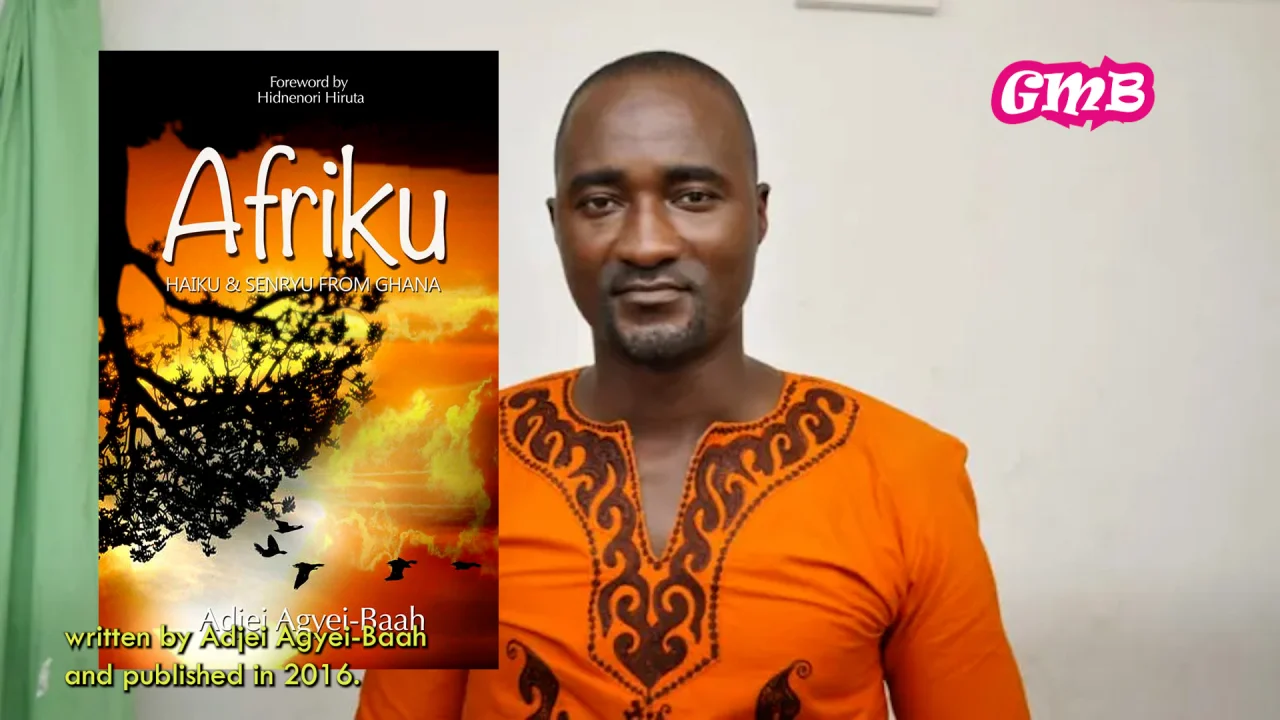
Art is alive. It moves, it adapts, and it carries the soul of the people who create it. That’s exactly what Afriku – Haiku & Senryu from Ghana by Adjei Agyei-Baah does—it takes a centuries-old Japanese form and infuses it with the rhythms, landscapes, and stories of Africa. This is more than a poetry collection; it’s a cultural dialogue, a bridge between continents, and an intimate look at how universal forms can reflect local lives.
If you’ve ever wondered how Haiku could feel at home in the tropical sun, in African languages, or in the daily rhythms of Ghana, this is the book to explore. Let’s dive in.
About the Book
Published in 2016, Afriku is a collection of Haiku and Senryu poems that reimagine Japanese poetry from an African perspective. Haiku, traditionally short poems that capture moments in nature, and Senryu, which reflect on human nature often with irony or humor, are highly structured forms. But Adjei Agyei-Baah takes these constraints and transforms them to reflect Ghanaian landscapes, culture, and language—including translations into Twi, a Ghanaian language with its own lyrical cadence.
The challenge here is immense: how do you preserve the delicate simplicity of Haiku while grounding it in a different climate, culture, and language? Adjei rises to the challenge with elegance, showing that form is only the beginning—meaning, emotion, and context are what truly make a poem resonate.
👉 You can find Afriku – Haiku & Senryu from Ghana on Amazon here.
Breaking and Respecting the Rules
One Haiku poet, Jane Reichhold, said, “One must learn all the rules, practice them, and break them.” Adjei Agyei-Baah embodies this philosophy. His Haiku in Afriku respects the classical structure but bends it beautifully to accommodate African contexts.
For instance, he opens the collection with a nod to Basho’s famous “old pond” Haiku:
old pond –
the living splash
of Basho’s frog
And then he presents a Twi version:
sutae dadaa -
nkaedum a Basho
apotrɔ gyaeε
Here, translation isn’t a one-way street. Are the Twi poems translations, or are the English ones? It doesn’t really matter—the act of moving poetry into Twi roots it more deeply in African soil and experience, enriching both forms.
Capturing the Power of the Moment
At its heart, Haiku is about a moment—a fleeting, powerful fragment of life. Adjei’s Haiku achieve this effortlessly:
drought -
the farmer digs
into his breath
Just three lines, yet you can feel the scorching sun, the labor, and the tension. Or consider:
season of migration
the lightning dash
of a late egret
The images are vivid, alive, and instantly transportive. This is Haiku at its best: minimal words, maximum impact.
Kigo in the Tropics
Traditional Haiku often includes a kigo, a seasonal reference. But in tropical Ghana, seasons are subtler, making kigo a creative challenge. Adjei solves this with remarkable subtlety:
gust of wind...
the crow takes off
in a zigzag line
Those few words hint at the pre-rainy season winds—so local, so specific—without over-explaining. This is Haiku that belongs to its environment, showing that culture can reshape tradition without breaking it.
Where Haiku Meets Senryu
Not every poem in Afriku adheres strictly to Haiku rules. That’s where Senryu steps in—short, sharp reflections on human nature, often ironic or humorous:
traffic holdup
the absurdity of politics
served fresh on the airwaves
Or this gem of childhood memory:
school memories -
all the farts concealed
by shifting chairs
Senryu in this collection captures everyday life with wit, giving readers a glimpse of humor and humanity across Ghanaian society.
Storytelling in Three Lines
What’s remarkable is how Adjei tells fully formed stories within just three lines.
stone meal...
mother fakes supper
to put the kids to sleep
This Haiku speaks of survival, memory, and familial resilience. Another example:
childhood memories
the wood shavings that light up
mother’s charcoal
The imagery is so vivid that you don’t need any additional context—the story is complete, yet beautifully restrained.
The Bigger Picture: Art That Breathes
Haiku isn’t about syllables alone; it’s about moments, emotion, and cultural resonance. Adjei Agyei-Baah knows exactly when to hold the form and when to let the poem breathe. From the delicate dance of a dragonfly:
a dragonfly pausing the wind
smiling pond...
a dragonfly dips
its tail
…it’s clear that Afriku transcends rules to embrace lived experience, making the collection a work of art that is both African and universal.
About the Author
Adjei Agyei-Baah is a Ghanaian poet and co-founder of the Africa Haiku Network, dedicated to localizing Haiku in African contexts. His work in Twi not only honors his heritage but challenges the notion that serious literature must exist solely in English or French. By writing in Twi, he liberates the African voice in poetry and encourages others to explore their native languages as literary vessels.
Who Should Read Afriku?
Afriku is perfect for:
-
Poets and Haiku enthusiasts curious about cross-cultural adaptations.
-
Readers interested in African literature, storytelling, and language.
-
Anyone who loves poetry that captures moments, nature, and human nuance in minimal words.
You might struggle with this book if:
-
You prefer long, plot-driven narratives.
-
You need clear, linear storytelling.
-
You dislike open-ended or interpretive poetry.
👉 You can check out Afriku – Haiku & Senryu from Ghana on Amazon here.
Final Thoughts
Afriku is a masterclass in adaptation and cultural resonance. It’s a reminder that art is not fixed—it evolves, crosses borders, and lives through those who reinterpret it. Adjei Agyei-Baah shows us that Haiku can thrive in African landscapes, in Twi, and in everyday life, without losing its delicate, reflective magic.
If you’re ready to explore Haiku that breathes African air, that tells stories in three lines, and that makes you pause to feel life’s subtleties, Afriku is waiting for you.