 English
 French
 German
 Russian
 中文
中文

The Hero Everyone Trusted… Was the Traitor All Along
There’s a moment while thinking about this story that makes you pause.
Imagine living in a small village where everyone suddenly believes you’re a hero. People greet you with respect. Elders nod approvingly. The entire community wants you to stand up during the independence celebration and say something wise—something historic.
But there’s just one problem.
You know the truth about yourself.
And if the village ever discovered it… everything would collapse.
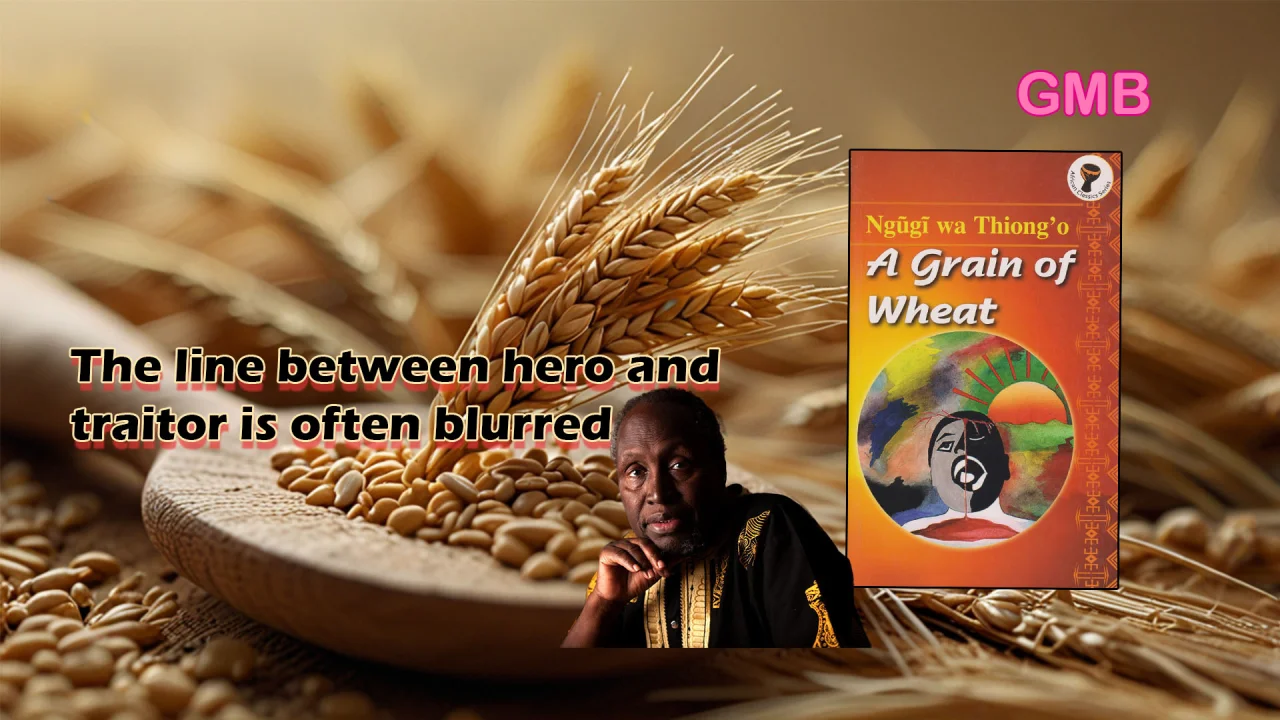
That uneasy tension sits at the heart of A Grain of Wheat by Ngũgĩ wa Thiong’o, one of the most powerful novels to come out of Africa. It’s the kind of book that quietly slips under your skin. Not because of explosions or dramatic twists—but because it forces you to ask a deeply uncomfortable question:
What if the heroes we celebrate are hiding the darkest secrets?
What Kind of Novel Is This?
This is a historical and political literary novel about the cost of freedom and the burden of guilt.
Rather than telling a straightforward independence story, the novel explores the emotional and moral aftermath of struggle.
Tone: reflective, tense, quietly tragic
Pace: moderate, unfolding through memory and revelation
Themes: betrayal, sacrifice, colonial trauma, guilt, forgiveness, national identity
This book is for readers who:
-
Enjoy serious literary fiction with political depth
-
Like stories that explore human psychology and moral ambiguity
-
Are curious about African history and the Mau Mau struggle
This book is NOT for readers who:
-
Want a fast-paced thriller
-
Prefer clear heroes and villains
-
Dislike stories that move through multiple perspectives and timelines
👉 The edition I read is available here:
A Grain of Wheat by Ngũgĩ wa Thiong’o (Amazon)
Why This Story Matters (The Emotional Core)
What makes A Grain of Wheat unforgettable isn’t the political backdrop—it’s the moral weight every character carries.
This is a novel about guilt.
Not the simple kind where someone does something wrong and apologizes. But the deeper kind that follows people for years, shaping who they become.
In the village of Thabai, everyone is preparing for Uhuru—Kenya’s independence in 1963. On the surface, the mood should be joyful. Independence means the end of colonial rule. Freedom. Celebration.
But beneath the excitement lies something darker.
Memories of the Mau Mau rebellion linger everywhere—detention camps, collaborators, betrayals, lost lives. Everyone remembers who resisted, who suffered, and who cooperated with the colonial government.
And those memories refuse to stay buried.
What Ngũgĩ wa Thiong’o does brilliantly is show how colonialism didn’t just oppress people—it divided them. It turned neighbors into informants, friends into enemies, and communities into places of suspicion.
Some fought bravely.
Some survived quietly.
Some betrayed others.
And the most unsettling part of the novel is realizing that almost everyone is morally compromised in some way.
There are no pure heroes here. Only people trying to live with the choices they made.
Even after independence arrives, the emotional damage remains. Freedom doesn’t erase guilt. It doesn’t undo betrayal. And it certainly doesn’t guarantee justice.
That’s the uncomfortable truth the novel keeps circling: winning freedom doesn’t mean healing the nation.
A Glimpse of the Story (No Spoilers)
The novel takes place in the days leading up to Kenya’s independence.
The villagers of Thabai are preparing for a huge Uhuru celebration. At the center of the preparations is Mugo, a quiet and mysterious man whom many villagers believe to be a hero of the independence struggle.
They want him to deliver a speech during the celebration.
But while the village celebrates, another conversation is happening quietly in the background.
Years earlier, a beloved freedom fighter named Kihika was betrayed to the British colonial authorities and executed. His death turned him into a martyr.
Now the villagers want to know the truth.
Who betrayed Kihika?
As the story unfolds, the lives of several characters begin to intertwine:
-
Gikonyo, returning home after years in detention
-
Mumbi, caught between love, regret, and survival
-
Karanja, a man whose collaboration with colonial authorities has made him deeply unpopular
And at the center of it all stands Mugo—carrying a secret heavy enough to destroy the image the village has built around him.
Who This Book Is Perfect For
You’ll enjoy this novel if:
-
You like books that explore moral complexity
-
You enjoy literature that mixes history with psychology
-
You read fiction to reflect on society and human nature
You’ll especially appreciate it if you enjoy writers who examine the aftermath of political struggle rather than the glory of revolution.
You might struggle with this book if:
-
You prefer fast-moving plots
-
You want stories with clear-cut heroes and villains
-
You dislike narratives that move back and forth through time
👉 If this sounds like your kind of book, you can find it here:
A Grain of Wheat by Ngũgĩ wa Thiong’o (Amazon)
My Honest Verdict
This isn’t an easy novel.
But it’s an important one.
What worked brilliantly for me was the psychological depth of the characters. Nobody in the novel feels like a simple symbol. Everyone carries wounds from the colonial period, and those wounds shape how they treat each other.
The structure—moving between past and present—also works surprisingly well. At first it feels fragmented, but gradually the pieces begin to fit together like a puzzle.
What might challenge some readers is the pacing. This isn’t a story built around dramatic action. It’s a slow revelation of truth, and that requires patience.
But that patience pays off.
Because when the full picture finally emerges, the emotional impact is powerful.
This isn’t a perfect novel—but it’s an honest one. And honest novels about history are rare.
👉 You can read the same edition I did here:
A Grain of Wheat by Ngũgĩ wa Thiong’o (Amazon)
Final Thoughts
What stayed with me most after finishing A Grain of Wheat was the uncomfortable realization that history is rarely as clean as we like to believe.
We love stories about heroes and villains.
But real struggles—especially national struggles—are messy. People make compromises. They act out of fear. They betray others. They regret it later.
This novel refuses to simplify that reality.
Instead, Ngũgĩ wa Thiong’o gives us something more valuable: a portrait of a society trying to rebuild itself after trauma, where the line between heroism and betrayal is often painfully thin.
If you enjoy novels that leave you thinking long after the last page, this is one of the most powerful African books you can read.
👉 If you’d like to read the same edition I did, here’s the link:
A Grain of Wheat by Ngũgĩ wa Thiong’o (Amazon)
Similar Books You Might Like
-
Petals of Blood – also by Ngũgĩ wa Thiong’o
-
Things Fall Apart – by Chinua Achebe
Both explore how African societies confront colonialism and its aftermath in different ways.