 English
 French
 German
 Russian
 中文
中文

The Scholar Who Loved Books More Than People — And Paid the Price
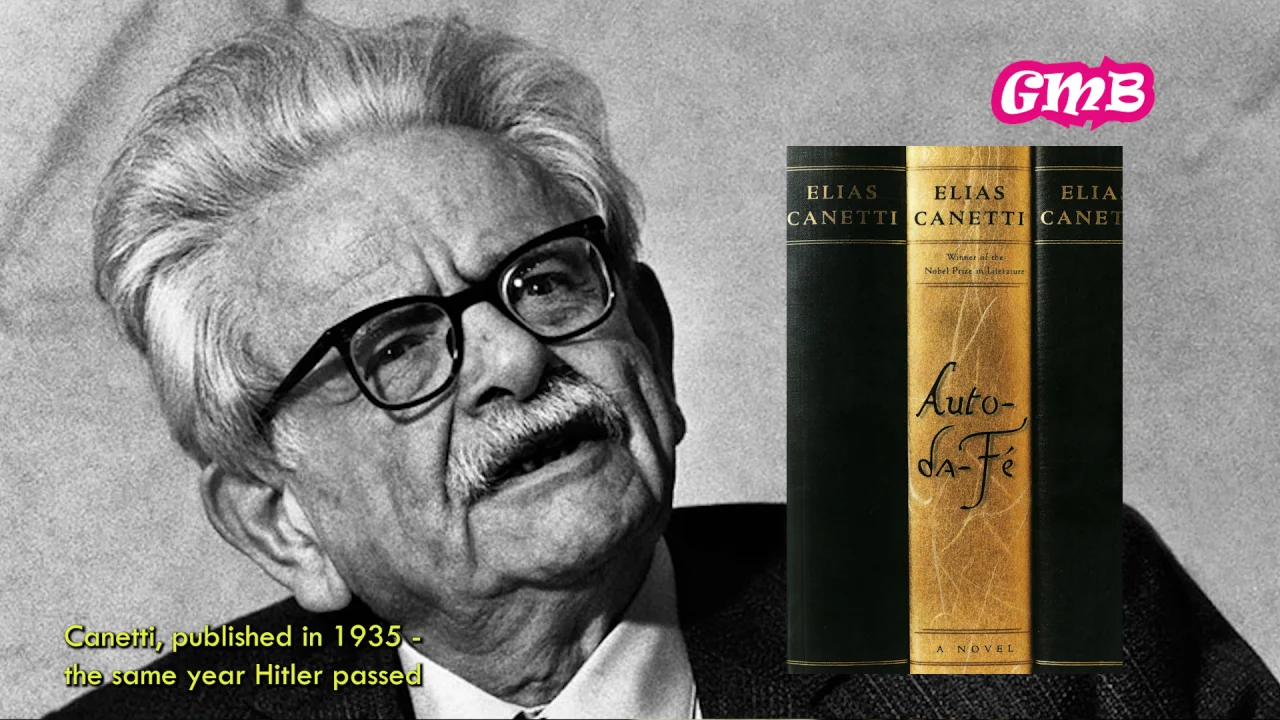
There’s a moment early in Auto da Fé when I had to pause and just… stare.
A grown man — a genius, no less — watches his housekeeper handle a book with such sacred care that he falls in love with her on the spot.
Not because she understands it.
Not because she connects with him.
But because she treats the book properly.
And right there, I knew this wasn’t going to be a normal story.
This was going to be something far stranger — and far more uncomfortable.
What Kind of Novel Is This?
This is a dark, psychological, almost grotesque novel about obsession, isolation, and the dangers of living entirely inside your own mind.
-
Tone: disturbing, satirical, darkly humorous
-
Pace: slow to moderate, but steadily spiraling
-
Themes: knowledge vs reality, power, manipulation, intellectual arrogance, societal blindness
This book is for readers who:
-
Enjoy psychologically intense fiction like Dostoevsky
-
Like stories that feel absurd on the surface but deeply serious underneath
This book is NOT for readers who:
-
Want fast-paced plots or likable characters
-
Need emotional comfort or clear moral direction
👉 The edition I read is available here:
https://amzn.to/4rJxQdM
Summary (No Spoilers)
At the center of Auto da Fé is Professor Peter Kien — a brilliant but completely socially dysfunctional scholar who has built his entire life around books.
His world is small, controlled, and predictable.
Until one day, his housekeeper, Therese, asks to borrow a book — and handles it with such obsessive care that Kien becomes convinced she shares his devotion to knowledge.
So he marries her.
That decision slowly unravels everything.
What begins as an odd, almost comedic situation transforms into a psychological collapse — as Kien is pulled out of his carefully constructed intellectual world and forced into the chaos of human reality, where he is completely unequipped to survive.
Analysis & Review
What makes Auto da Fé so powerful is how uncomfortable it is.
Kien is not a hero.
He’s not even particularly sympathetic.
He’s arrogant, detached, and almost willfully blind to reality. He believes knowledge — especially the kind stored in books — is superior to human experience. And because of that, he never learns how people actually work.
That’s what makes his downfall feel… inevitable.
There’s something quietly terrifying about watching a man who can read ancient languages fail to understand the simplest human intentions. He gets manipulated, deceived, and stripped of everything — not because he’s stupid, but because he’s disconnected.
And Canetti doesn’t let you look away.
Where the Novel Really Hits
This isn’t just a story about one man losing his mind.
It’s a warning.
Published in 1935, the same year Nazi Germany introduced the Nuremberg Laws, this novel carries a chilling allegorical weight. Kien’s obsession with protecting his books — his “pure” world — mirrors how societies cling to rigid ideas while ignoring the dangers growing around them.
There’s even a moment where Kien imagines his books as territories under threat — a clear echo of political expansion and occupation.
It’s subtle, but once you see it, you can’t unsee it.
Canetti is asking a brutal question:
What happens when intelligence exists without awareness?
What Worked
-
The psychological depth is incredible
-
The absurdity is both funny and disturbing
-
The themes feel disturbingly relevant even today
What Didn’t Work
-
It’s not an easy read — emotionally or structurally
-
The characters are intentionally frustrating
-
At times, the narrative feels overwhelming in its intensity
Still…
This isn’t a comfortable novel — but it’s an honest one.
And those are rare.
Why This Story Still Matters
What stayed with me after finishing Auto da Fé wasn’t the plot.
It was the feeling.
The quiet realization that being intelligent doesn’t protect you from being completely wrong about the world.
Kien isn’t destroyed by ignorance — he’s destroyed by misplaced certainty. He trusts books more than people, ideas more than reality, and in doing so, he becomes incredibly easy to manipulate.
And that feels… uncomfortably modern.
We live in a time where knowledge is everywhere — but understanding is rare.
This book forces you to ask:
-
Are you actually seeing the world clearly?
-
Or just interpreting it in a way that makes you feel safe?
Who This Book Is Perfect For
You’ll enjoy this novel if:
-
You like books that challenge your thinking
-
You enjoy dark, intellectual, slightly absurd fiction
-
You read to question, not just to escape
You might struggle with this book if:
-
You prefer fast-moving stories
-
You need characters to root for
-
You dislike ambiguity or discomfort
👉 If this sounds like your kind of book, you can get it here:
https://amzn.to/4rJxQdM
Final Thoughts & Recommendation
Auto da Fé isn’t a book you enjoy in the traditional sense.
It’s a book you experience.
It pulls you into a mind that feels both brilliant and broken — and then slowly shows you how dangerous that combination can be. Not just for the individual, but for the world around them.
If you’re willing to sit with discomfort, to engage with something messy, intense, and deeply thought-provoking, this novel will stay with you long after you finish it.
If not, it might frustrate you.
But either way — it will make you think.
👉 If you’d like to read the same edition I did, here’s the link:
https://amzn.to/4rJxQdM
Similar Books You Might Like
-
Crime and Punishment — for psychological depth and moral tension
-
The Trial — for absurdity and existential dread
Best Format to Read This Book
Paperback — this is a dense, reflective novel. You’ll want the physical presence of the book to slow down, re-read passages, and sit with the ideas.