 English
 French
 German
 Russian
 中文
中文

The Women Who Refuse to Stay Silent
A Quiet Realization That Wouldn’t Leave Me Alone
There’s a moment you reach—reading certain books—where you stop nodding along and start feeling… uncomfortable.
Not because the book is wrong. But because it’s right in a way that exposes how much you’ve quietly accepted.
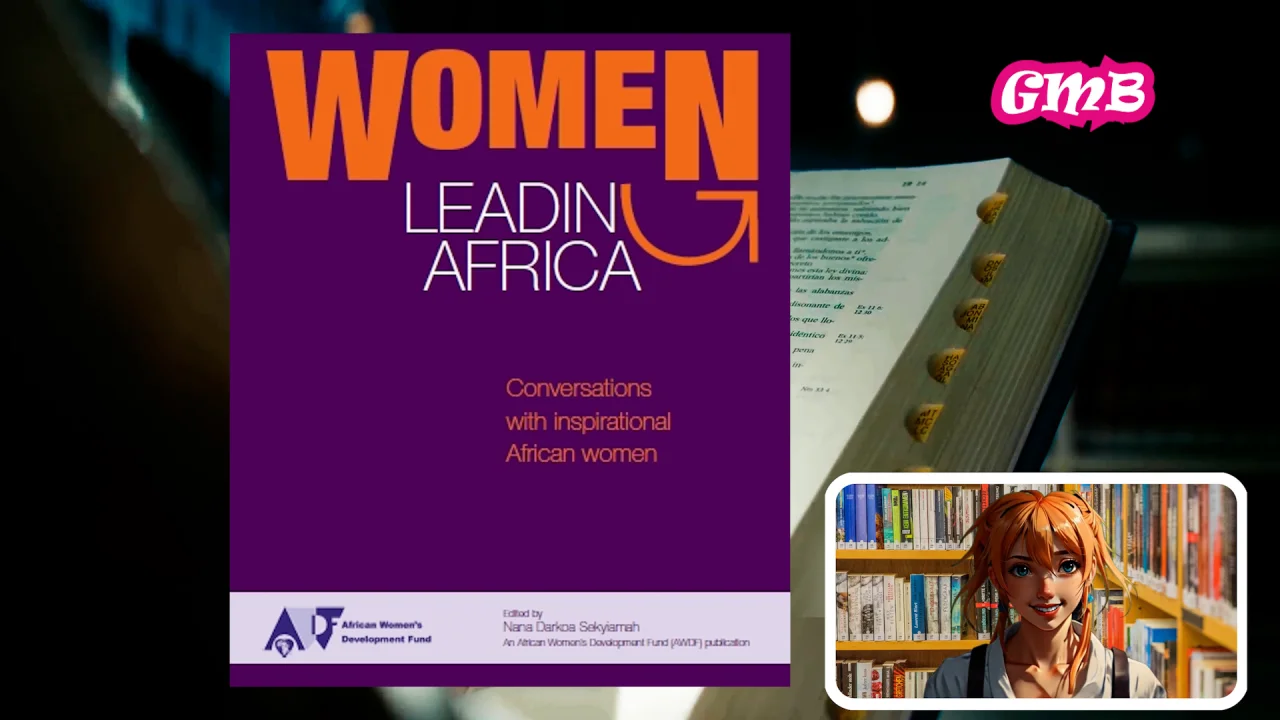
That’s exactly what happened to me while reading Women Leading Africa: Conversations with Inspirational African Women by Nana Darkoa Sekyiamah.
At first, it felt like a celebration—stories of powerful African women doing incredible things. But somewhere along the way, it became something else. A confrontation. A reminder that the systems we call “normal” are often anything but.
And the unsettling part? Many of us—knowingly or not—help keep those systems alive.
Summary: A Chorus of Voices Redefining Power
Women Leading Africa is a collection of interviews with influential African women across politics, the arts, and activism.
Rather than telling one story, the book builds a mosaic of perspectives—each woman offering her lived experience, her struggles, and her vision for a more equal world.
The book is structured into three sections:
-
Politics – featuring figures like Winnie Byanyima and Margaret Dongo, whose lives blur the line between activism and survival.
-
The Arts – with literary giants such as Ama Ata Aidoo and Tsitsi Dangarembga, showing how storytelling itself becomes resistance.
-
Feminist Spaces – highlighting voices like Leymah Gbowee, who helped end a civil war through nonviolent protest.
Key Themes:
-
Gender inequality as a structural issue, not just individual behavior
-
The tension between tradition and progress
-
Feminism in African contexts—diverse, complex, and sometimes contested
-
The role of women in reshaping leadership, culture, and power
This isn’t a book driven by plot—it’s driven by ideas, lived experiences, and contradictions.
Analysis & Review: Where the Book Hits Hard—and Where It Holds Back
What Works Brilliantly
The biggest strength of this book is its honesty.
These women don’t speak in polished, rehearsed soundbites. They disagree. They hesitate. Some reject the label “feminist” while doing deeply feminist work. Others embrace it unapologetically.
That tension is what makes the book feel real.
One idea that stayed with me is the distinction between men as individuals and patriarchy as a system. The book makes it clear: the issue isn’t simply “men vs. women”—it’s the structures that shape how both think, behave, and relate to each other.
And sometimes, those structures are upheld by the very people they harm.
That realization lingers.
Another powerful aspect is how the book redefines leadership. These women are not just politicians or writers—they are architects of change. Whether through policy, storytelling, or grassroots activism, they are actively reshaping what power looks like in Africa.
Where It Falls Slightly Short
If I had one complaint, it’s this: some conversations end too soon.
There are moments—especially with figures like Margaret Dongo—where you feel the story is just getting started… and then it’s over.
You’re left wanting more depth, more detail, more time with these voices.
But maybe that’s also the point. The book opens doors—it doesn’t walk you through all of them.
Why This Book Matters Right Now
This isn’t just a collection of interviews. It’s a mirror.
It forces you to confront uncomfortable questions:
-
How much of what we call “culture” is actually inequality in disguise?
-
Why do harmful systems survive even when people know they’re harmful?
-
What does real progress actually require from us—not just in belief, but in action?
What stayed with me most is this: progress is not automatic.
It doesn’t happen just because time passes or because we like to think we’re more “modern” than previous generations.
It happens because people—often at great personal cost—refuse to accept the status quo.
And this book is full of those people.
Conclusion & Recommendation: Who Should Read This Book?
You should read Women Leading Africa if:
-
You’re interested in African literature, politics, or social change
-
You enjoy books that challenge your assumptions rather than comfort them
-
You want real stories—not simplified narratives—about gender and power
You might struggle with it if:
-
You prefer fast-paced, plot-driven books
-
You want clear-cut heroes and villains
-
You’re looking for easy answers instead of complex realities
Final Thoughts: A Book That Stays With You
This isn’t a perfect book—but it’s an important one.
It doesn’t try to simplify the conversation around gender, culture, and power. Instead, it leans into the complexity—and trusts the reader to sit with it.
And that’s what makes it powerful.
I started this book expecting inspiration. I finished it with something deeper: awareness.
The kind that doesn’t fade easily.