 English
 French
 German
 Russian
 中文
中文

He Tried So Hard Not to Become His Father — And That’s Exactly What Destroyed Him
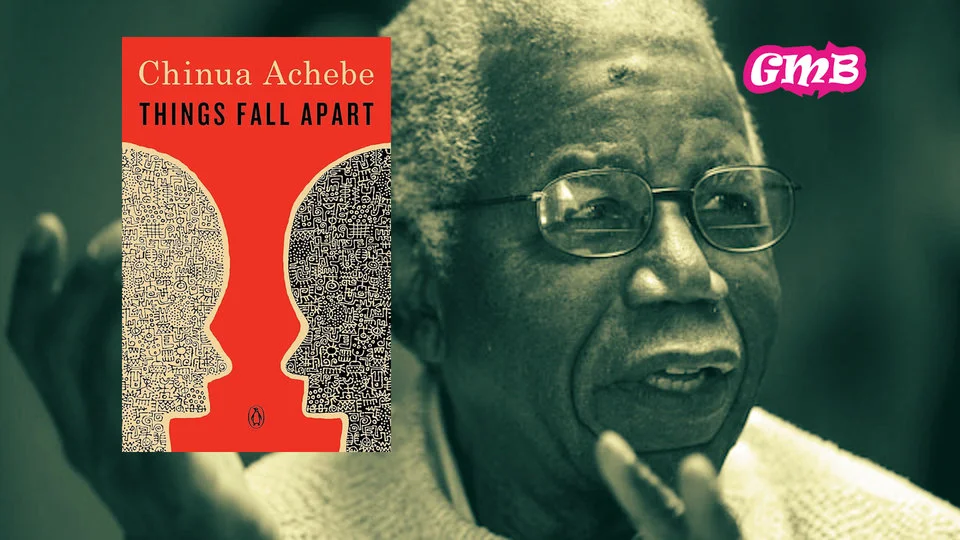
A deeply personal look at Chinua Achebe’s Things Fall Apart
You know that feeling when you spend your whole life running from your father’s shadow… only to realize you’ve been shaped by it more than you ever wanted to admit?
That was the uncomfortable thought Things Fall Apart left me with.
This isn’t just a novel about colonialism or tradition or a clash of cultures. It’s a story about a man who builds his entire identity on not being someone else, and in doing so, forgets to become anything human at all. It’s about strength taken too far, pride hardened into fear, and a world that collapses not in one dramatic explosion — but slowly, painfully, from the inside.
There are machetes in this book. Missionaries. Locusts. Gods and laws and rituals. But at its center is one stubborn man desperately trying to hold his world together with brute force while the ground beneath him quietly gives way.
And no — it does not end with forgiveness, hugs, or a neat moral lesson.
What Kind of Novel Is This?
Things Fall Apart is a tragic historical novel about identity under pressure.
Tone: Quietly devastating, restrained, unsentimental
Pace: Moderate, deliberate
Core themes:
-
Masculinity and fear
-
Tradition versus change
-
Pride and inflexibility
-
Colonial erasure
-
Fathers, sons, and inherited trauma
This book is for readers who:
-
Enjoy character-driven tragedies
-
Like novels that ask moral questions instead of answering them
-
Want African history told from an African perspective
This book is not for readers who:
-
Need likable heroes
-
Prefer fast-paced, plot-heavy stories
-
Want clear villains and clean resolutions
👉 The edition I read is available here:
Things Fall Apart by Chinua Achebe – Paperback Edition (Amazon) OR https://godsmercybookshop.com/things-fall-apart-66
A Glimpse of the Story (No Spoilers)
The novel is set in Umuofia, a cluster of villages in pre-colonial Nigeria.
At its center is Okonkwo — a respected warrior, wealthy farmer, and man of fearsome reputation. He has risen from nothing, driven by one consuming terror: becoming his father. His father, Unoka, was gentle, poor, artistic, and — in the eyes of the clan — a failure.
Okonkwo builds his life in opposition to that image. Strength over softness. Violence over vulnerability. Control over compassion.
But when outside forces arrive — missionaries, colonial courts, foreign laws — the rigid world Okonkwo believes in begins to fracture. And the question the novel quietly asks is devastatingly simple:
What happens when the only way you know how to live no longer works?
Why This Story Still Hurts (And Still Matters)
What stayed with me long after I closed this book wasn’t the violence or the colonial invasion — it was Okonkwo’s fear.
Achebe doesn’t write him as a monster. He writes him as a man who is terrified of weakness, tenderness, and change. Every harsh decision Okonkwo makes — every act of cruelty — is fueled by that fear. And that’s what makes his downfall tragic rather than satisfying.
The novel’s brilliance lies in how human it feels.
Achebe also does something quietly revolutionary: he presents pre-colonial Igbo society as complex, moral, and deeply ordered. There are laws. There are debates. There is justice, religion, and philosophy. This is not the “primitive” Africa of colonial imagination — it is a living world with its own logic and dignity.
When colonial rule arrives, it doesn’t simply conquer with guns. It divides, redefines, and slowly erases meaning. And the final insult comes in the book’s last moments, when Okonkwo’s entire life is reduced to a possible paragraph in a colonial administrator’s book.
That ending still chills me.
It’s Achebe’s sharpest critique: not just of colonial violence, but of who gets to tell history — and who gets erased in the process.
The Tragedy of Refusing to Bend
One of the hardest truths in Things Fall Apart is this:
Okonkwo is not destroyed by colonialism alone.
He is destroyed by inflexibility.
Other characters adapt. Some find new meaning. Some survive by changing. Okonkwo cannot. To bend, in his mind, is to break. And so he stands rigid — until he shatters completely.
It’s a deeply uncomfortable idea, especially for readers who admire strength. Achebe seems to ask: When does strength become self-destruction? And what does real courage actually look like?
About the Author: Chinua Achebe
Chinua Achebe (1930–2013) is often called the father of modern African literature, and for good reason.
Published in 1958, Things Fall Apart was his debut novel — and it permanently changed how Africa was written about in global literature. Achebe chose to write in English deliberately, reclaiming the language of colonial power to tell African stories on African terms.
He went on to write other major works, including No Longer at Ease, Arrow of God, and Anthills of the Savannah, but Things Fall Apart remains his most enduring achievement.
👉 You can explore Achebe’s works starting here:
Things Fall Apart by Chinua Achebe – Kindle Edition (Amazon) OR https://godsmercybookshop.com/things-fall-apart-66
My Honest Verdict
This is not a comfortable novel.
It is not always enjoyable.
And it does not offer easy answers.
But it is honest, restrained, and devastating in a way very few books manage to be.
Achebe doesn’t tell you what to think. He shows you a world, lets it breathe, and then lets it fall apart — quietly, inevitably. And that restraint is exactly why the book still matters decades later.
👉 If you want the same edition I read, you’ll find it here:
Things Fall Apart (Amazon) OR https://godsmercybookshop.com/things-fall-apart-66
Final Thoughts
Things Fall Apart is more than a novel. It’s a mirror — held up to history, culture, masculinity, and fear.
It asks questions that don’t age:
-
How do you preserve tradition without becoming trapped by it?
-
How do you face change without losing yourself?
-
And what happens when the world you’ve built your identity on no longer exists?
Okonkwo’s story is a tragedy, yes. But it’s also a warning.
And if you’ve read this book before, I’d argue it’s worth returning to — not as a school text or a historical artifact, but as a deeply human story about pride, loss, and the cost of refusing to change.
👉 You can revisit the novel here:
Things Fall Apart by Chinua Achebe – Paperback (Amazon) OR https://godsmercybookshop.com/things-fall-apart-66