 English
 French
 German
 Russian
 中文
中文

The Book That Sparked a Global Firestorm: A Review of The Satanic Verses by Salman Rushdie
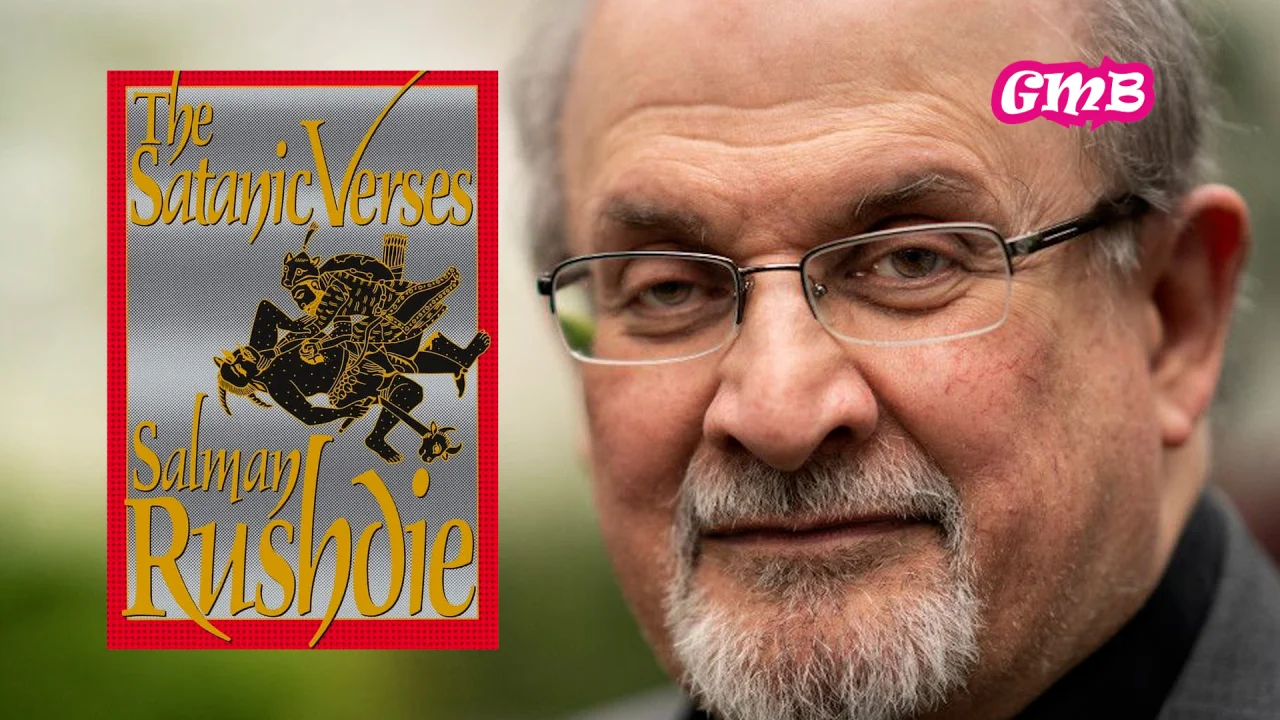
What if I told you there’s a book so controversial that its author had to live in hiding for over a decade, protected by government bodyguards, with a literal death sentence hanging over his head? A book that ignited riots, book burnings, and international diplomatic crises? A book that challenged the very limits of free speech and made even its most liberal admirers question whether the author had gone too far?
Welcome to the world of The Satanic Verses by Salman Rushdie, a novel that remains one of the most polarizing in literary history. Part magical realism, part religious satire, part immigrant odyssey, this 547-page book is a dense, symbol-heavy journey that will either leave you breathless with awe or desperately reaching for an aspirin.
👉 You can find the edition I read here on Amazon.
A Story of Faith, Identity, and Transformation
The novel begins in the most explosive way imaginable: two men plummet from an exploding airplane at 30,000 feet. But this is no ordinary survival story. In true magical realism fashion, they don’t just survive—they transform.
Gibreel Farishta, born Ismail Najmuddin, is Bollywood’s golden boy, known for playing gods and angels. But a crisis of faith following a near-fatal accident shatters his belief in God, sending him on a journey of self-discovery that begins with an epic pork-eating binge at the Taj Hotel. Along the way, he meets Alleluia Cone, an Everest-climbing adventurer who inspires him to abandon his film career for something—or someone—real.
Saladin Chamcha, in stark contrast, has spent his life rejecting his Indian roots to embrace a meticulously curated English identity. Wealthy, educated, and determined to erase his heritage, he returns to India only to find his accent and identity impossible to disguise. His journey becomes a meditation on the cost of assimilation and the illusions of self-invention.
The plane they’re on is hijacked by terrorists, and when it explodes, the two men survive—but emerge transformed. Gibreel begins to manifest angelic traits, while Saladin becomes devil-like, complete with horns and hooves. Their transformations aren’t just physical—they are allegories for their inner struggles and the society that judges them.
Themes That Spark Controversy and Conversation
Beyond the magical realism and character transformations, Rushdie dives into a number of provocative themes:
-
Faith and Blasphemy: Through Gibreel’s hallucinations as the prophet Mahound, the novel explores the formation of religion, divine messages, and human interpretation—an element that led to global outrage and a fatwa calling for Rushdie’s death.
-
Immigrant Experience and Identity: Saladin’s attempts to become “fully English” highlight the alienation and racism immigrants face. His devilish transformation ironically earns him instant acceptance, a sharp critique of societal prejudice.
-
Power, Gender, and Politics: Dream sequences feature polytheist communities, political compromises, and women whose influence challenges patriarchal norms—Rushdie’s commentary on how humans navigate power structures.
The infamous “Satanic Verses” episode—less than 15% of the novel—is what caused the uproar. Yet the rest of the book is a sprawling meditation on belonging, identity, and human transformation, often lost in the shadow of controversy.
Why This Book Matters
When The Satanic Verses was published in 1988, it changed literary history. On February 14, 1989, Ayatollah Khomeini issued a fatwa calling for Rushdie’s death, forcing him into hiding for over a decade under the pseudonym Joseph Anton.
Yet the controversy overshadowed the novel’s deeper merit. Rushdie’s exploration of immigration, cultural displacement, and identity crises remains startlingly relevant today. His characters’ psychological struggles—Gibreel’s haunted mind, Saladin’s alienation—capture universal human experiences.
Rushdie’s writing is dense, often challenging, but richly rewarding. Magical realism here is more than style—it’s a lens to view human contradictions, societal hypocrisy, and the tension between belief and skepticism.
What Works and What Doesn’t
Strengths:
-
Unflinching exploration of identity, faith, and exile.
-
Multi-layered magical realism that reflects inner psychological states.
-
Sharp commentary on racism, assimilation, and societal hypocrisy.
Weaknesses:
-
Dense prose and nonlinear narrative can be disorienting.
-
Controversial content may overshadow literary merit for some readers.
-
Not a casual read—demands patience and engagement.
Even if it isn’t Rushdie’s most acclaimed work—many would argue that title belongs to Midnight’s Children—The Satanic Verses is undeniably significant. It’s a novel that forces readers to confront uncomfortable truths about faith, culture, and freedom.
Who Should Read This Book
You’ll enjoy The Satanic Verses if:
-
You like novels that mix magical realism with philosophical and political themes.
-
You enjoy stories that challenge your assumptions about identity and belief.
-
You read fiction to think deeply, not just escape.
You might struggle with it if:
-
You prefer fast-paced plots or clear resolutions.
-
You want simple heroes and villains.
-
You’re uncomfortable with provocative religious or political content.
👉 Get your copy of The Satanic Verses here on Amazon.
Final Thoughts
The Satanic Verses isn’t just a novel—it’s a statement, a historical moment, and a challenge. Salman Rushdie’s fearless exploration of belief, identity, and belonging remains provocative decades later. Whether you love it or hate it, you can’t ignore it—and maybe that’s exactly what Rushdie intended.
This is a book for those willing to wrestle with complexity, to navigate multiple timelines, and to question how societies define faith, morality, and the self. For anyone interested in the intersection of literature, controversy, and cultural identity, it’s an essential read.
Salman Rushdie survived a fatwa to produce a work that will continue to spark conversation for generations. Reading The Satanic Verses is not just engaging—it’s reading history, controversy, and genius all at once.
Have you read The Satanic Verses? What do you think about the balance between artistic freedom and religious sensitivity? Share your thoughts below, and keep exploring literature that challenges you.