 English
 French
 German
 Russian
 中文
中文

The Day Everything You Believe About the Future Falls Apart
I kept thinking about that turkey.
Not while reading the first few pages. Not even halfway through. But somewhere deep into the book, it hit me—hard—that I might actually be that turkey.
Not literally, of course. But in the way I trust patterns. The way I assume tomorrow will look like today, just slightly improved. The way I quietly believe the world is… predictable.
And then this book comes along and whispers something deeply uncomfortable:
What if the biggest events in your life are the ones you’re completely blind to?
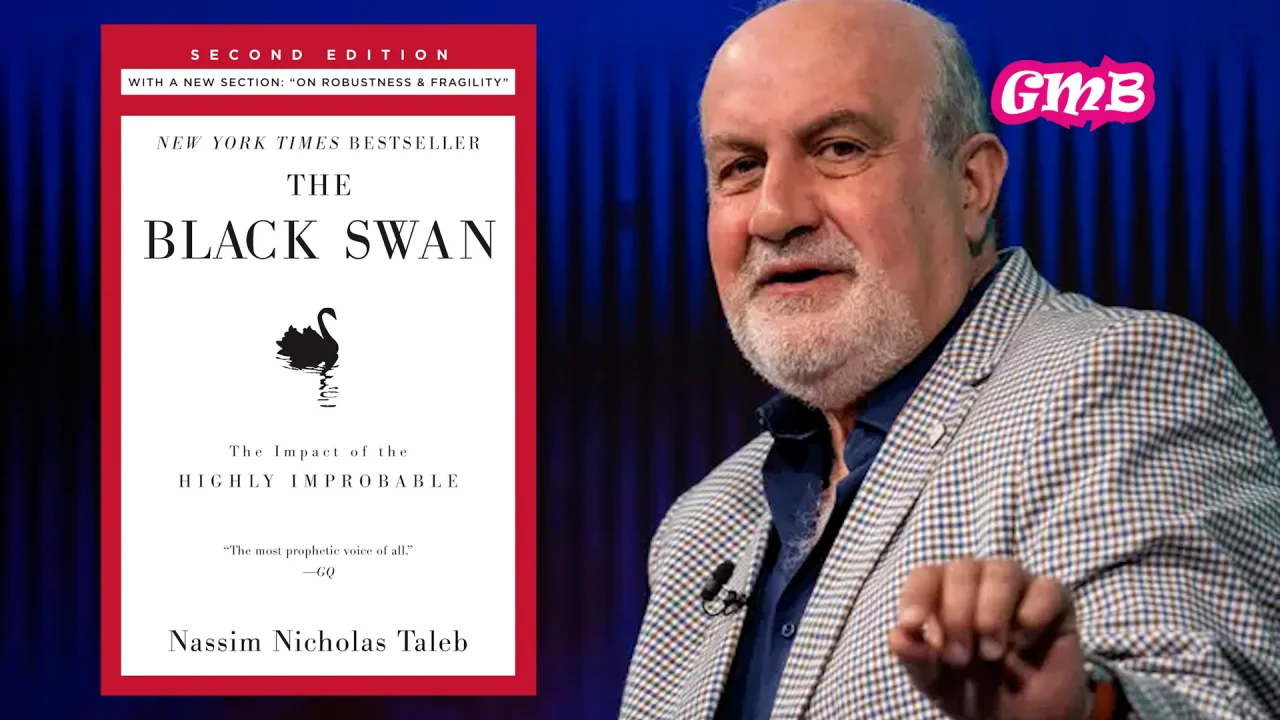
That thought stayed with me long after I closed the last page of The Black Swan: The Impact of the Highly Improbable by Nassim Nicholas Taleb.
What Kind of Novel Is This?
This is a philosophical, analytical, and quietly unsettling book about uncertainty and the illusion of prediction.
Tone: Sharp, provocative, occasionally humorous
Pace: Moderate, with bursts of intensity
Themes: Uncertainty, randomness, knowledge, risk, human bias, power of rare events
This book is for readers who:
-
Question experts and systems
-
Enjoy ideas that disrupt how they see the world
-
Like philosophy mixed with real-world examples
This book is NOT for readers who:
-
Want a simple, linear argument
-
Prefer comfort over confrontation
-
Need clear, tidy conclusions
👉 The edition I read is available here:
https://amzn.to/4iLDnfz
Why This Story Matters (Emotional Core)
This book isn’t really about finance. Or statistics.
It’s about how fragile our understanding of the world actually is.
Taleb argues that the events that shape our lives—wars, technological breakthroughs, financial crashes, even personal turning points—are not predictable. Not just difficult to predict… but fundamentally outside our models.
And yet, we behave as if they are predictable.
That’s the tension at the heart of this book.
What stayed with me most wasn’t the theory—it was the realization that confidence is often built on incomplete stories. We see patterns, we create explanations, and then we believe those explanations as truth.
But Taleb keeps pushing:
What if those explanations are just stories we tell after the fact?
What if the world doesn’t follow the neat narratives we create?
It made me rethink something simple but powerful:
Maybe the problem isn’t that we don’t know enough. Maybe it’s that we think we do.
A Glimpse of the Story (Minimal, No Spoilers)
At its core, the book presents a simple but disturbing idea:
There are events—rare, unpredictable, and massively impactful—that shape everything.
These “Black Swan” events:
-
Come as a complete surprise
-
Change the course of history
-
Are explained after they happen as if they were obvious
The conflict is not between people.
It’s between reality and our illusion of understanding it.
Who This Book Is Perfect For
You’ll enjoy this book if:
-
You like books that challenge your assumptions
-
You enjoy big ideas more than fast plots
-
You read to think, not just to escape
You might struggle with this book if:
-
You prefer fast-paced storytelling
-
You want clear answers and certainty
-
You dislike philosophical detours
👉 If this sounds like your kind of book, you can get it here:
https://amzn.to/4iLDnfz
Analysis & Review
What makes The Black Swan powerful is not just the idea—it’s how relentlessly Taleb dismantles the systems we trust.
He introduces two worlds:
-
Mediocristan – where things are predictable and averages work
-
Extremistan – where one event can change everything
And here’s the uncomfortable truth:
Most of what matters happens in Extremistan.
That alone flips everything.
What Worked
The clarity of the core idea is incredible. Once you understand it, you start seeing it everywhere—in business, history, even personal life.
Taleb’s writing is also surprisingly engaging. He mixes philosophy, storytelling, and sharp criticism in a way that keeps you thinking.
And the turkey example? It’s simple, almost funny—but impossible to forget.
What Didn’t
At times, the book feels repetitive. Taleb circles back to the same ideas again and again, which can feel excessive.
He’s also… unapologetically opinionated. There are moments where his tone borders on dismissive, especially toward academics and economists.
Some readers will find that refreshing. Others might find it exhausting.
Personal Insight
What changed for me wasn’t how I predict the future.
It’s that I’ve become less obsessed with predicting it at all.
Instead, I find myself asking:
-
Am I prepared for uncertainty?
-
Am I overconfident in what I think I know?
That shift alone made the book worth it.
Conclusion & Recommendation
This isn’t a comfortable book.
It doesn’t reassure you. It doesn’t give you control.
Instead, it quietly dismantles the idea that control was ever real to begin with.
But strangely… that’s what makes it valuable.
If you’re someone who wants to understand why experts fail, why systems collapse, and why life doesn’t follow neat plans, this book will stay with you.
If you just want entertainment, this might not be it.
👉 If you’d like to read the same edition I did, here’s the link:
https://amzn.to/4iLDnfz
Final Thoughts
I started this book thinking it would teach me how to better understand the world.
I finished it realizing how much of the world is fundamentally unknowable.
And somehow, that didn’t feel discouraging.
It felt… honest.
Because maybe the goal isn’t to predict everything.
Maybe it’s to stay aware, adaptable, and humble in the face of what we can’t predict.
And if that idea unsettles you a little…
Then this book is probably exactly what you need.