 English
 French
 German
 Russian
 中文
中文

Two Souls, One Fatal Gamble: A Love Story Built on Chance and Glass
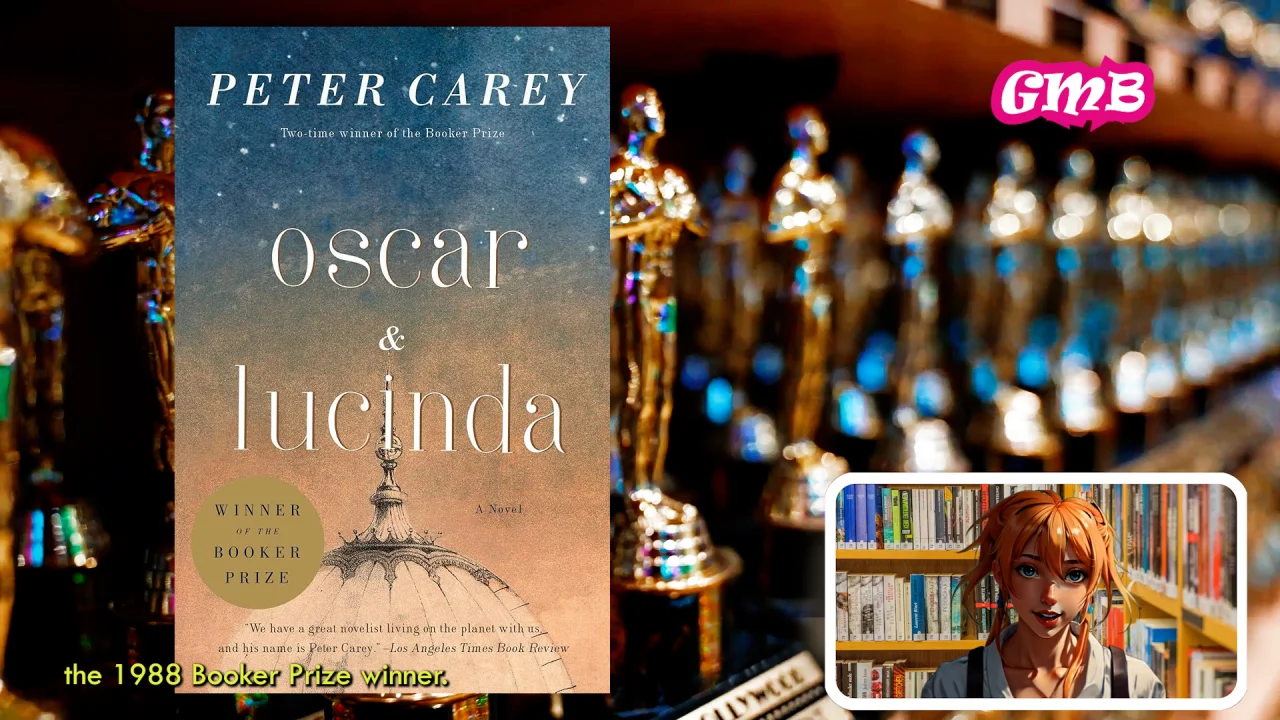
There’s a moment in this novel where I had to stop and just sit with what I’d read. Not because it was shocking in a dramatic, explosive way—but because it felt inevitable. Like watching something fragile fall in slow motion and realizing, too late, that no one is going to catch it.
I kept thinking: why do people who need each other the most always fail to say the one thing that matters?
That question haunted me through every page of Oscar and Lucinda. Not the plot. Not even the outcome. Just that quiet, devastating tension between feeling something deeply… and never quite managing to express it.
What Kind of Novel Is This?
This is a historical, tragicomic novel about faith, chance, and the quiet destruction caused by repression.
Tone: Reflective, darkly humorous, quietly devastating
Pace: Moderate, with bursts of intensity
Themes: Faith vs reason, love and miscommunication, gender roles, colonialism, guilt, identity
This book is for readers who:
-
Enjoy character-driven stories that explore human contradictions
-
Like novels that feel thoughtful, strange, and emotionally layered
This book is NOT for readers who:
-
Want fast-paced plots or constant action
-
Prefer clear resolutions and emotionally direct characters
👉 The edition I read is available here:
https://amzn.to/48Dru73
Summary (No Spoilers)
At its heart, Oscar and Lucinda follows two deeply unconventional individuals.
Oscar Hopkins is a devout young man who believes gambling is not a vice—but a form of divine communication. Lucinda Leplastrier is a wealthy heiress burdened by guilt over her inheritance, who gambles as a way to rid herself of it.
Their lives, shaped by religion, guilt, and social expectations, eventually collide on a journey to Australia.
What follows is not a typical romance, but a strange, fragile connection between two people who understand each other… and yet cannot fully reach each other.
At the center of their bond lies a bizarre and symbolic wager—one that will test not just their beliefs, but their capacity for love.
Analysis & Review
What struck me most about this novel is how deeply human its characters feel—without ever becoming comforting.
Oscar is not easy to like. His belief that God speaks through gambling is both fascinating and frustrating. You want to shake him out of it. But at the same time, there’s something painfully sincere about him. He’s not reckless—he’s searching. Searching for certainty in a world that gives him none.
Lucinda, on the other hand, feels like a contradiction walking on two legs. She is independent, wealthy, and determined to carve out space for herself in a male-dominated world. And yet, beneath all that strength, she is terrified—of poverty, of judgment, of losing everything.
Together, they don’t balance each other. They mirror each other’s instability.
What Works
The brilliance of Peter Carey lies in how he uses these two characters to reflect something larger: a society that punishes difference.
Oscar is condemned for blending faith with chance.
Lucinda is condemned for daring to exist outside traditional gender roles.
Their tragedy isn’t just personal—it’s structural.
Another powerful aspect is the theme of miscommunication. Like characters in Jude the Obscure, Oscar and Lucinda feel deeply but speak poorly. Love, in this novel, is never clearly stated. It’s hidden behind actions, bets, and silences.
And then there’s gambling—not just as an activity, but as a language.
For Oscar, it’s faith.
For Lucinda, it’s guilt.
For both, it becomes the only way they know how to connect.
It’s beautiful. And tragic.
What Doesn’t Fully Work
At times, the novel feels emotionally distant. Not because it lacks feeling—but because the characters themselves are so repressed that the reader is kept at arm’s length.
You may find yourself wanting more direct emotional payoff—more clarity, more confession. But that absence is also part of the design.
Another challenge is the portrayal of colonial Australia. The treatment of Indigenous people is intentionally distant and unsettling—but it can feel frustrating, even alienating. That discomfort, however, is part of the point.
Conclusion & Recommendation
This isn’t a novel you read for comfort. It’s one you read for reflection.
If you’re drawn to stories about flawed people trying—and failing—to navigate love, faith, and identity, this book will stay with you long after you finish it.
But if you prefer stories where emotions are clearly expressed and conflicts neatly resolved, this might feel slow or even frustrating.
👉 If this sounds like your kind of book, you can check it out here:
https://amzn.to/48Dru73
Final Thoughts
I keep coming back to that feeling I had while reading—watching something fragile collapse in slow motion.
That’s what Oscar and Lucinda is. Not a dramatic explosion, but a quiet unraveling. A story about two people who might have been everything to each other… if only they had known how to say it.
And maybe that’s why it lingers.
Because it forces you to ask a question that doesn’t have a comfortable answer:
How many lives are shaped—not by what we feel—but by what we fail to express?
👉 If you’d like to read the same edition I did, here’s the link:
https://amzn.to/48Dru73