 English
 French
 German
 Russian
 中文
中文

The Day Honesty Became a Crime
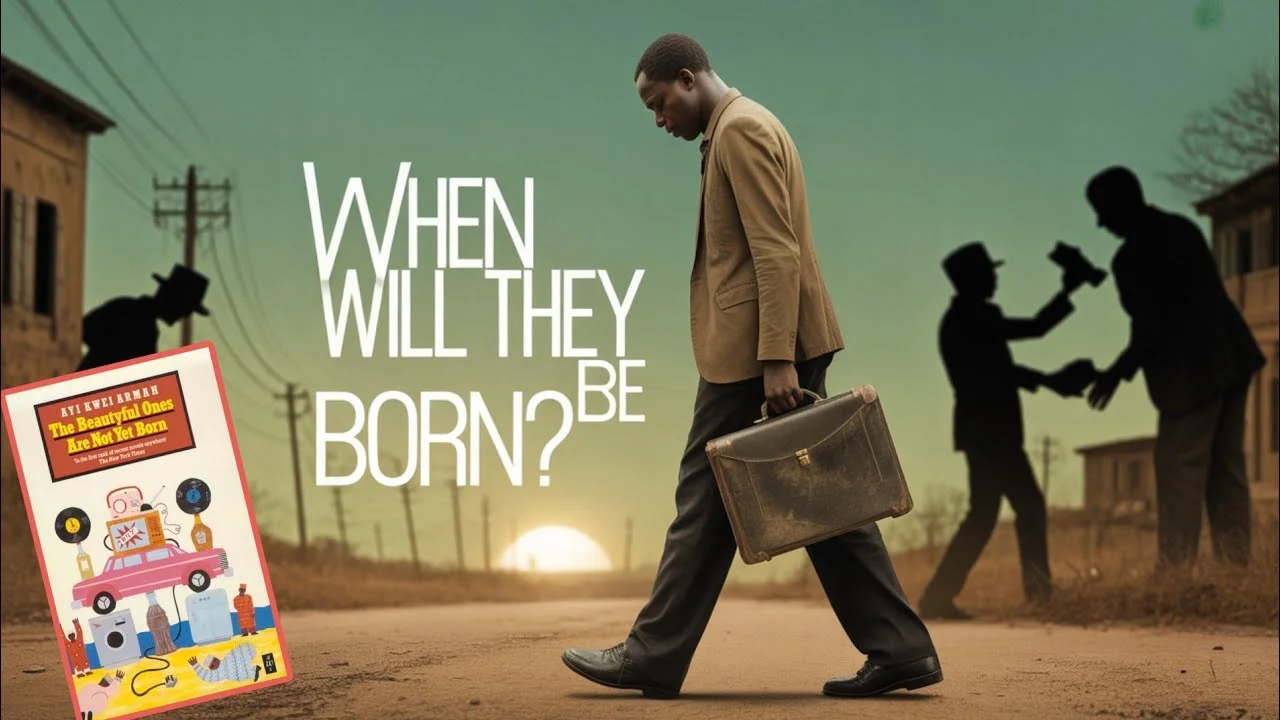
There’s a moment in The Beautyful Ones Are Not Yet Born when you realize something deeply uncomfortable: in some societies, being a good person isn’t just difficult—it’s suspicious. I remember sitting with that thought long after closing the book, wondering when honesty quietly turned into a liability.
Ayi Kwei Armah doesn’t ease you into this realization. He throws you straight into 1960s Ghana, a country drunk on independence but sobering up fast. Money moves faster than conscience. Power smells like rot. And if you’re not stealing, scheming, or cutting corners, people look at you like you’ve missed the memo.
That’s the world Armah builds—sticky, decaying, morally exhausted. And at the center of it stands a man whose greatest flaw is that he refuses to join the mess.
What Kind of Novel Is This?
The Beautyful Ones Are Not Yet Born is a political, psychological, and moral novel about integrity in a system designed to crush it.
Tone: Dark, cynical, reflective
Pace: Slow, deliberate, almost suffocating
Core obsession: Corruption—not just as politics, but as a way of life
This book is for readers who:
-
Enjoy uncomfortable truths
-
Like novels that interrogate society rather than entertain it
-
Appreciate African literature that refuses to romanticize post-independence realities
This book is not for readers who:
-
Need likable heroes
-
Prefer fast-moving plots
-
Want optimism neatly packaged at the end
👉 The edition I read is available here:
The Beautyful Ones Are Not Yet Born – Amazon
Meet “The Man” (And Why Everyone Hates Him)
Armah’s protagonist is simply called “the man.” No grand name. No symbolic flair. Just a railway clerk trying—almost stubbornly—to live honestly.
And that’s the problem.
His honesty doesn’t pay the bills. It doesn’t impress his wife. It definitely doesn’t impress his mother-in-law, who keeps pointing out that other men—corrupt men—drive big cars and feed their dogs better.
Meanwhile, the man squeezes into public transport, clinging to principles no one seems to value anymore.
Then there’s Koomson—former classmate, now party big man. He’s everything the man isn’t: wealthy, powerful, morally hollow. In Ghana’s new social order, Koomson is proof that corruption works.
But Armah is careful here. This isn’t just a rivalry between two men. It’s a diagnosis of a nation.
Why This Story Still Hurts (And Still Matters)
This novel isn’t really about Ghana in the 1960s. That’s just the setting.
What Armah is exposing is the sickness that follows broken hope. Independence promised dignity. Leadership promised transformation. But what arrived instead was greed dressed up as progress.
“People despised knowledge and revered wealth; thus, men would go any length to enrich themselves.”
The decay isn’t only political—it’s spiritual. Trash piles up in the streets. Bribes pass under tables. Even the landscape feels tired.
And the most painful truth?
People weren’t fooled. They weren’t naïve.
Through the character of Maanan, Armah shows what happens when belief collapses completely. She once believed in Nkrumah. When that faith died, something inside her died too.
As the Teacher explains, desperate people don’t follow just anyone. They wait. They watch. And when real change never comes, disillusionment settles in—and sometimes madness.
That’s the quiet horror of this book: not rage, but resignation.
👉 You can find this edition of the novel here:
The Beautyful Ones Are Not Yet Born – Paperback
A Glimpse of the Story (No Spoilers)
At its core, the novel follows:
-
An honest man navigating a corrupt system
-
A society obsessed with wealth over worth
-
A moral question with no easy answer: Is integrity still meaningful when it costs everything?
There are no heroic victories here. Just small choices, heavy consequences, and a haunting sense that the system always wins.
Blackness, Power, and a Brutal Mirror
One of Armah’s most cutting insights is his critique of postcolonial identity:
“There is something so terrible in watching a black man trying at all points to be the dark ghost of a European…”
That line still stings.
The novel forces us to confront how deeply Western validation still shapes our politics, beauty standards, and leadership ideals. Armah insists that real power can’t be imported—it must come from the people themselves.
“The only real power a black man can have will come from black people.”
And yet, even revolutions fail. The coup that overthrows Nkrumah doesn’t cleanse corruption—it simply rotates the thieves. Different faces. Same pockets.
By the end, the man walks home watching policemen still taking bribes, and the question hangs in the air:
When will the Beautyful Ones be born?
My Honest Verdict
This is not a comfortable novel.
It’s not even a pleasant one.
What works:
-
Relentless honesty
-
Powerful symbolism
-
A fearless critique of post-independence failure
What doesn’t:
-
The pacing can feel heavy
-
The bleakness is emotionally exhausting
Still, I recommend it—because it’s honest.
And honest books are rare.
👉 If this sounds like your kind of novel, you can find it here:
The Beautyful Ones Are Not Yet Born – Amazon
Final Thoughts
Armah took the title from a misspelled car inscription—“The Beautyful Ones Are Not Yet Born.” And that misspelling matters. It reminds us that hope doesn’t arrive polished. It arrives awkward, unfinished, and future-bound.
The key word is yet.
The beautyful ones will come. But until they do, this novel stands as a warning—and a challenge. Will we wait? Will we compromise? Or will we endure, like the man, even when integrity feels foolish?
This isn’t a book you read to escape.
It’s a book you read to wake up.
And once it does that, it doesn’t let go.