 English
 French
 German
 Russian
 中文
中文

When a Book Makes You Uncomfortable — and You Keep Reading Anyway
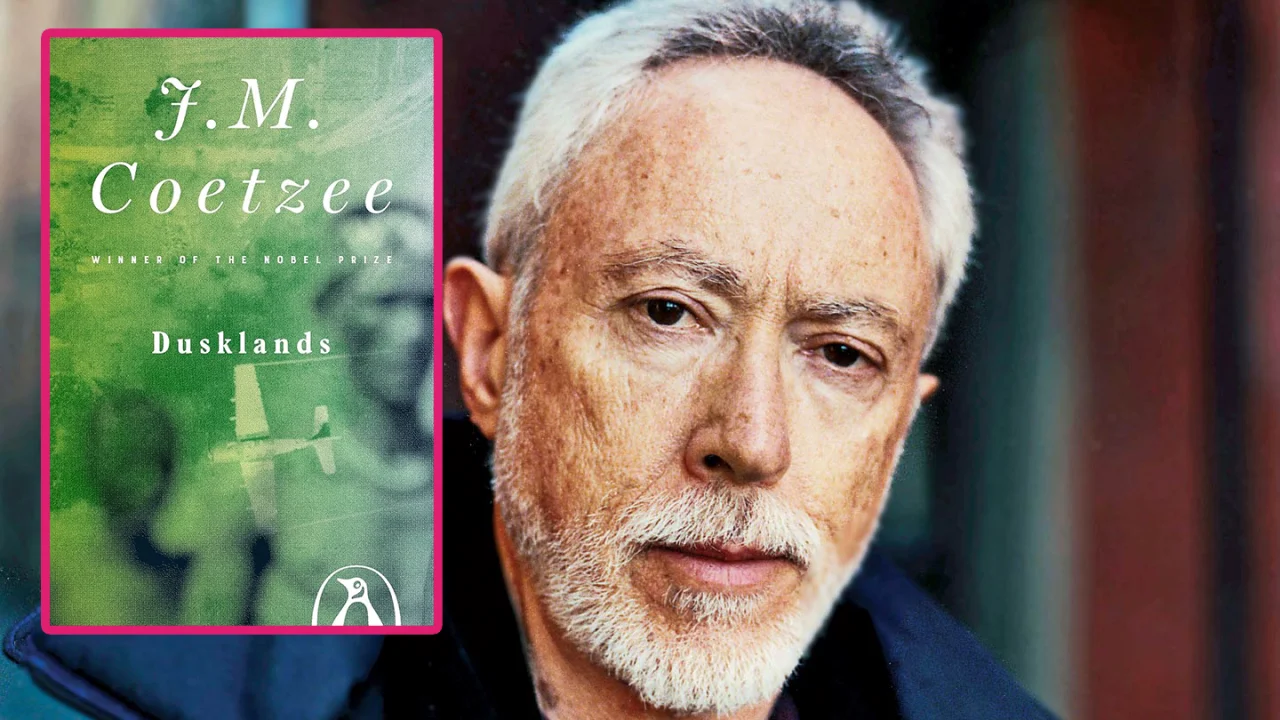
There’s a moment that happens sometimes while reading—a quiet, unsettling realization. You’re only a few pages in, but you already know this book is not going to be polite with you. It’s not here to entertain you gently. It’s here to stare back.
That’s how Dusklands felt to me.
It was bitter. Disorienting. Intellectually abrasive. And yet, I couldn’t stop. Like drinking coffee that’s far too strong, but somehow exactly what you need.
This was my first encounter with a Nobel Prize–winning writer, and I wasn’t disappointed—just disturbed in the right way.
What struck me immediately was how the book moves between two worlds that feel impossibly far apart: the psychological machinery of the Vietnam War and the brutal moral emptiness of colonial Africa. Two stories. Two men. One losing his mind, the other his soul. Both fighting wars of conscience—and both losing.
And it all begins with a man named Eugene Dawn.
What Kind of Book Is Dusklands?
Dusklands is a literary, psychological, postcolonial novella about power, justification, and moral decay.
Tone: Cold, unsettling, clinical
Pace: Slow, deliberate
Themes:
-
Psychological warfare
-
Colonial violence
-
Dehumanization
-
Moral self-deception
-
Power and guilt
This book is for readers who:
-
Enjoy morally challenging fiction
-
Like literature that refuses to explain itself
-
Are interested in war, colonialism, and psychology
This book is not for readers who:
-
Want fast-paced plots
-
Need likable protagonists
-
Prefer clear moral comfort
👉 The edition I read is available here:
👉 Dusklands by J.M. Coetzee (Paperback / Kindle)
The Vietnam Project: When the Mind Becomes the Battlefield
Eugene Dawn is not a soldier. He doesn’t fire weapons or march into enemy territory. He fights with words.
A psychologist during the Vietnam War, Eugene is tasked with designing a psychological warfare strategy—something refined, intelligent, devastating. His job is persuasion. Or, more honestly, manipulation.
He believes in the work. Too much.
When his superior (also named Coetzee, a detail that feels deliberately unsettling) asks him to revise his report, Eugene doesn’t just edit the document—he begins to edit himself. He turns his analytical gaze inward. And that’s where the real collapse begins.
The breakdown isn’t dramatic. There are no grand explosions. Instead, it’s a slow erosion. Self-doubt creeps in. Identity blurs with ideology. Purpose dissolves into obsession.
Reading this section feels disturbingly intimate. Coetzee writes Eugene’s descent with such precision that it begins to feel less like fiction and more like a case study. You start wondering whether this man is unraveling—or whether the system itself is the disease.
What The Vietnam Project reveals is something deeply uncomfortable: not all victims of war die in combat. Some are destroyed behind desks, crushed under the weight of ethical contradictions they refuse to confront.
And just when you think you’ve grasped the book’s darkness—it shifts continents.
The Narrative of Jacobus Coetzee: Civilization as an Excuse for Violence
The second half of Dusklands takes us to 1760, into colonial southern Africa.
Jacobus Coetzee is an explorer—or at least, that’s what he believes himself to be. In reality, he is a man armed with entitlement, racial superiority, and a gun. He travels through Namaqua territory with cattle, slaves, and an unshakable belief in his own importance.
He brings “gifts” of civilization: tobacco, copper, European arrogance. But the Namaqua people aren’t impressed.
And that rejection wounds him deeply.
From that moment on, the narrative becomes a chilling study in dehumanization. Jacobus describes the people around him as animals. He fears contamination. He threatens violence casually. Yet the irony is relentless: when he falls sick, it is the very people he despises who nurse him back to health.
He repays their care with contempt.
Eventually expelled, Jacobus loses most of his slaves—a loss he considers unforgivable. On his journey home, there’s a brief flicker of humanity when he carries his remaining slave, Klawer, through the wilderness. But even that compassion rots. Jacobus abandons him.
Later, he returns—not to reconcile, but to exterminate.
The massacre that follows is narrated with horrifying calm. Men, women, children—killed or left to die. Jacobus defines savagery himself:
“A way of life based on disdain for the value of human life and sensual delight in the pain of others.”
And in that sentence, Coetzee strips the mask off colonial “civilization.”
Why This Story Matters
What stayed with me after finishing Dusklands wasn’t a plot point—it was a question:
How easily do we excuse cruelty when it serves a purpose?
Eugene Dawn justifies manipulation in the name of national interest. Jacobus Coetzee justifies murder in the name of civilization. Different centuries. Same logic.
That’s what makes Dusklands feel so relevant. It’s not about Vietnam or colonial Africa alone—it’s about systems that reward cruelty while pretending to be rational. About how language, authority, and ideology are used to erase responsibility.
Coetzee doesn’t shout. He doesn’t moralize. He lets the horror speak for itself.
And that restraint is what makes the book linger.
A Glimpse of the Story (No Spoilers)
Dusklands presents two situations:
-
A psychologist tasked with winning a war through the manipulation of minds
-
A colonial explorer convinced of his right to dominate
Both face moments where conscience could intervene.
Neither listens.
Who This Book Is Perfect For
You’ll enjoy Dusklands if:
-
You like books that unsettle you
-
You enjoy restrained, precise prose
-
You read fiction to think, not just escape
You might struggle with this book if:
-
You want action-driven narratives
-
You need emotional closure
-
You dislike morally ambiguous storytelling
👉 If this sounds like your kind of book, you can find it here:
👉 Dusklands by J.M. Coetzee
My Honest Verdict
This isn’t a perfect book—but it’s an honest one.
What worked:
-
Psychological depth
-
Moral intensity
-
Surgical prose
What didn’t:
-
The brevity (it ends just when you want more)
-
The emotional coldness may alienate some readers
Still, I recommend it. Carefully. Because books like this don’t aim to comfort—they aim to reveal.
About the Author
J.M. Coetzee is a South African–born writer and Nobel Prize winner (2003), later becoming an Australian citizen. His work relentlessly explores guilt, power, and moral responsibility, especially within colonial and postcolonial contexts.
If you’ve read Disgrace, Waiting for the Barbarians, or Life & Times of Michael K, you’ll recognize the same quiet fury here—just in its earliest form.
👉 Explore Coetzee’s work here:
👉 J.M. Coetzee books on Amazon
Final Thoughts
Dusklands isn’t a book you breeze through. It’s one you carry with you.
It forces you to confront uncomfortable truths—not just about history, but about how easily humans rationalize harm when it’s wrapped in duty, progress, or intellect.
It’s short. It’s unsettling. And once you’ve seen what Coetzee exposes, you can’t unsee it.
👉 If you’d like to read the same edition I did, here’s the link:
👉 Dusklands by J.M. Coetzee
Until next time—happy reading.