 English
 French
 German
 Russian
 中文
中文

Born Cursed, Died Owning a House (Barely)
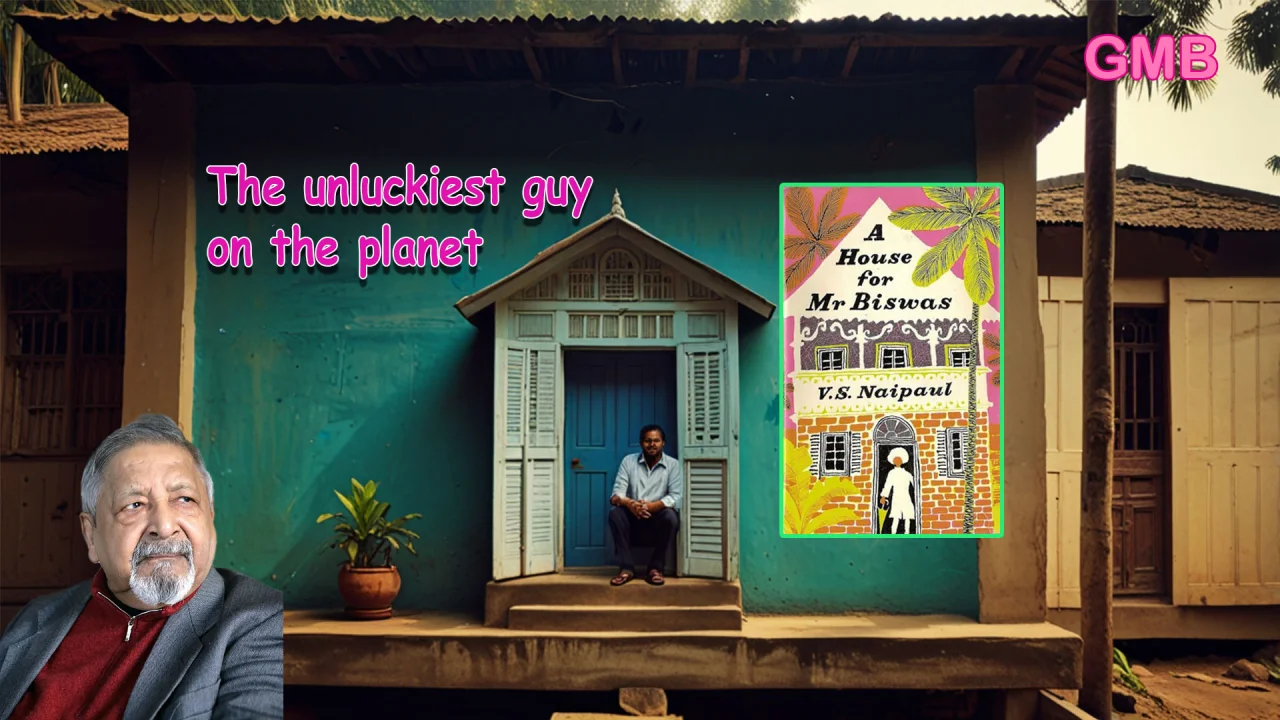
Some novels open with hope.
A House for Mr. Biswas opens with an extra finger — and a prophecy that basically says, this kid is going to ruin lives.
That moment stopped me cold.
Because from the very first page, V.S. Naipaul makes it clear: Mohun Biswas was never meant to win. Not in love. Not in money. Not even in peace. His life feels like a slow, carefully orchestrated humiliation, and as I kept reading, I found myself asking a strange question: how much suffering is a man allowed before we stop calling it realism and start calling it cruelty?
This book didn’t make me comfortable. It made me tired.
And yet — it refused to leave my head.
What Kind of Novel Is This?
A House for Mr. Biswas is a postcolonial, literary realist novel about the quiet desperation of wanting a life that belongs to you.
Tone: Bleak, ironic, emotionally draining
Pace: Slow and deliberate
Themes:
-
Identity
-
Independence
-
Family control
-
Failure
-
Masculinity
-
The illusion of success
This book is for readers who:
-
Like character studies more than plots
-
Are interested in postcolonial identity and displacement
-
Don’t need likable characters to stay engaged
This book is NOT for readers who:
-
Want hope, redemption, or emotional relief
-
Prefer fast-paced storytelling
-
Need characters they can admire
👉 The edition I read is available here:
A House for Mr. Biswas – V.S. Naipaul (Amazon)
Why This Story Matters (Even When It Hurts)
This novel isn’t really about a house.
The house is just a symbol — a stubborn, almost childish dream that refuses to die. For Mohun Biswas, owning a house means proof of existence. Proof that he isn’t just an accessory in the lives of others. Proof that he escaped the gravitational pull of the Tulsi family, where individuality goes to suffocate quietly.
What stayed with me after I finished wasn’t a scene or a line of dialogue — it was the weight. The exhaustion of watching someone try again and again, only to fail in slightly different ways. Naipaul captures something painfully honest: how ambition can exist without courage, how desire can be real and still self-sabotaging.
And that’s the uncomfortable truth of this book.
Mr. Biswas isn’t heroic. He complains. He blames. He resents.
But he also wants — and wanting, in a world designed to deny you, becomes a form of resistance.
This story exists to ask a brutal question:
What if independence comes too late to matter?
A Glimpse of the Story (No Spoilers)
Mohun Biswas is born in Trinidad under an ominous prophecy and spends his life drifting — from broken homes to hostile relatives, from failed careers to humiliating dependence.
Through marriage, he becomes trapped inside the Tulsi family, a massive, controlling household where privacy is nonexistent and obedience is currency. Every attempt he makes to assert himself — through work, writing, or housing — ends in disappointment.
The conflict isn’t dramatic.
It’s domestic.
It’s psychological.
And that makes it worse.
Who This Book Is Perfect For
You’ll enjoy this novel if:
-
You like books that linger emotionally
-
You enjoy slow, ironic storytelling
-
You read fiction to understand human limitation
You might struggle with this book if:
-
You want characters to grow clearly
-
You need hope at the end of the tunnel
-
You dislike relentless emotional pressure
👉 If this sounds like your kind of book, you can get it here:
A House for Mr. Biswas – Paperback Edition (Amazon)
My Honest Verdict
This isn’t a book I enjoyed.
It’s depressing. It’s slow. Most of the characters are people I would actively avoid in real life. Mohun Biswas himself can be exhausting — always dissatisfied, always blaming, rarely grateful when things briefly go right.
And Shama? Her loyalty to the Tulsi family felt like a quiet betrayal repeated endlessly. Every small dream Mr. Biswas had was measured against what her sisters had, until ambition itself became suspicious.
But here’s the thing.
I didn’t enjoy it — and I still think it’s important.
Naipaul writes failure with terrifying precision. He understands how colonial history, family structures, and personal insecurity tangle together until escape feels impossible.
This isn’t a perfect novel.
But it’s an honest one.
And those are rare.
Final Thoughts & Recommendation
A House for Mr. Biswas is not comforting literature. It doesn’t reward patience with joy. It rewards it with understanding — and even that comes at a cost.
If you’re looking for a novel that reflects the quiet tragedy of wanting more than life is willing to give, this book will speak to you. If you’re already emotionally stretched thin, it might push you away.
For me, this book confirmed something personal: I’m done with Naipaul for now. Between this and A Bend in the River, I’ve reached my emotional limit. His world is too bleak, too unforgiving, too certain that hope is temporary.
Still — I don’t regret reading it.
👉 If you’d like to read the same edition I did, here’s the link:
A House for Mr. Biswas by V.S. Naipaul (Amazon)
Optional: Best Format to Read This Book
Paperback — the weight matches the experience. This is not a book you skim. It demands to be endured.